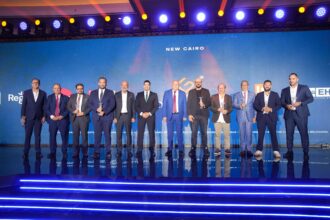
Egytrans NOSCO and Nafith International have secured a 25-year usufruct concession from the General Authority of the Suez Canal Economic Zone (SCZONE) to develop and operate a smart truck management system at Sokhna Port, marking a significant step in Egypt’s drive to modernise its logistics infrastructure.
The project will be implemented on a 167,000-square-metre site within the port and is designed to regulate truck traffic through advanced digital solutions and state-of-the-art technologies. The initiative seeks to address operational bottlenecks, improve cargo flow and enhance overall service quality, as Sokhna undergoes large-scale infrastructure and capacity upgrades.
Under the concession agreement, the partners will establish and operate modern truck marshalling yards supported by integrated digital platforms for yard and logistics management. The system will rely on real-time planning and dynamic flow management tools to streamline truck movements, reduce congestion inside and around the port, and optimise turnaround times.
According to project estimates, daily operational capacity could increase by 50–60% within the first two years of operation, in line with benchmarks from leading global smart port projects. The system is expected to handle between 800 and 1,100 trucks per day through structured scheduling and digital coordination, significantly reducing waiting times and accelerating cargo handling cycles.
Walid Gamal El-Din, Chairperson of SCZONE, said the project aligns with Egypt’s strategy to position its ports as global logistics hubs, particularly along the Red Sea corridor. He noted that Sokhna Port is undergoing extensive development, including the addition of new berths, expanded handling capacity and the attraction of leading international operators.
He added that launching an integrated digital truck flow management system will help reduce idle times, increase handling rates and strengthen the port’s competitiveness along key international trade routes. This, he said, reinforces Sokhna’s role within global supply chains and supports Egypt’s broader economic growth strategy.
For her part, Abir Leheta, co-CEO of Egytrans NOSCO, described the project as the second strategic collaboration between the two companies within a year, reflecting their shared focus on sustainable, long-term revenue-generating assets.
Leheta said the initiative goes beyond the development of truck yards, encompassing a comprehensive restructuring of truck flow management in line with international best practices. She highlighted strong growth in container throughput at Sokhna, with 285,000 TEUs recorded in the first quarter of 2025 – 26% above target – underscoring rising demand for efficient, technology-driven logistics solutions.
Noura Mehyar, CEO of Nafith International, said the digitally enabled model will enhance fleet utilisation, reduce congestion and ease traffic pressure around the port. By leveraging real-time operational data and analytics, the system is expected to improve planning efficiency and capacity management, enabling better use of existing assets without the need for costly physical expansion.
International benchmarks indicate that adopting digital and AI-driven logistics solutions can reduce operating costs by 15-30%, improve yard management efficiency by up to 70% and cut waiting times by more than 40%. Stakeholders expect comparable gains once the Sokhna system becomes fully operational, further strengthening the port’s competitive edge and advancing Egypt’s ambition to build a regionally and globally integrated logistics sector.