

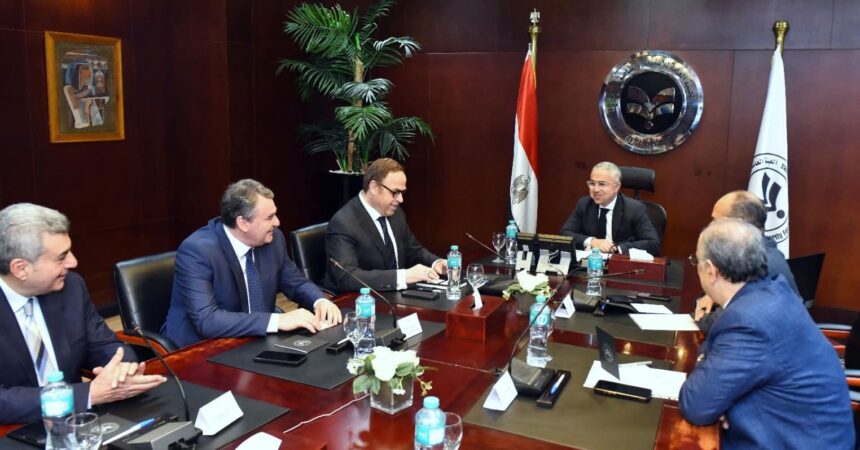
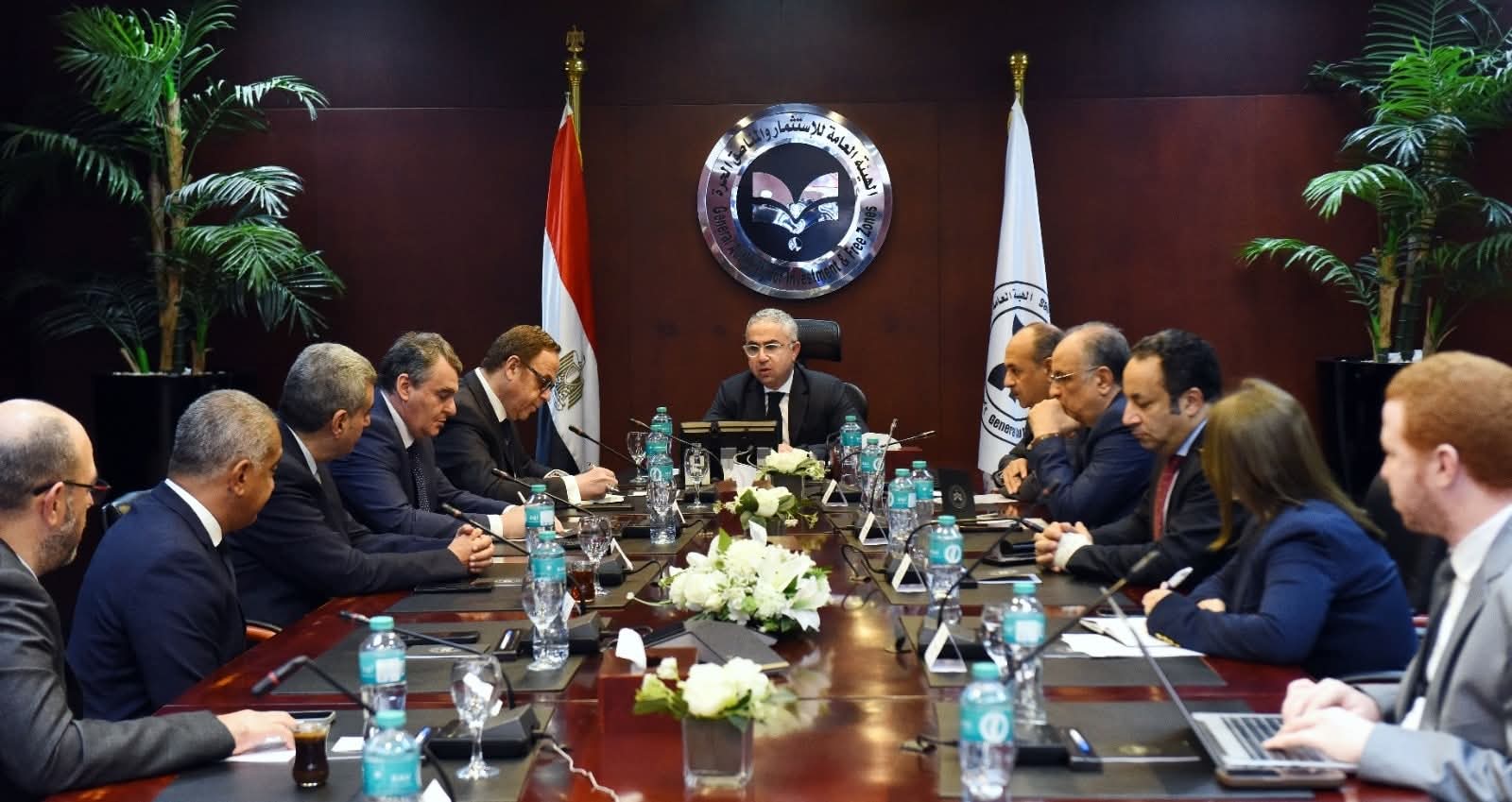
The Chief Executive Officer of the General Authority for Investment and Free Zones (GAFI), Mohamed El-Gawsaky, has received a delegation from DrasChem Specialty Chemicals, a Private Free Zone company, to discuss the steps required to establish the company’s sodium cyanide production facility at the Sidi Kerir Petrochemicals Complex in Alexandria.
During the meeting, both sides reviewed progress achieved to date, including the Cabinet’s approval for the company to operate under the Private Free Zones framework, confirmation of full compliance with Egyptian and international chemical safety standards, and the commencement of the project’s design and construction phase. Discussions also covered contracting arrangements with raw material suppliers.
DrasChem plans to begin production in 2028 following the completion of the facility’s first phase, with initial investments estimated at $200m. Phase I targets the production and export of 50,000 tonnes of sodium cyanide annually, a key input in gold extraction.
The second phase will focus on either doubling production capacity or manufacturing additional sodium cyanide derivatives, while a third phase will target the production of sodium-ion battery components.
El-Gawsaky affirmed GAFI’s full support for the project, pledging to provide all necessary facilitation to accelerate construction and enable production to begin at the earliest possible date. He said the project aligns with key government development priorities, including boosting exports, transferring technology, deepening local manufacturing, and creating jobs.
He added that the facility will benefit from Egypt’s economic reform programme, which has been implemented across state institutions and has led to marked improvements in monetary, financial, investment, trade, and logistics indicators.
El-Gawsaky also urged Egyptian companies, including DrasChem, to adopt integrated, export-oriented industrial strategies, with a particular focus on African markets. He pointed to the competitive positioning of Egyptian products across the continent and the extensive market access opportunities created by trade agreements Egypt has joined, most notably the African Continental Free Trade Area (AfCFTA).
He noted that the Ministry of Investment and Foreign Trade is targeting an increase of approximately $4bn in exports compared to 2024, when exports reached $7.7bn. This strategy prioritises sectors with strong competitive advantages, led by the chemicals industry. El-Gawsaky added that DrasChem’s sodium cyanide products enjoy an additional advantage given their critical role in Africa’s gold mining sector, as the continent accounts for nearly a quarter of global gold production.
He further highlighted the importance of the company’s planned sodium-ion battery products in supporting the government’s objective of increasing local content in renewable energy storage solutions, including batteries used in data centres and electricity transmission networks.
Bassem El-Shemmy, Vice President for Strategic Partnerships at Austria-based Petrochemical Holding GmbH, the largest shareholder in DrasChem, expressed his appreciation for GAFI’s efforts in facilitating establishment and licensing procedures, as well as coordinating with other state entities to streamline administrative processes.
El-Shemmy said Egypt represents the optimal location for launching a sodium cyanide facility, citing its proximity to key export markets in Africa and the Middle East, major upgrades to road and port infrastructure in recent years, and the availability of essential raw materials, including natural gas, ammonia, and sodium hydroxide (caustic soda).
He added that project partner Draslovka of the Czech Republic will, for the first time, transfer its proprietary technology—developed at its facilities in the United States—to Africa and the Middle East. This move, he said, will help position Egypt as a regional hub for gold extraction technologies and sodium-ion battery manufacturing, a more sustainable and cost-effective alternative to lithium-ion batteries.
Andrey Yurkevich, Deputy Managing Director for Strategy and Business Development at Petrochemical Holding GmbH, said the DrasChem facility will create up to 500 direct jobs and generate approximately $120m in annual foreign-currency revenues. He added that the project will enhance the stability and sustainability of local supply chains and strengthen Egypt’s regional standing as home to the first sodium cyanide production facility in both Egypt and the Middle East.
Yurkevich reaffirmed the company’s commitment to full compliance with Egyptian and international environmental and regulatory standards, noting that the advanced technology used is more environmentally friendly and eliminates the costs and pollution associated with importing and transporting the product.
He also echoed El-Gawsaky’s emphasis on African export markets, noting that Egypt will become the first African country to export sodium cyanide to the continent. He said Phase I production alone will be five times current domestic demand, while covering a significant share of African gold mines’ requirements.
The meeting was attended by DrasChem Chief Executive Officer Mohamed Abdel Aziz, Project Manager Mahmoud El-Menkhaly, Senior Analyst Vasily Sobolev, N Gage Consulting Chairman Karim Refaat, and senior consultant Sara El-Fata.


