

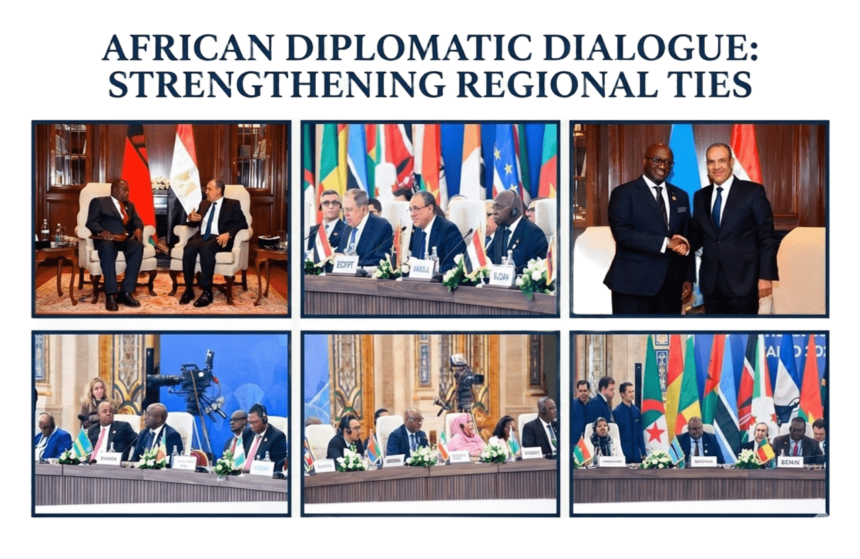
In the quiet corners of the Russian-African Ministerial Conference this weekend, the traditional image of Egyptian diplomacy—often focused narrow-mindedly on the Nile—gave way to something far more expansive. Whether discussing renewable energy tenders in South Africa or the first shipment of medical equipment to a new heart centre in Kigali, Cairo is signaling that its future is inextricably linked to the heart of the continent.
On Sunday, Foreign Minister Badr Abdelatty welcomed South African Deputy Foreign Minister Tandi Moraka in a meeting that served as a bookend to a series of high-level talks. The discussions, which spanned counterparts from Somalia, Rwanda, Malawi, and Equatorial Guinea, highlight a concerted effort to translate political goodwill into tangible economic and security footprints.
By late December 2025, the central argument of Egypt’s foreign policy has become clear: to secure its regional interests, Cairo must move beyond being a mere observer and become an active architect of African development. This “nut graph” of Egyptian strategy relies on a blend of infrastructure investment, “soft power” healthcare initiatives, and a firm stance on institutional reform within the African Union.
Building a Narrative of Development
The export of Egyptian expertise in construction and energy emerged as a primary theme. In Malawi, Abdelatty proposed a sweeping involvement of the Egyptian private sector, ranging from the rehabilitation of Kamuzu International Airport to the construction of hydroelectric dams. Similar ambitions were echoed in talks with Equatorial Guinea, where Cairo is eyeing contracts for social housing and infrastructure projects.
In South Africa, the momentum is already tangible. Abdelatty noted that Egyptian firms have successfully secured tenders for renewable energy projects earlier this year, a milestone he hopes to build upon by finalising the Egyptian-South African Business Council. The goal is to move from sporadic trade to what he described as a “sustainable strategic partnership.”
This economic push is supported by a significant healthcare initiative. The Magdi Yacoub Heart Centre in Rwanda is positioned to become a medical hub for Central and Eastern Africa. With the first batch of medical equipment already purchased and a high-level inauguration planned for next year, the project represents the pinnacle of Egypt’s humanitarian and developmental outreach.
Security and the Nile Balance
While development provides the hook, security remains the anchor. In his meeting with Somali Foreign Minister Abdusalam Abdi Ali, Abdelatty reiterated Egypt’s commitment to the stability of the Horn of Africa, marked by the recent relocation of the Egyptian embassy to Mogadishu. Egypt is actively lobbying international partners for sustainable funding for the African Union Support and Stabilisation Mission in Somalia (AUSSOM), while rejecting “destructive policies” that threaten regional sovereignty.
The sensitive issue of Nile water security was addressed with a tone of “consensus and brotherhood” during talks with Rwanda. Abdelatty emphasised a return to inclusivity within the Nile Basin Initiative, while firmly rejecting unilateral measures in the Eastern Nile. This diplomatic balancing act is mirrored in Egypt’s stance on African Union reform, where Abdelatty called for a “methodical and transparent” process that ensures all member states have a voice in the continent’s institutional evolution.
A Regional Peacekeeper
Egypt’s role as a mediator was also on display as Abdelatty discussed the Great Lakes region with Rwandan officials, welcoming the Washington and Doha agreements as essential frameworks for de-escalation in the eastern Congo. From providing police training to Equatorial Guinea to dispatching rice-cultivation experts to Rwanda, the variety of cooperation illustrates a multifaceted engagement strategy.
As the ministerial sessions concluded, the focus shifted toward a busy 2026. With invitations for presidential visits to Rwanda and South Africa on the horizon, Cairo is positioning itself as a central pillar of the “African family.”
The kicker for this diplomatic surge was best articulated in Abdelatty’s remarks to his Malawian counterpart: the aim is no longer just to provide aid, but to ensure that Egyptian companies and expertise are “embedded in the very growth” of the continent. For Cairo, the pivot to Africa is no longer a diplomatic choice, but a strategic necessity for the decades to come.

