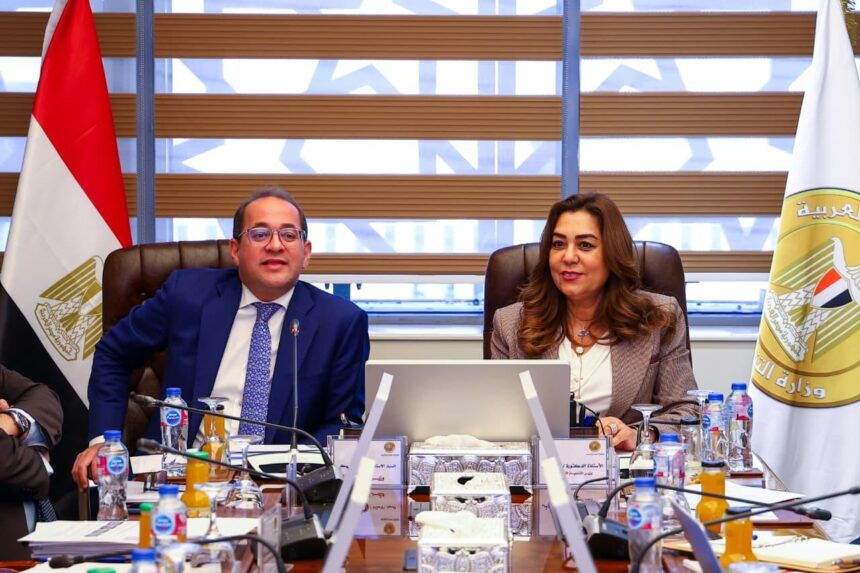
Egypt’s Minister of Local Development and Acting Minister of Environment, Manal Awad, held two meetings on Wednesday with Minister of Finance Ahmed Kouchouk at the ministry’s headquarters in the New Capital to discuss key financial and environmental priorities, including support for the waste management system and strengthening local revenue streams.
According to a statement from the Ministry of Local Development, the first meeting reviewed progress on reform measures linked to the IMF’s Resilience and Sustainability Trust, the financial sustainability of the national solid waste management system, and funding requirements for private waste-collection companies operating across the governorates.
Discussions also covered cooperation between the Ministries of Environment and Finance on implementing the Extended Producer Responsibility (EPR) system under the Waste Management Law, as part of Egypt’s transition toward a green economy.
Awad emphasised the Environment Ministry’s commitment to continued coordination with the Finance Ministry to support green economic tools, expand access to climate-related financing, and accelerate investments that reduce carbon emissions and promote renewable energy.
Kouchouk reaffirmed the Finance Ministry’s support, particularly for maintaining waste-collection services and reducing the funding gap in the sector to preserve environmental and aesthetic standards across cities and governorates.
The second meeting focused on financial challenges hindering governorates from expanding and managing their own revenue-generating projects, aiming to strengthen local financial autonomy, ease pressure on the state budget, and improve public services.
The meeting also reviewed the executive regulations for governorate-run activities–including parking management, advertising, and economic housing–with a plan to standardise these regulations nationwide to unify procedures and improve service delivery.
Awad expressed appreciation for the Finance Ministry’s ongoing cooperation, highlighting that enhancing local revenue streams is key to enabling governorates to better serve citizens and drive sustainable development. She noted that the ministry closely monitors governorates’ plans to expand economic activities, leverage geographic advantages, and address obstacles through continuous coordination with the Finance Ministry and other relevant state authorities.
Kouchouk welcomed new initiatives to mobilise additional resources, stressing the importance of engaging the private sector and ensuring efficient collection of dues owed by companies and citizens.
Senior officials from both ministries attended the meetings, including Sherine El-Sharkawy, First Assistant Minister of Finance for Economic Affairs; Yasser Abdallah, Head of the Waste Management Regulatory Authority; and senior advisors from the three ministries.