

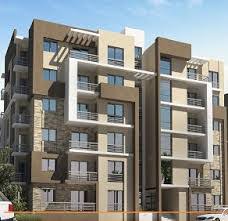
Egypt plans to launch a national housing programme targeting approximately one million residential units over four years, with estimated investments of EGP 1trn, as the government seeks to expand housing supply and provide alternatives to conventional homeownership.
Prime Minister Mostafa Madbouly announced the programme at the closing of Egypt Forum 2026 on Saturday, October 24.
The initiative will be implemented in cooperation with the private sector, while the forum’s recommendations called for involving Tahya Misr Fund in its implementation.
The recommendations also called for accelerating legislation to regulate Egypt’s real estate market and establish a clearer framework governing relations among citizens, developers and the state.
The programme is expected to cover several housing categories, including social housing, middle-income units, rental apartments, rent-to-own housing and accommodation for factory workers. However, the government has yet to announce the allocation of units across these categories or clarify the implementation timetable.
The announcement comes as the government seeks to expand its housing strategy beyond subsidised ownership schemes to address the needs of households unable to afford large down payments and long-term instalments.
Rental housing and rent-to-own gain prominence
During the forum’s urban development session on October 20, President Abdel Fattah Al-Sisi directed the government to cooperate with Tahya Misr Fund to construct 200,000 rental housing units, with the two parties sharing the costs equally.
It remains unclear whether these units will form part of the proposed one-million-unit programme or be delivered under a separate initiative.
Madbouly said the state had built or was implementing approximately two million housing units in recent years, including projects targeting low- and middle-income households. He also highlighted the importance of rental housing, noting that it accounts for a significant share of the housing market in several developed economies.
Expanding rental housing would provide young people, newly married couples and households with limited savings with an alternative to purchasing a home immediately.
The government has already announced a separate offering of 25,000 units under rental and rent-to-own arrangements, with applications scheduled to remain open until October 28, 2026.
The offering comprises 15,000 units through the Social Housing and Mortgage Finance Fund under the Sakan Likol El Masryeen 9 initiative, alongside 10,000 units offered by the New Urban Communities Authority under the rent-to-own system.
Of the latter, approximately 5,000 units have been completed, while another 5,000 are planned for construction over three years. The units are distributed across approximately 26 new cities.
The conventional rental component targets eligible low-income households, while the rent-to-own model offers a potential route to homeownership subject to specified conditions.
Under rent-to-own arrangements, households occupy a property under a rental agreement before potentially transitioning to ownership. Depending on the programme’s terms, rent already paid may be counted towards the purchase price or future instalments.
The model can reduce the initial financial burden of obtaining a home, although eligibility criteria, payment obligations and the conditions for transferring ownership depend on the applicable rules.
Details of any additional rental or rent-to-own units under the proposed EGP 1trn programme have yet to be announced.
Government housing programmes since 2014
Since Al-Sisi took office in 2014, Egypt has pursued housing programmes targeting different income groups, alongside initiatives to redevelop unsafe areas and establish new urban communities.
The Sakan Likol El Masryeen, or Housing for All Egyptians, initiative is a central component of the government’s affordable housing policy. Administered through the Social Housing and Mortgage Finance Fund, the programme provides eligible low-income households with subsidised housing and access to mortgage financing.
Successive offerings have expanded the availability of homes in new cities and other locations, allowing beneficiaries to purchase units through payment arrangements designed to make homeownership more accessible.
Sakan Misr targets middle-income households through apartments in new urban communities, positioning it between subsidised housing for lower-income groups and more expensive residential developments.
Dar Misr is another government-backed programme targeting middle-income buyers, providing apartments in new cities through government-administered allocations and payment arrangements.
Jannah offers residential units generally positioned towards higher-income segments than conventional social housing.
Madbouly cited Sakan Likol El Masryeen, Sakan Misr, Dar Misr and Jannah among the programmes contributing to the state’s housing construction efforts.
The government has also pursued Beit Al Watan, a programme offering residential land in new cities to Egyptians living abroad. Unlike apartment-based social housing schemes, it focuses on residential plots that buyers can develop subject to planning and construction requirements.
Together, these programmes reflect the state’s approach of offering different residential products to households with varying purchasing capacities, although affordability and payment terms differ significantly across schemes.
Redevelopment and new urban communities
Housing policy under Al-Sisi has also included relocating residents from unsafe settlements and improving living conditions in informal urban areas.
Projects such as Al-Asmarat in Cairo and Bashayer Al-Kheir in Alexandria have provided alternative accommodation for residents affected by unsafe or inadequate housing. The redevelopment of the Maspero Triangle in central Cairo has also involved relocating residents and providing alternative housing arrangements.
These initiatives differ from conventional housing allocations because their primary purpose is to replace unsafe accommodation and improve living conditions.
The government has simultaneously expanded new urban communities, including the New Administrative Capital, New Cairo, 6th of October City and New Alamein, supported by investments in roads, utilities and public infrastructure.
At Egypt Forum 2026, Madbouly reviewed the country’s urban development efforts since 2014. He said Egypt’s long-term development plan through 2052 included 39 new cities, of which 27 had been completed or were under development, while an estimated 14 million to 15 million people lived in new cities.
The expansion of urban communities has created locations for social housing, middle-income apartments and higher-priced residential developments.
However, the new programme’s success will depend in part on aligning housing supply with household purchasing power and ensuring that residential developments are accessible to employment centres, transport networks and public services.
Private-sector participation and worker housing
The proposed national programme envisages cooperation with private developers to deliver social housing and accommodation for factory workers.
Partnerships with the private sector could expand construction capacity by combining public-sector support and planning with private investment and development expertise.
Worker housing, meanwhile, could help meet accommodation needs near industrial employment centres, reducing commuting pressures and supporting employers’ efforts to attract and retain workers.
The government has yet to disclose the number of units allocated to these categories, their locations or the financing arrangements governing their delivery.
Implementation will therefore depend partly on how responsibilities are divided among the government, Tahya Misr Fund and participating developers.
Alongside the housing target, Egypt Forum 2026 called for accelerating legislation to regulate the real estate market and clarify the relationship among buyers, developers and the state.
The recommendation comes amid continuing debate over transparency, contractual obligations and buyer protection in Egypt’s property market.
A comprehensive regulatory framework could address disclosure of ownership costs, developers’ responsibilities and safeguards for buyers. However, the forum’s recommendation does not specify the provisions or timetable of any proposed legislation.
Regulation will be particularly relevant to the planned expansion of private-sector participation, which will require clear rules governing project delivery, financing and the respective responsibilities of public and private partners. Details of the programme’s implementation remain outstanding.


