

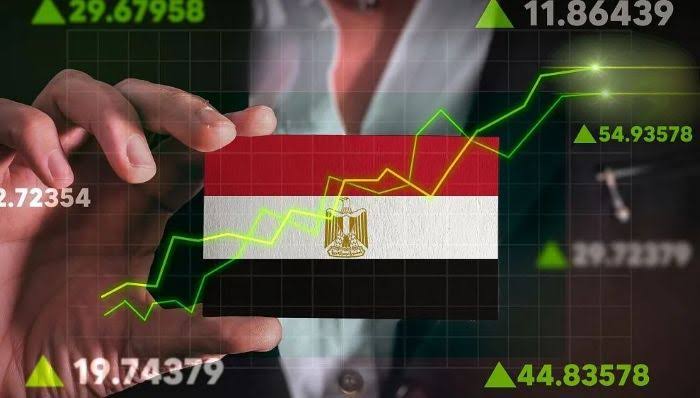
Egypt will shortly launch a foreign direct investment (FDI) strategy in partnership with the World Bank targeting 16 priority sectors, marking a structural shift from general promotion to direct investor targeting, Minister of Investment and Foreign Trade Mohamed Farid said.
Addressing 57 correspondents and representatives from 27 international and Arab media outlets, Farid outlined the ministry’s vision to revamp investment and foreign trade frameworks. He noted that the current phase operates under the motto “from strategy to implementation,” focusing on translating policy plans into tangible, on-the-ground measures that streamline business operations and enhance the competitiveness of the Egyptian economy.
Farid explained that the ministry is building an integrated investment ecosystem structured around four main pillars: facilitating business practice, localising development while supporting small and medium-sized enterprises (SMEs), effective targeting, promotion, and marketing of investment opportunities, and mitigating investment risks while mobilising capital.
Macroeconomic indicators demonstrate an improved capacity to absorb investment, with gross domestic product (GDP) growth rising to 5.1% from 4.4%, and official targets set at 5.5% to 6%. Farid cited ongoing improvements in key indicators, including net foreign assets, remittances from Egyptians working abroad, and international reserves, adding that the economic model relies on expanding private sector participation.
Under the risk-mitigation and capital-mobilisation pillar, the government is updating the operational methodology of the Sovereign Fund of Egypt (SFE) and its sub-funds to encourage private partnerships. To lower entry risks without replacing private management, the fund and its sub-entities may acquire minority stakes ranging between 10% and 20% in priority development projects.
In tandem, steps to establish a dedicated industrial investment fund have been completed. Its board of directors is currently being formed, with three to four investment opportunities under study. To guide incoming capital, the ministry has published an updated investment map featuring approximately 1,330 opportunities across various governorates and sectors, categorised by location and activity.
Egypt retained its position as Africa’s top destination for FDI for the fourth consecutive year, securing $15.5bn in inflows during the last calendar year. Farid stressed that the priority is converting available opportunities into actionable, scalable projects that deepen local manufacturing, increase production, and boost exports.
To address regulatory hurdles, the ministry is preparing amendments to the executive regulations of Companies Law No. 159 of 1981 to ease mergers and acquisitions (M&A), simplify company valuations, and expand available financing instruments. The state is also activating and increasing the number of dispute resolution committees and agreement committees.
On digital transformation, a platform dedicated to capital increase procedures is undergoing testing ahead of its launch within weeks to simplify inter-agency processes. Additionally, an economic entities platform will connect 92 government entities to manage services linked to approximately 486 licences, redesigning the investor journey to reduce administrative time and costs.
Regarding foreign trade, the ministry is introducing a regulatory trade laboratory (sandbox) to test innovative digital solutions aimed at modernising the trade ecosystem and expanding service exports. This forms part of a broader strategy to connect new investments with a productive base capable of supplying local, regional, and global markets.
Operational trade enhancements focus on streamlining customs clearance, implementing risk-based inspection systems, refining import regulations, and applying trade remedy tools. Commercial representation offices and export councils are also being deployed to open new export markets for Egyptian goods.
Farid highlighted localising development across governorates through investment zones and medium-sized zones as a core policy objective. Operational examples in Benha, Mit Ghamr, and three investment zones in Alexandria serve as models to integrate SMEs into industrial supply chains and expand regional employment.
Supporting existing investors by enabling them to reinvest profits, scale operations, and deepen their local investments remains a fundamental priority, Farid stated. He affirmed that continuous dialogue with the private sector will ensure reforms respond to practical operational challenges and deepen Egypt’s integration into global supply chains.


