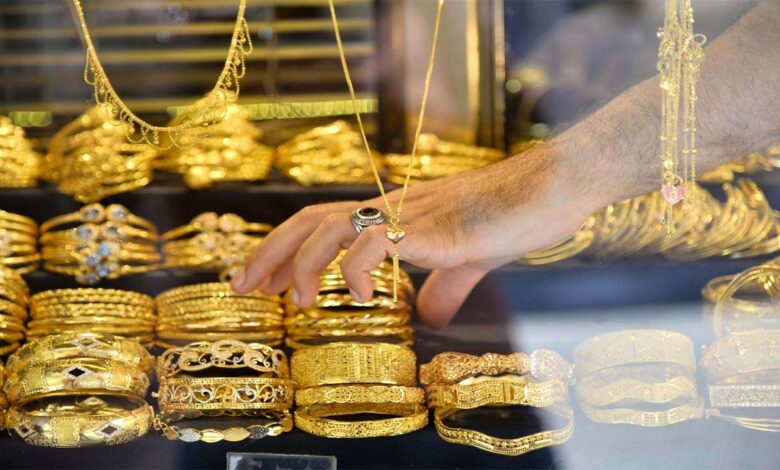
Gold prices rose during trading over the past week, with the price of a gram of 21-karat gold, the most widely traded in the local market, increasing by around EGP 110 to reach approximately EGP 6,390.
The price of 24-karat gold reached around EGP 7,303 per gram, while 18-karat gold stood at approximately EGP 5,477. The gold pound reached around EGP 51,120, while the global gold ounce stood at approximately $4,378, according to data from iSagha, a platform specialising in online gold and jewellery trading.
Gold prices in Egypt rose in tandem with strong global gains in the price of the ounce, despite the US Federal Reserve’s decision to raise interest rates by 25 basis points. At the same time, geopolitical tensions continued to support demand for gold as a key safe-haven asset.
Saeed Embaby, Executive Director of iSagha, said the most notable feature of gold’s performance this week was a break from one of the traditional relationships between interest rates and gold prices, with the price of 21-karat gold increasing by 1.75% despite the Federal Reserve raising interest rates by 25 basis points.
He added that the movement reflects the strong influence of geopolitical risks on the gold market at present compared with the traditional effect of interest rates, particularly amid continued tensions in the Gulf region and the resulting pressure on energy prices and inflation.
Gold faced two opposing forces during the week. The first was higher interest rates and a stronger dollar, both of which put pressure on gold prices. The second was continued geopolitical tensions, which provided support for the precious metal. Ultimately, the support generated by geopolitical risks enabled gold to post weekly gains despite the US interest rate hike.
Gold also benefited from lower oil prices, which helped ease inflation concerns and pushed bond yields lower, reducing expectations of further interest rate hikes.
Geopolitical tensions in the Gulf and between the US and Iran, alongside US inflation remaining at 3.4%, also supported demand for gold as a safe-haven asset and a hedge against inflation.
On the other hand, gold faced pressure from the Federal Reserve’s 25-basis-point interest rate hike, the strength of the dollar, and the return of the price gap to negative territory. These factors reflect continued pressure in the local market and an unstable relationship between the local gold price and its fair value.
Embaby also said that gold price movements during the week underscore the importance of taking a broader view of the market rather than focusing on price movements over a single day, particularly given the interaction of a wide range of local and global factors affecting the precious metal.
Key factors include US interest rates, the dollar exchange rate, geopolitical tensions and inflation rates, alongside supply and demand dynamics in the local market.
Phased buying remains one appropriate approach to managing price volatility, with gold purchase decisions linked to the purpose of saving and the intended holding period. Selling decisions, meanwhile, should be based on actual liquidity needs rather than concerns over temporary price movements.
Data contained in iSagha’s analysis indicates that gold in the local market is moving towards relative stability with a slight upward bias, amid a relative balance between pressure stemming from higher US interest rates and support generated by geopolitical risks.
The EGP 6,400-per-gram level remains an important resistance level for 21-karat gold, while the EGP 6,250–6,280 range represents an important support zone in the coming period.
Furthermore, gold prices in Egypt and globally will remain closely linked to developments in the geopolitical situation in the Gulf region, alongside any new US inflation data and the signals such data may provide regarding the trajectory of US monetary policy at upcoming meetings.
Accordingly, gold’s local performance remains dependent on the interaction of several factors at the same time, including global ounce prices, the dollar’s exchange rate against the Egyptian pound, changes in local supply and demand, as well as developments in interest rates, inflation and geopolitical risks globally.