

If Iran now faces a choice between escalation and capitulation, the more likely course of action is escalation. Tehran’s reading of the regional and international landscape appears to rest on carefully calculated considerations that lead it to view the current moment as an opportunity to increase pressure, enhance its negotiating leverage, and impose conditions of its own. This assessment is shaped by a convergence of decisive factors.
Reports published by both Western and Iranian media indicate that discussions are underway in Tehran about adopting an “offensive approach”—in other words, a deliberate return to escalation. This thinking rests on several considerations, including recognition that while Iran wants an end to the war, it is unwilling to surrender to President Donald Trump’s demands and remains determined to preserve what it regards as its gains in the conflict.
Tehran understands that the approaching US congressional midterm elections are narrowing the administration’s room for manoeuver. Republicans fear that prolonged military escalation or a surge in global oil prices could damage their electoral prospects, limiting Washington’s ability to embark on a lengthy military adventure.
The regime’s calculations also appear to rest on the belief that the White House is reluctant to pursue an all out confrontation—not only because of its enormous financial and human costs, but also because continued tensions and multiple ongoing conflicts are placing sustained pressure on US strategic stocks of ammunition and defensive equipment.
Iran’s objectives in pursuing escalation revolve around two principal elements. The first is directed toward the Gulf states and seeks to disrupt regional shipping routes, thereby increasing the economic and security costs for Washington and its allies. The ultimate objective would be to push the US toward seeking a negotiated exit rather than prolonging the confrontation.
The second is a return to negotiations under a new formula dictated by Tehran, rather than simply accepting Washington’s vision for Iran’s nuclear and regional policies. Through military demonstrations and threats, Tehran seeks to establish strategic priorities at the negotiating table—potentially including sanctions relief, recognition of its regional influence, and a role in determining the security and management of the Strait of Hormuz.
Tehran is unlikely to accept indefinitely a status quo in which the United States continues to reap the benefits of its “maximum pressure” campaign at relatively little cost. Iran’s strategic thinking now appears increasingly focused on initiative and offensive action. The longer the economic siege continues, the stronger Tehran’s incentive becomes to initiate confrontation and create new sources of leverage.
Yet despite the logic of Iran’s calculations regarding the political and military constraints facing the United States, this strategy carries significant risks of miscalculation.
The first danger is unintended escalation. An intense and direct confrontation could trigger a military conflict that neither side initially intended and that crosses the red lines of any US administration, regardless of electoral calculations.

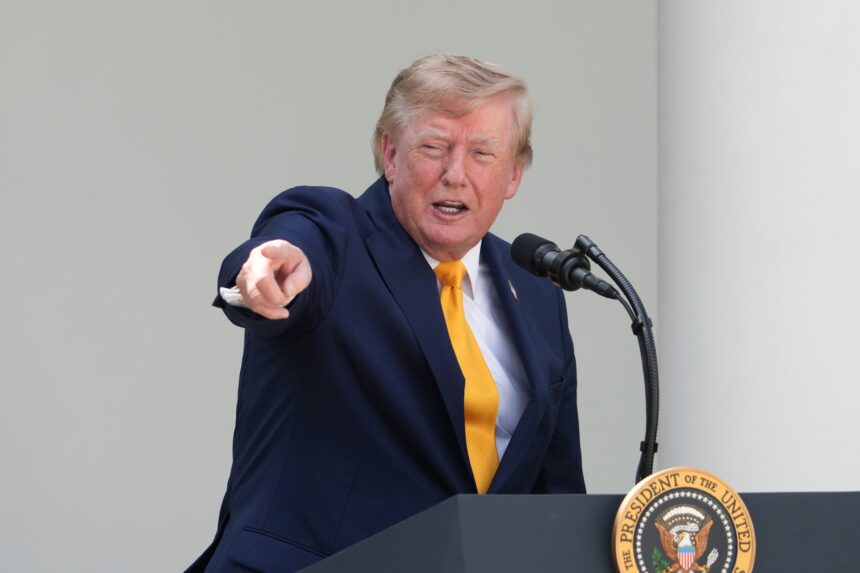
Moreover, betting that Trump no longer possesses sufficient leverage to force Tehran to negotiate on his terms could prove extremely costly. The US president is known for abrupt shifts from one extreme to another and for his willingness to employ direct maximum pressure tactics. Assuming that his options are effectively constrained is therefore a highly risky strategy—one that leaves considerable room for tactical surprises.
Contrary to Trump’s expectations, there is no stable foundation on which Washington can reshape the regional balance in the Middle East. Nor can the United States assume it can continue applying maximum pressure, avoid reaching an agreement, and simultaneously escape the consequences.
In reality, there is no quick, decisive strike capable of resolving the Iranian problem. Additional pressure on strategic partners such as China is unlikely to produce decisive—or even satisfactory—results. Nor would an attempt to tighten the land blockade or introduce yet another round of sanctions constitutes a magic formula for bringing the Iranian regime to its knees.
At most, such measures can make life extraordinarily difficult for ordinary Iranians. But they are unlikely, by themselves, to persuade the population to overthrow the regime or force Tehran into unconditional surrender. More importantly, Iran’s likely response would be to raise the costs imposed on its adversaries. Tehran believes it can shift part of those costs onto the global economy by disrupting energy flows, undermining regional stability, and obstructing or threatening maritime traffic from the Strait of Hormuz to the Bab el Mandeb.
At the same time, while US sanctions and pressure are inflicting significant damage on the Iranian economy, Iran is no longer the only side feeling the pain. That pressure is increasingly being felt by American consumers as well.
Although Trump has downplayed the impact of the Strait of Hormuz crisis on domestic fuel prices and has insisted he will “never apologize” for his decision to take military action against Iran, polling data suggest a more complicated reality. A Reuters/Ipsos poll found that only 33% of Americans approved of Trump’s overall job performance, while 64% disapproved—one of the lowest approval levels of his presidency. When it came specifically to his handling of Iran, only 28% approved, down from 34% the previous month. Even support within the Republican Party appears to be weakening, with approximately 61% of Republicans saying they approved of Trump’s handling of the conflict.
More strikingly, the US administration appears to be struggling to understand how the Iranian regime thinks. Washington faces a long list of unanswered questions whose answers could determine whether the current impasse can be resolved: Can the regime make concessions? Can it retreat tactically? Can it modify its regional policies?
In the absence of clear answers, frustration in Washington is likely to grow—particularly for Trump, who appears increasingly unable to avoid choosing between the two options that have confronted him for months: a costly and unpredictable escalation, or what could be portrayed as a humiliating acceptance of Iran’s terms.
The central paradox is that Tehran is escalating because it believes Trump is politically and militarily constrained. Yet precisely this assumption may become the factor that ultimately pushes the US president to transcend those constraints.
In any case, the coming months are likely to become a dual track contest. On one track, Trump will seek to maintain economic and military pressure on Tehran while securing an agreement he can present as a political achievement. On the other, he will have to prevent the war from becoming a liability capable of weighing heavily on Republican candidates in the congressional midterm elections.
Ultimately, Trump may find himself caught between two difficult choices: the bad and the worse.
Prof. Hatem Sadek, Helwan University


