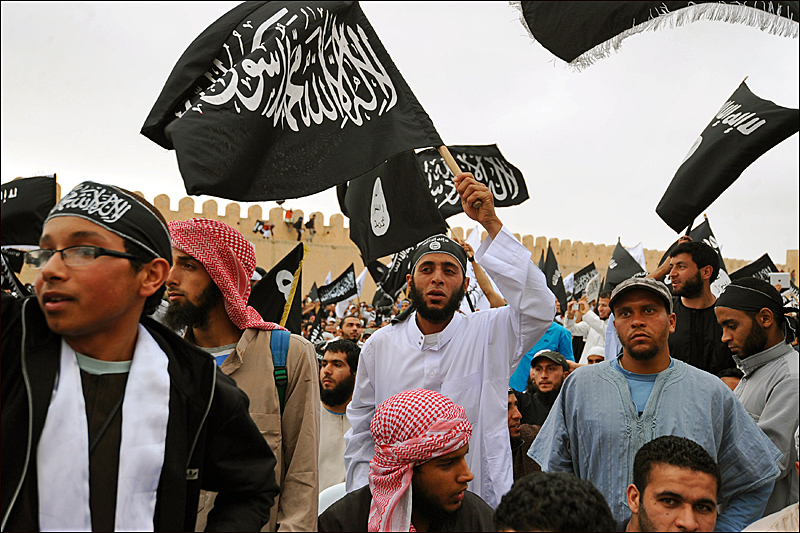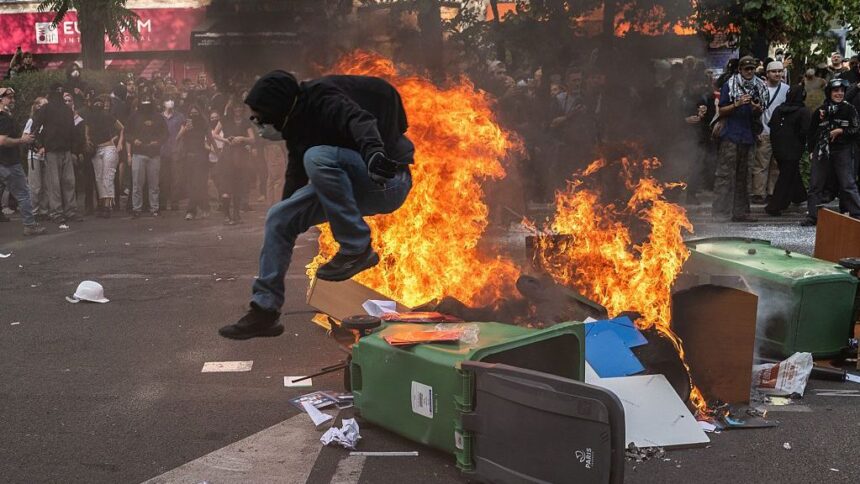
France is bracing for a day of widespread mass mobilisation on Saturday, October 17, as public anger mounts over a convergence of soaring living costs and allegations of severe police violence against high school students.
The planned protests, scheduled to coincide with the first day of the school holidays, represent a merging of various grievances, including the fuel crisis exacerbated by the war in Iran, actions by firefighters’ unions, and over two weeks of demonstrations by high school students over school conditions. The movement marks the latest expression of deep public dissatisfaction with President Emmanuel Macron’s government ahead of the 2027 elections.
According to the French newspaper Le Figaro, calls for joint mobilisation on October 17 have gained significant traction on social media. The date was initially set by a small number of groups identifying with the “Yellow Vests” movement to protest living conditions as fuel prices approach record highs. While initial calls on the TikTok platform garnered little attention, widespread school closures injected additional momentum into the movement, generating widespread enthusiasm among social media users to participate.
Jean-Luc Mélenchon, leader of the La France Insoumise party and a presidential candidate, urged high school and university students on Saturday to adopt “peaceful strategies” during the planned protests.
Allegations of police violence
The impending protests take place against a backdrop of tense and violent clashes with law enforcement, with police facing accusations of using excessive force that has left dozens of students injured.
The National Police Inspectorate General (IGPN), the internal police oversight body, is currently investigating 24 incidents regarding the security forces’ handling of the student protests.
One prominent case involves Eden, a 14-year-old boy whose family lawyer stated his jaw was broken and several teeth were smashed by a tear gas canister fired at close range last week. Elza Marcel, the family’s lawyer, said Eden was sitting and looking at his phone a few metres away from a protest site in Saint-Ouen-l’Aumône.
According to the local prosecutor, a police officer approached the teenager and struck him with a baton, after which Eden kicked the officer. A second officer then fired a tear gas canister at the boy’s face using a “Cougar” launcher.
“(The officer) hit him in the mouth and left him lying on the ground without even calling emergency services,” Marcel said. The family has filed a formal complaint accusing the officer of attempted murder.
The public prosecutor’s office stated that the student confronted the officers, who were attempting to stop him. Eight days after the incident, the officer was placed under formal investigation on Tuesday on suspicion of committing an assault as a public official resulting in permanent disability or disfigurement.
Through interviews and a review of legal documents, Reuters has documented 28 injuries resulting from the police use of force, 15 of which are currently under investigation by the IGPN. These cases involve the use of rubber bullets, stun grenades, tear gas, and batons. In two separate incidents, individuals lost an eye or suffered severe eye injuries due to rubber bullets.
Arrests and government response
Interior Minister Laurent Nuñez confirmed another severe incident in the city of Lens, where a 15-year-old boy lost his hand, likely due to a stun grenade. In response, Nuñez temporarily suspended the use of the munitions pending an investigation into the case.
Speaking in a radio interview on Wednesday, Nuñez stated that approximately 200 students have been injured, though he maintained this was rarely the result of police intervention. “Our primary role is, of course, to protect high school students,” he said.
Authorities have reported heavy tolls on both sides and significant property damage. According to official figures, 700 police officers have been injured, schools have been looted or set on fire, and teachers have been assaulted. Police have arrested 6,877 individuals, the vast majority of whom are minors.
In the Paris suburb of Argenteuil, a lawyer told Reuters that police shot a 16-year-old student who was walking home after discovering his school was closed. The boy was struck in his left eye, risking permanent damage, though the lawyer noted it remains unclear whether he was hit by a rubber bullet or another projectile.
The public prosecutor investigating the Argenteuil case stated that, according to the police account, the injured student “appears to be” one of two youths who had launched fireworks at officers, prompting police to return fire with rubber bullets.
Thierry Clair, a representative for the police union, described severe injuries such as Eden’s fractured jaw or the loss of the teenager’s hand as tragedies. However, Clair argued that these incidents should not cast doubt on French policing methods, asserting that the root of the problem lies in the extreme violence perpetrated by some youths.
The police response has reignited widespread calls to halt the use of rubber bullets and tear gas grenades. These riot control weapons are not used by law enforcement in many other European countries and have drawn repeated criticism in recent years from human rights organisations, including Amnesty International and United Nations human rights experts, who classify their use as dangerous and disproportionate.