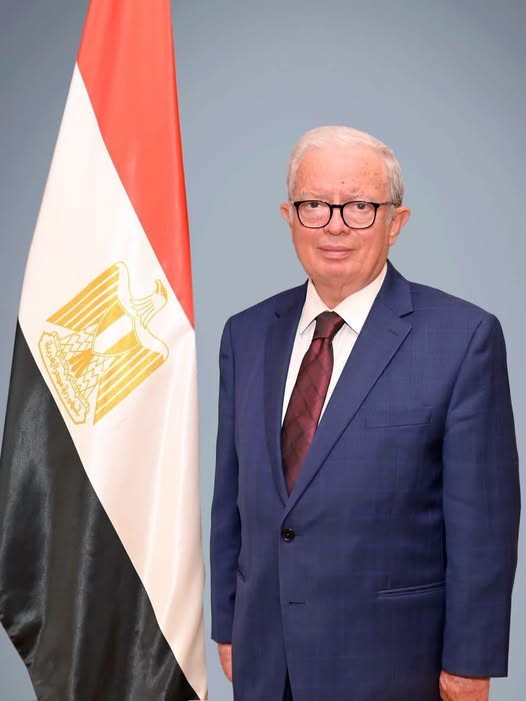
Deputy Prime Minister for Economic Affairs Hussein Eissa chaired a meeting with Minister of Finance Ahmed Kouchouk, Minister of Investment and Foreign Trade Mohamed Farid, and Assistant Prime Minister and CEO of the State-Owned Enterprises and Public Offerings Unit Hashem El-Sayed to discuss proposals for reorganising the ownership affiliations of several holding companies and their subsidiaries within Egypt’s public business sector.
The meeting was also attended by Deputy Minister of Finance Yasser Sobhy and Assistant Minister of Investment Saeed Arafa.
Eissa said the government is continuing to implement a comprehensive programme to restructure and enhance the performance of state-owned companies, while closely monitoring performance indicators as well as reform and development plans.
He said the programme aims to increase productivity, improve operational and financial efficiency, and maximise returns from state-owned enterprises.
Eissa stressed that making better use of companies’ assets, improving management efficiency, and maximising economic returns remain key government priorities. He added that the government is also working to identify promising investment opportunities and prepare them for investments and partnerships capable of creating genuine added value.
He highlighted the government’s commitment to expanding private-sector participation across a wide range of economic activities, describing the private sector as a key partner in driving economic growth, investment, production, and job creation.
According to Eissa, the proposed reorganisation of the ownership affiliations of several public business sector companies forms part of an integrated strategy to improve corporate performance and enhance the efficiency and effectiveness of managing state-owned assets.
The strategy is also intended to maximise economic returns, strengthen oversight and decision-making mechanisms, enhance companies’ capacity for growth and development, and attract new investments.
It further seeks to reinforce professional management standards and improve governance and transparency, in line with the government’s broader strategy to modernise the management of public assets and maximise the economic value generated by state-owned companies.
Eissa noted that the restructuring is consistent with the objectives of the second edition of the State Ownership Policy Document (2026–2030).
He also stressed that reorganising the companies’ ownership affiliations will not affect their existing operations, development plans, ongoing projects, or programmes aimed at improving productivity and performance.
The companies will continue operating normally and maintain business stability while proceeding with their planned projects and development programmes, he added.