

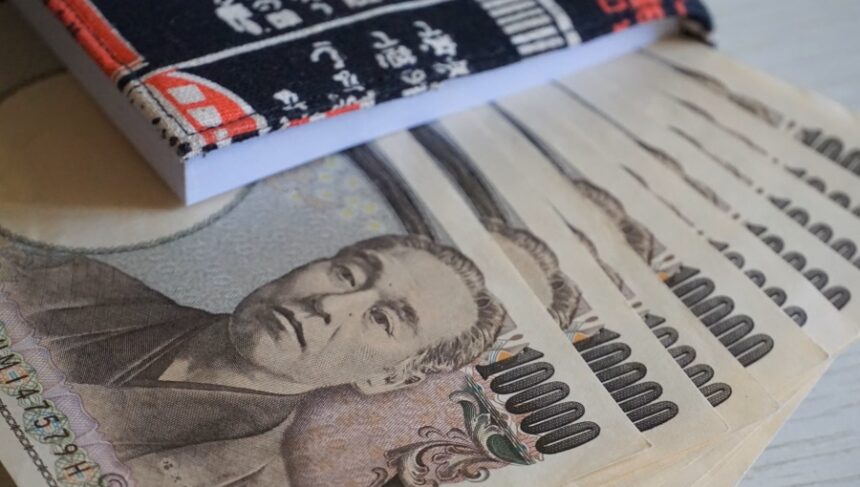
The United States and Japan have executed a highly coordinated intervention to rescue the beleaguered yen, driving the currency to its highest level since early May following direct market purchases and explicit support from US Treasury Secretary Scott Bessent.
The yen closed in New York on Friday at 157.40 against the dollar, culminating one of its strongest recoveries after a years-long slide that had recently pushed it near 1986 lows. The sharp rebound, which eases Tokyo’s concerns over inflation and rising import costs for businesses and consumers, was fuelled by direct yen purchases, official communications with trading banks, and vocal backing from Bessent and Japanese Finance Minister Satsuki Katayama.
Japanese authorities bought yen and sold dollars during Friday’s New York trading, according to a person familiar with the matter. The Nikkei newspaper reported that the Japanese government and the Bank of Japan (BOJ) intervened for a second consecutive day, while the Financial Times reported separately that the Federal Reserve Bank of New York sold euros to buy yen on behalf of the US Treasury.
Two people familiar with the matter told Bloomberg that the New York Fed requested at least two large US banks to check the yen-euro exchange rate during the day.
Following these moves, the yen rose more than 1% against the dollar and the euro on Friday. This followed a jump of over 3% against the dollar on Thursday, when Japan spent an estimated 8.45 trillion yen ($52.8bn) in what was likely Tokyo’s largest single-day intervention on record, according to Bloomberg data comparing BOJ accounts with money market broker forecasts.
Bessent, drawing on his extensive hedge fund experience regarding Japan’s position in global markets, indicated the yen was trading at severely weak levels. He told Fox Business the currency was “significantly undervalued” and that “excessive volatility” damages markets. Speculation regarding his direct involvement intensified after a Reuters photograph from a Friday cabinet meeting showed a notepad in front of him with a to-do list that included: “Buy $5-10bn worth of Japanese yen.”
While direct interventions and verbal support have historically triggered temporary recoveries that fade within days or weeks, the current coordination between Washington and Tokyo appears to be the closest in decades, heightening risks for traders betting against the yen.
“The market underestimated the authorities,” said Michiyoshi Kato, chief adviser for the currency and interest rate client team at Sumitomo Mitsui Trust Bank in Tokyo. “It is likely that selling the yen has become more difficult for speculators. If another intervention occurs, the dollar exchange rate against the yen is likely to fall below 155 yen.”
The US Treasury did not immediately respond to a request for comment late Friday, and Japanese Finance Ministry officials were unavailable for comment in Tokyo on Saturday. However, Atsushi Mimura, Japan’s top currency official, stated Friday that Tokyo was receiving more than just “moral support” from Washington. Concurrently, Katayama praised Bessent, calling him “one of the most knowledgeable experts on the markets.”
Nobuyasu Atago, chief economist at the Rakuten Securities Economic Research Institute and a former BOJ official, noted, “Bessent’s influence is significant, and the US has become more cooperative with Japan’s interventions.”
The yen has faced sustained pressure from high oil prices, Japan’s budget deficit, and the wide interest rate differential between Japan and other major economies. The currency’s weakness has global implications, as fluctuations in the Japanese government bond market have spilled over into US Treasuries this year, a development that frustrated Bessent.
Furthermore, while a weak yen gives Japan a trade advantage that could anger US President Donald Trump, his administration faces a dilemma: leaving Japan to defend its currency alone could force Tokyo to sell off US Treasury holdings to fund interventions, negatively impacting US borrowing costs.
The market interventions coincided with the BOJ’s monetary policy meeting, where the policy board voted 8-1 to hold interest rates steady, having raised them to 1% in June. While this is the highest level since 1995, it remains far below the upper limit of the US benchmark rate at 3.75%. In his post-decision press conference, BOJ Governor Kazuo Ueda offered little additional support for the yen, keeping the door open for future rate hikes without explicitly signalling their likelihood.
In a social media post, Bessent said he looks forward to meeting Ueda at the G20 summit in Asheville, North Carolina, in August. He added that the BOJ has “showed a strong commitment to monetary and financial stability,” and that both nations “continue to enjoy a strong relationship and close coordination.”
However, market analysts remain cautious. Evercore ISI strategists Marco Casiraghi and Gang Liu wrote on Friday: “Without support from interest rate differentials, the impact of interventions in the exchange market is likely to remain relatively short-lived. Although the BOJ considers the exchange rate a source of inflation risk, it has so far refused to take a more active role in supporting the yen.”

