

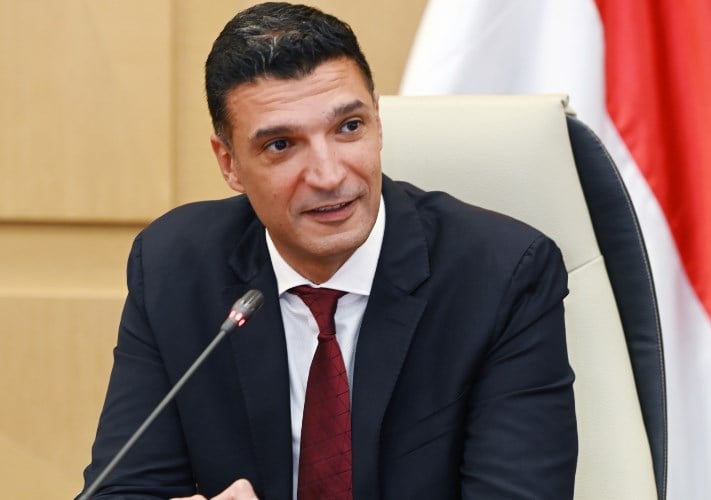
Egypt is preparing to roll out a broad package of industrial reforms aimed at attracting investment, supporting manufacturers and expanding domestic production, Industry Minister Khaled Hashem announced on Tuesday, unveiling new financing mechanisms, regulatory changes, and sector-specific initiatives.
Speaking at a press conference, Hashem said the Ministry of Industry will launch Egypt’s first industrial investment fund in September, with additional funds to follow as part of a broader strategy to provide new financing and investment vehicles for manufacturers seeking to expand production.
The minister said the ministry is currently identifying and evaluating factories eligible for investment through the funds to ensure capital is directed towards projects capable of generating high added value and advancing Egypt’s industrial development objectives. The initiative is being coordinated with the relevant authorities overseeing investment and foreign trade.
According to Hashem, government incentives will focus on five priority industrial groups, including strategic, priority, enabling and complementary industries, with the aim of directing new investments towards sectors offering the greatest economic impact and value creation.
As part of efforts to improve access to industrial land, the ministry will introduce multiple allocation mechanisms tailored to different categories of investors. One of the key measures is a lease-to-own system designed to ease the financial burden on manufacturers who cannot afford both the upfront cost of purchasing land and the capital required to build factories and install production lines.
The new mechanism replaces the previous requirement for investors to pay 25% of the land value in advance, allowing businesses to preserve liquidity during the early stages of project implementation.
Hashem also announced that, from mid-August until 31 December 2026, the government will temporarily suspend the requirement for industrial landowners to wait three years after proving project seriousness before transferring ownership.
He said the measure aims to address sharp increases in industrial land prices after authorities observed significant market distortions linked to the restriction. The minister described the suspension as a final opportunity for non-serious investors to dispose of unused land, while enabling genuine manufacturers to acquire plots at more reasonable prices.
At the same time, the ministry will continue withdrawing industrial land from investors who fail to implement their projects and reallocating it to companies committed to establishing operational factories. Hashem stressed that nationwide campaigns targeting idle industrial land would continue as part of broader efforts to maximise the productive use of state-owned industrial assets.
The ministry is also working to transform distressed factories into investment opportunities by listing them on a digital platform that will provide investors with access to existing industrial assets, including land, buildings, machinery, equipment and operating licences.
The programme is expected to facilitate the revival of idle factories while encouraging banks and financial institutions to finance rehabilitation projects, allowing investors to utilise existing facilities rather than build new ones from scratch.
In parallel, Hashem said Egypt plans to expand its industrial developer model by increasing the number of industrial developers to 30 from around 16 currently operating.
He noted that the model has proven effective in developing and managing industrial zones, accelerating infrastructure delivery, and providing maintenance and operational services to manufacturers. Increasing the number of developers is also expected to enhance competition and help keep industrial land prices affordable.
In the automotive sector, the minister said Egypt is holding talks with both international and domestic companies to expand manufacturing capacity and deepen localisation.
He stressed that the government’s objective extends beyond vehicle assembly to establishing a fully integrated automotive industry supported by a stronger domestic supplier base, higher local content and increased value-added manufacturing.
The ministry is also preparing a new package of incentives for the automotive industry aimed at maximising existing production capacity, attracting technology-intensive investments and strengthening local component manufacturing.
Separately, Hashem announced that the ministry has begun a nationwide survey of distressed factories as the first step towards launching a comprehensive programme to restore them to operation. The initiative is being implemented in coordination with several ministries and government agencies to identify the specific challenges facing each facility and develop tailored solutions.
In the metals sector, the minister revealed that Egypt is in the final stages of issuing new licences for iron production with a combined annual capacity of approximately 2.8 million tonnes.
The licensing process will be accompanied by measures to expand domestic billet production, reducing reliance on imports and strengthening local value chains.
Hashem said the expansion complements the government’s recent decision to impose temporary duties on imported steel products, creating a more supportive environment for domestic producers and enhancing the competitiveness of Egypt’s iron and steel industry. He added that the government also aims to attract new investments into the sector and position Egypt as a regional manufacturing hub for iron and steel production.


