

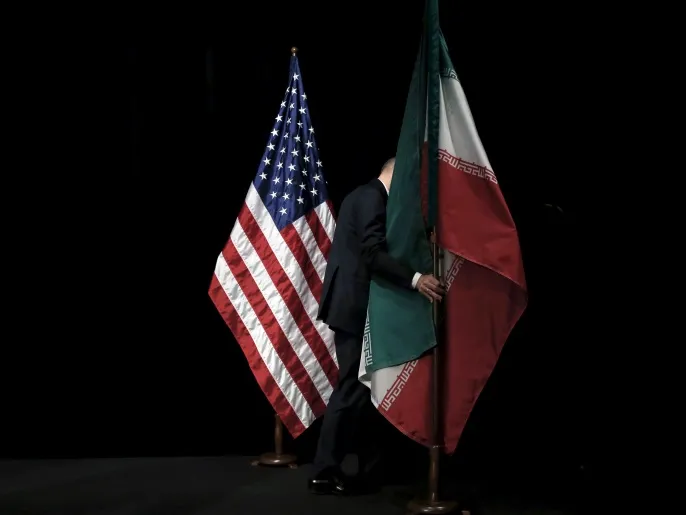
Iran said on Sunday it had suspended attacks against US targets in the region after Washington halted new strikes on Iranian territory, ushering in a period of cautious calm and giving Omani-led negotiations over the reopening of the Strait of Hormuz an opportunity to advance.
Iranian military spokesperson Amir Mohammad Akraminia said Tehran had suspended its operations after the United States refrained from attacking Iran for two consecutive nights. He said Iran’s strategy had been based on reciprocity and that the suspension was a direct response to Washington’s pause in military action.
Akraminia cautioned that it was still too early to describe the development as a formal ceasefire, saying the United States’ longer-term strategy remained unclear.
Axios, citing two sources, reported that US President Donald Trump ordered the military on Friday not to carry out further strikes on Iran, bringing nearly two weeks of daily attacks to a halt. The order came hours after an Omani delegation arrived in Tehran for talks on a new arrangement to reopen the Strait of Hormuz.
Two regional sources familiar with the negotiations said the talks had made progress and that Oman and Iran could reach an agreement, after which Trump would have to decide whether to approve the proposed terms.
US Ambassador to the United Nations Mike Waltz said Trump was giving diplomacy only a limited opportunity, describing the current pause as a window for negotiations rather than a permanent end to military action.
US media reports said the military was continuing to prepare contingency plans for a possible return to large-scale combat operations. CNN cited a US official as saying Vice President JD Vance and the Chairman of the Joint Chiefs of Staff had raised concerns with Trump during a White House meeting on Friday about US ammunition stockpiles.
Qatar’s Prime Minister and Foreign Minister Sheikh Mohammed bin Abdulrahman Al Thani and Saudi Foreign Minister Prince Faisal bin Farhan discussed regional de-escalation efforts in a telephone call. The Qatari official stressed the need for all parties to return to dialogue and implement the US-Iran memorandum of understanding, including guarantees for freedom of navigation through the Strait of Hormuz.
CBS News also reported that the Omani-Iranian negotiations were making progress. Maritime risks nevertheless remained high, with Iran’s Tasnim news agency reporting that an oil tanker exploded after striking a naval mine when it deviated from a route designated by Iranian authorities.
Despite the pause in fighting, Tehran renewed its warnings to countries that might support US military operations. A spokesperson for the Islamic Revolutionary Guard Corps said Britain, Gulf states, or any other country allowing its bases to be used against Iran would become legitimate targets. Iran also claimed that US bombers had recently operated from British airfields.
Kuwait rejected a Wall Street Journal report alleging that Kuwait and Bahrain had secretly carried out air strikes inside Iran with Emirati intelligence support and air cover. Kuwait’s ambassador to Washington, Al-Zain Al-Sabah, described the claims as entirely false.
Separately, Kuwait condemned a Houthi attack on the Saudi-linked vessel NCC Masa in the Red Sea, calling it a threat to international shipping and global trade.
Israeli Prime Minister Benjamin Netanyahu said he would travel to Washington to meet Trump and discuss several issues, including Iran.
In Lebanon, the army accused Israeli forces of continuing to demolish homes, damage agricultural land and destroy infrastructure in the country’s south, saying the operations were obstructing army deployment and preventing residents from returning.
Iranian President Masoud Pezeshkian said US attacks on civilian infrastructure amounted to war crimes and should be pursued through international legal institutions.

