

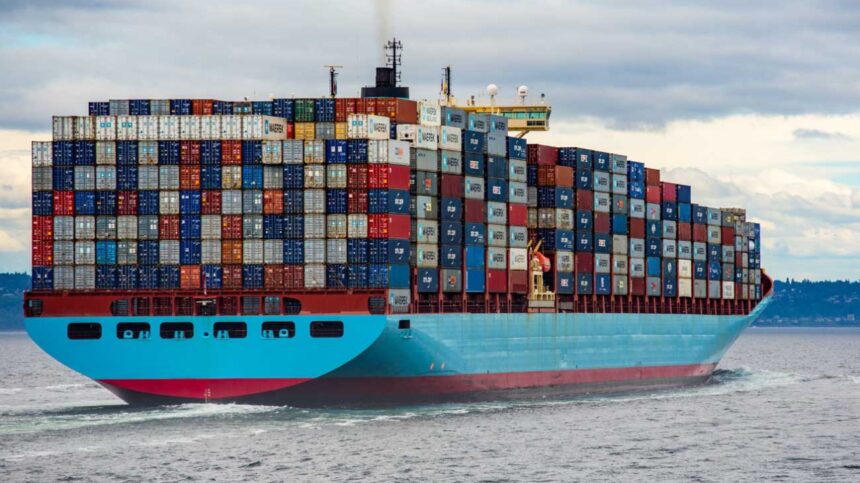
In recent months, the seizure and detention of vessels by Western countries—including the United States, the Netherlands, France, and Belgium—have drawn significant media attention. These operations reflect a broader effort to counter a phenomenon commonly known as the dark fleet.
This phenomenon relies on two main pillars. The first is the use of aging vessels, which frequently change flags, insurers, and ownership structures, creating serious risks for maritime safety and navigation. The second is the deliberate use of opaque corporate arrangements—tax havens, shell companies, fake mailing addresses, and falsified documents—designed to sell oil while circumventing international sanctions and helping finance Russia’s war effort.
One of the most famous cases of this phenomenon was Gatik Ship Management. In its 3 May 2023 investigation, “The unknown Indian company shipping millions of barrels of Russian oil,” the Financial Times described how a little-known Indian company emerged after Russia invaded Ukraine as a major operator of tankers carrying Russian oil. Citing Kpler and VesselsValue, the FT reported that Gatik had shipped at least 83 million barrels of Russian crude and oil products and expanded from two chemical tankers in 2021 to 58 vessels by April 2023. Reuters later reported that Lloyd’s Register was dropping class for 21 Gatik vessels and that the American Club no longer provided cover. Reuters also reported that about three dozen Gatik vessels obtained Indian Register of Shipping certification, many of which were then managed by Indian firms, including Gaurik, Geras, Caishan, Galena, Zidan, and Plutos.
Today, Charai Sea Shipping Pvt. Ltd. appears to be a perfect successor. According to the international global databases GISIS and EQUASIS, Charai Sea Shipping Pvt. Ltd. is an active Indian-registered shipping company created on the 24th of September, 2024. and listed in Mumbai.
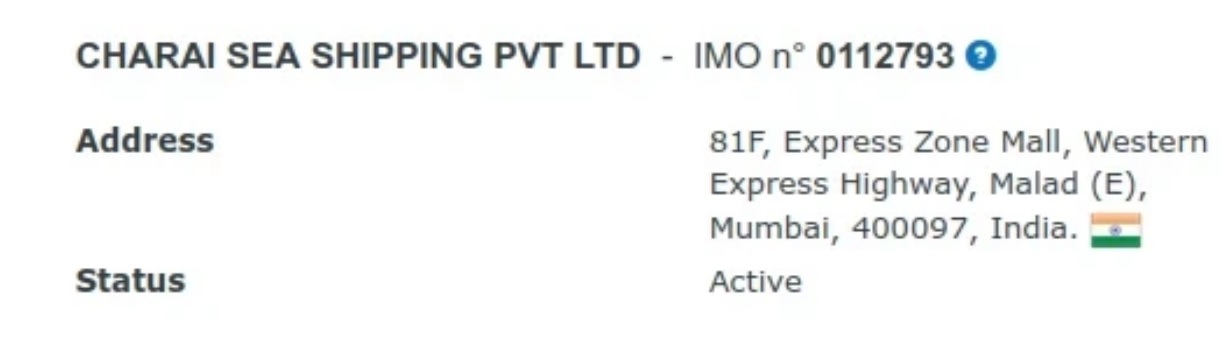
Charai operated 14 tankers (all of them sanctioned for Russian crude oil exportation). 9 of the 14 are linked to Gatik Shipping Management.
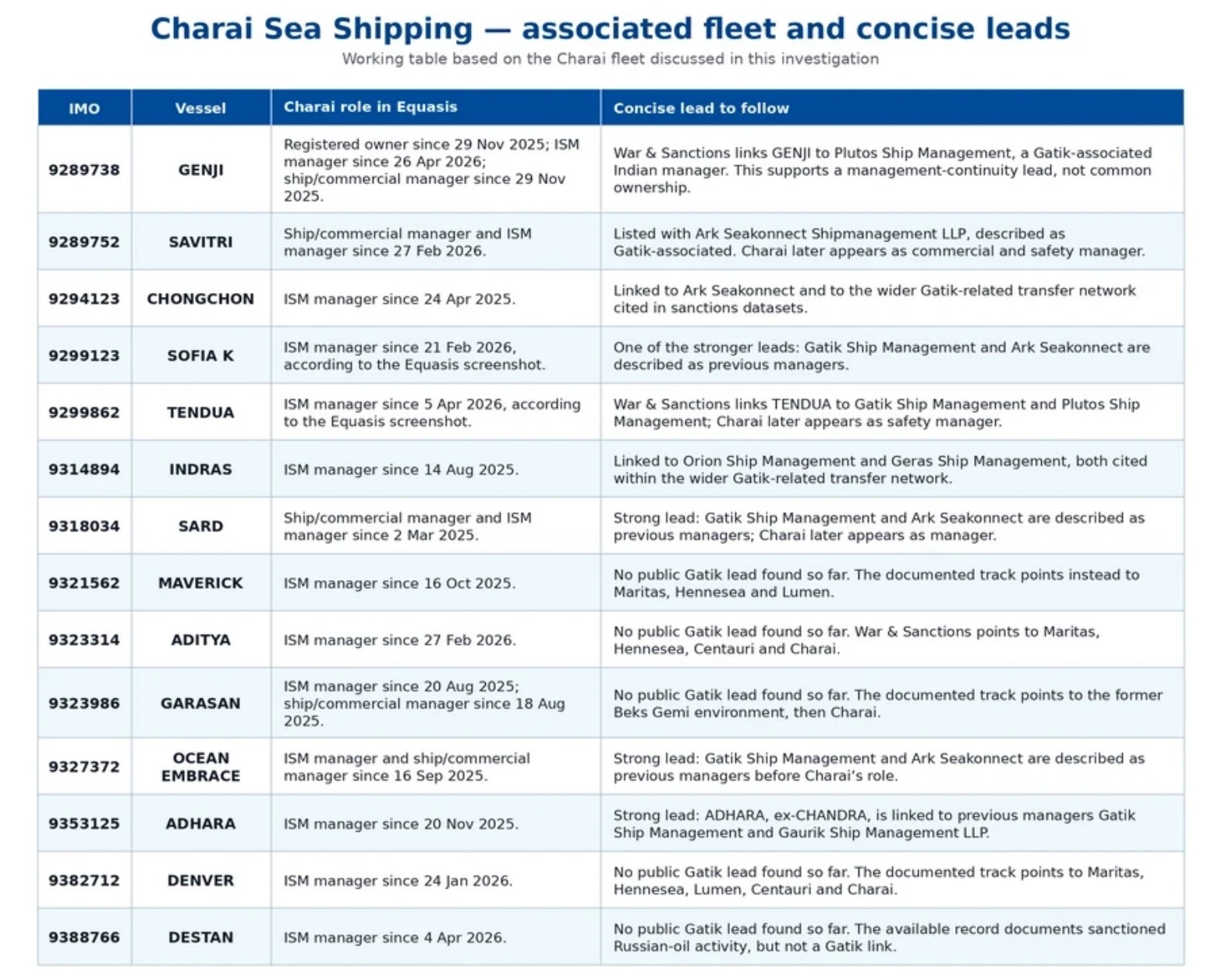
Charai Sea Shipping has not been sanctioned yet; it is listed as an “entity of interest” on the website OpenSanctions.
Two companies, one business model, and a similar fleet—the second, Charai, apparently inherited from the first. Gatik, once accused of helping circumvent sanctions, was ultimately brought down by media scrutiny, the loss of classification, and the withdrawal of insurance cover for its vessels.
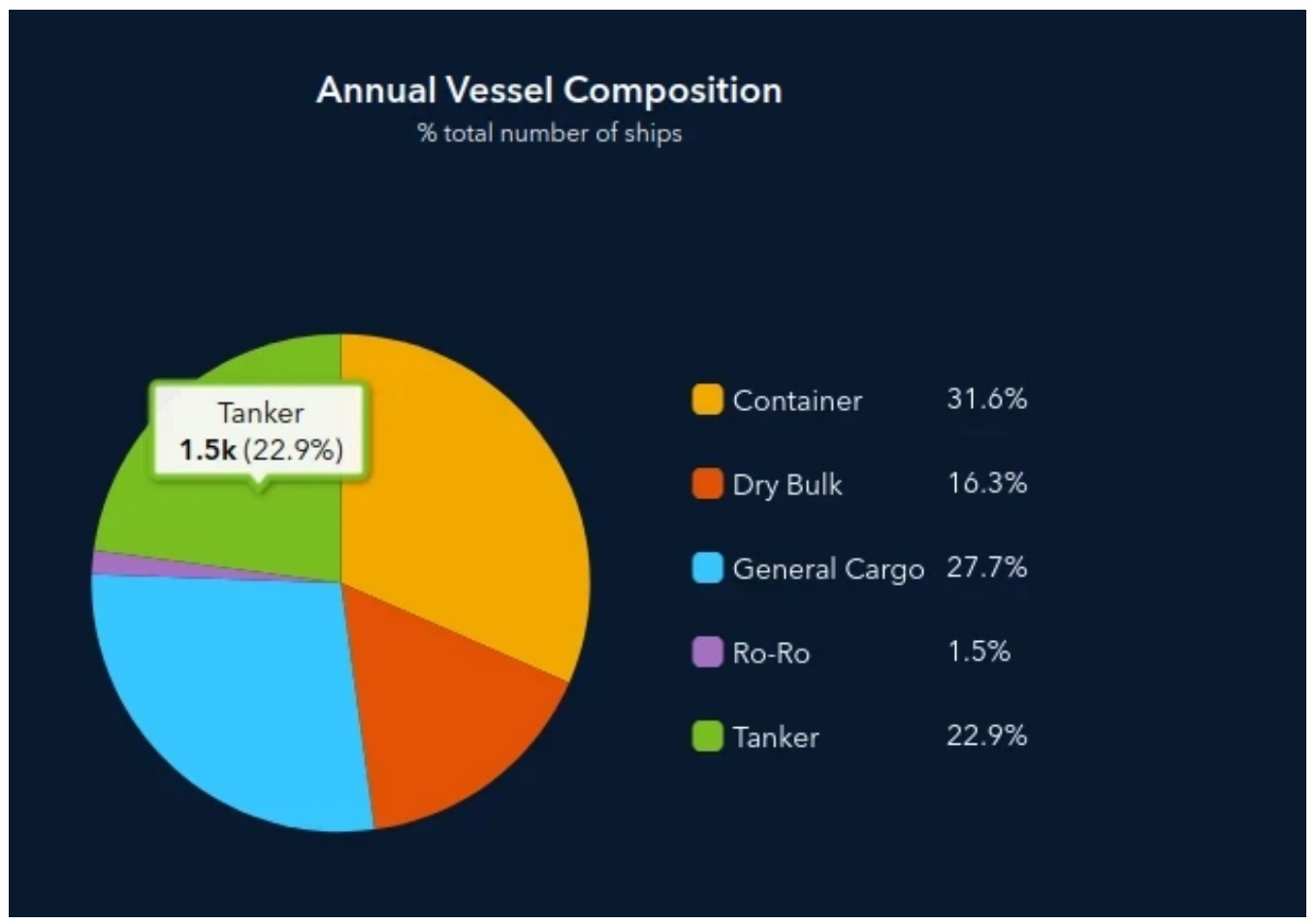
According to the website portwatch.imf.org, 1500 tankers call at Mumbai every year. Dark fleet aging vessels represent a major risk for the safety of navigation and maritime life. The opaque economic structure shifts the burden of an accident onto the coastal state, rather than the vessel’s insurer or its flag state. Could Charai be forced to cease operations, as Gatik was?