

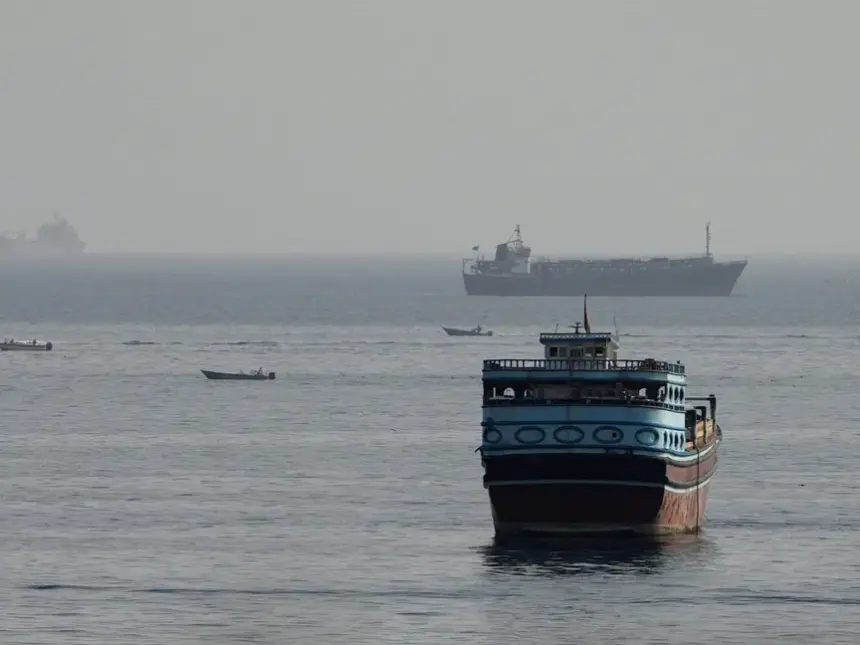
US forces fired missiles to disable a commercial vessel attempting to breach the naval blockade on Iran on Tuesday, as Tehran declared the Strait of Hormuz will remain closed until Washington meets its conditions, including ending regional conflicts.
The Blockade Strike
US Central Command (CENTCOM) reported that an MH60 naval helicopter fired two Hellfire missiles at the engine room of the Panama-flagged M/V Vela Nova in the Gulf of Oman. The strike occurred after the ship’s civilian crew ignored repeated warnings from US forces while attempting to cross toward an Iranian port.
CENTCOM stated the ship’s steering was disabled and it is “no longer heading to Iran, in violation of the US blockade which remains fully in effect.”
The military command noted that as of August 11, it has redirected 55 commercial vessels attempting to breach the blockade, disabled three that refused to comply with its orders, and boarded two others.
Tehran’s Demands
Also on Tuesday, Mohsen Rezaee, Secretary General of Iran’s Supreme National Security Council, told official Iranian news agencies that the Strait of Hormuz will not open unless the United States changes its behaviour and accepts Tehran’s conditions.
“The US must end the war across the region, including in Lebanon and Gaza, and release Iran’s frozen funds,” Rezaee stated, noting that additional conditions had been relayed to Washington through mediators.
He added that any potential agreement with Oman regarding transit rights in the Strait of Hormuz “will be separate from the issue of closing the strait.”
Diplomatic and Market Reactions
The military and diplomatic developments caused oil prices to fluctuate, with Brent crude trading near $88 a barrel after earlier touching $90.
Prices surrendered their gains after Pakistan indicated that the US and Iran are nearing an understanding that could help calm tensions shaking energy markets. Pakistani Defence Minister Khawaja Asif told Bloomberg on Tuesday that the two nations are close to “some kind of understanding,” noting that indicators over the past two to three days suggest potential progress toward a peace agreement.
Meanwhile, international efforts to de-escalate the situation continued. Egyptian Foreign Minister Badr Abdelatty discussed regional developments related to Iran during a telephone call with his British counterpart Ed Miliband on Tuesday.
The Egyptian Foreign Ministry stated the ministers agreed to push for diplomatic solutions, urging all parties to continue negotiations and avoid military escalation. They highlighted the severe repercussions such escalation would have on regional security and stability, as well as on energy security, freedom of navigation, supply chains, and international trade.
During the call, Abdelatty reaffirmed Egypt’s steadfast position on the importance of safeguarding the security and freedom of navigation in global waterways.
