

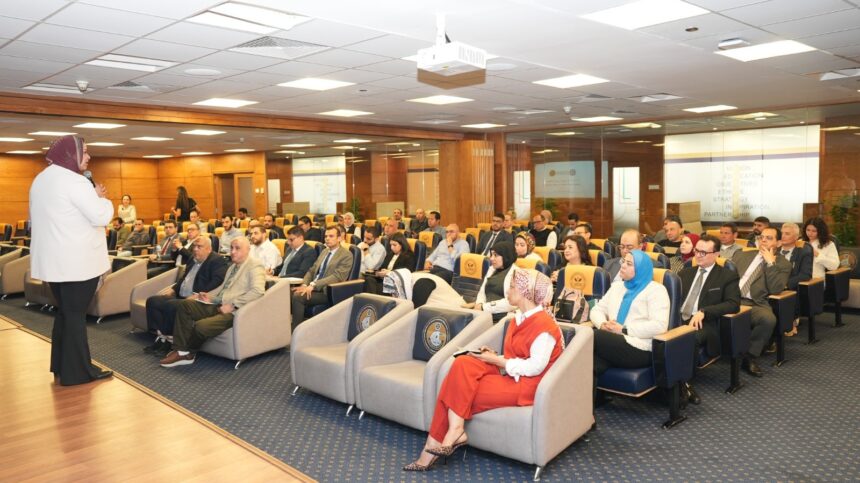
The Regional Centre for Sustainable Finance (RCSF), affiliated with the Financial Regulatory Authority (FRA), held a workshop to review mechanisms for implementing Board Resolution No. 36 of 2026, which obliges non-banking financial companies to disclose their carbon emissions and offset them through the purchase of emission reduction certificates in the regulated voluntary carbon market.
Islam Azzam, FRA Chairperson, said the initiative reflects the Authority’s commitment to developing sustainable non-banking financial markets and supporting Egypt’s transition toward a lower-carbon economy, a central pillar of Egypt Vision 2030. He emphasized the FRA’s role in raising awareness among companies and investors about the voluntary carbon market and noted that the resolution specifically targets firms with issued capital or net equity exceeding EGP 100m.
Opening the workshop, Tarek Seif, Executive Director of the Financial Services Institute, described the resolution as a qualitative shift in sector supervision, moving from simple disclosure to actual measurement and mandatory compensation. He stressed that these regulatory steps enhance competitiveness and make Egyptian firms more attractive to international sustainability-linked investments.
During the technical session, Norhan Ashraf, Sustainable Development Specialist at the Centre, explained that obligated companies must prepare annual reports detailing their carbon footprint, covering Scope 1 and Scope 2 emissions. These reports must be verified by an FRA-registered verification body, with the first submission due by 30 June 2026 and subsequent reports aligned with each company’s financial year.
The resolution also requires companies to offset 20% of their total annual emissions within 90 days of submitting their reports, through the purchase of carbon credits from the regulated voluntary carbon market.
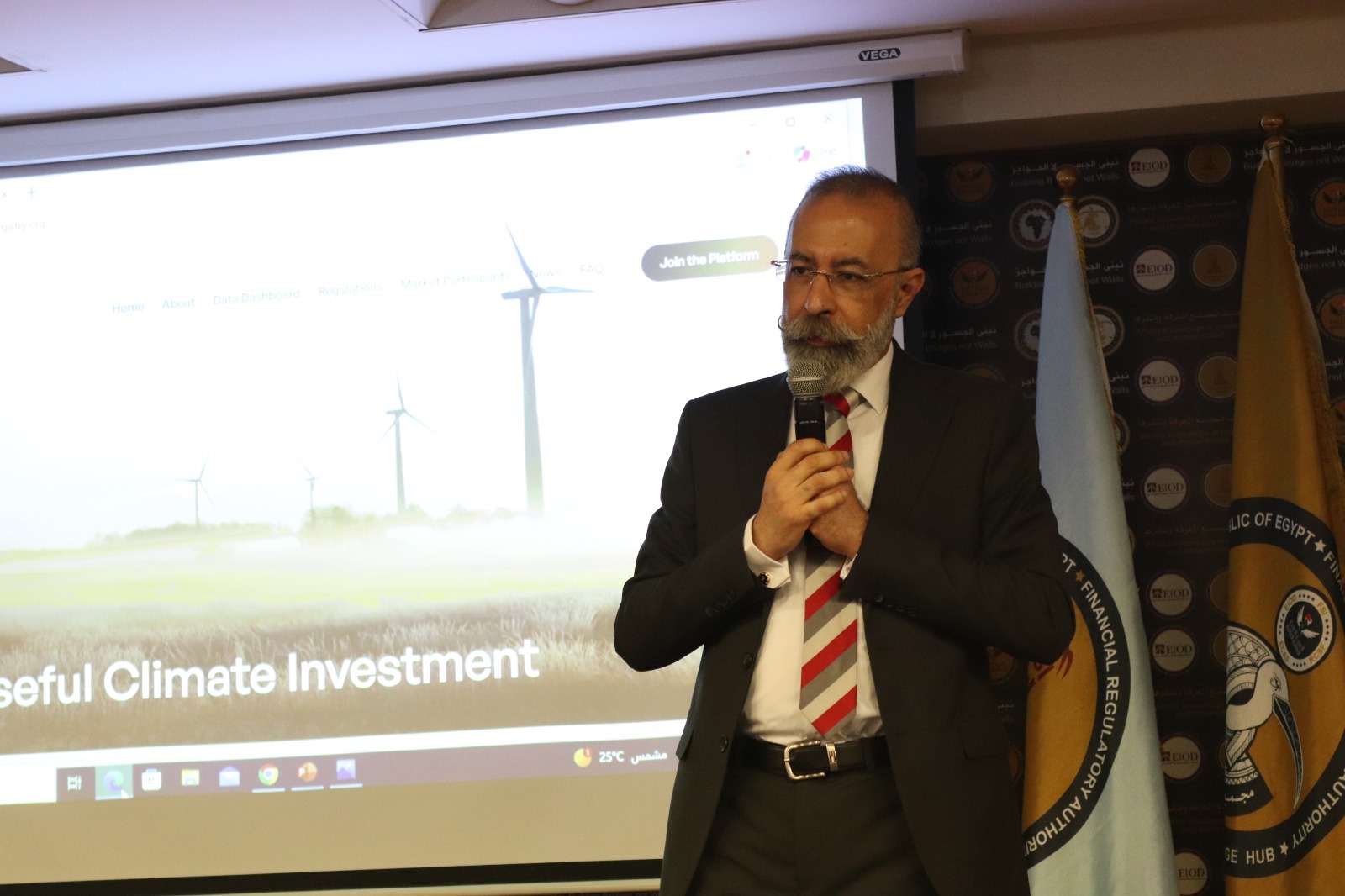
Omar El-Nemr, Carbon Markets Expert at the Centre, presented the FRA’s Climate Project Registry, showcasing registered emission reduction projects and their technical features.
The workshop concluded with an open discussion, where specialists addressed companies’ questions on measurement methodologies and the practical steps for purchasing credits in the voluntary carbon market.


