

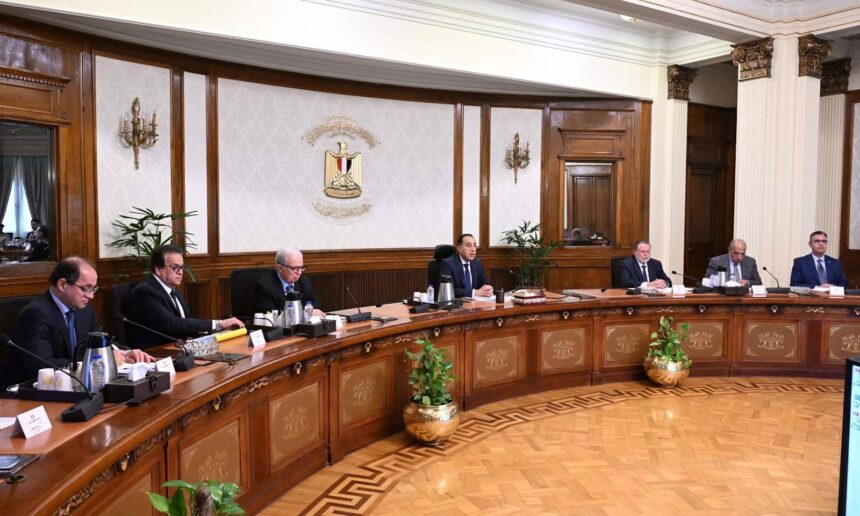
Egypt has lifted an 11 p.m. mandatory closing time for public shops, commercial centres, and restaurants, and will launch a solar energy incentive initiative for homes and factories, the government announced following a crisis management meeting addressing the economic fallout of “US-Israeli-Iranian” military operations.
Cabinet spokesman Mohamed El-Homosany confirmed that the Central Crisis Management Committee approved a return to standard operating hours for commercial establishments. Concurrently, Prime Minister Mostafa Madbouly directed the swift announcement of the solar transition initiative, stating the government has placed the transition to renewable energy firmly on its agenda.
Chaired by Madbouly, the committee reviewed the local, regional, and global economic repercussions of the current unprecedented crisis. The prime minister outlined the continuous preparation of various scenarios based on the expected duration and scope of the conflict.
He highlighted ongoing coordination across state agencies to secure long-term, high-volume strategic reserves of commodities and petroleum products, in accordance with directives from President Abdel Fattah al-Sisi to ensure consumption and production needs are met.
Madbouly urged relevant authorities to maintain strict market oversight to prevent manipulation and ensure the availability of goods at appropriate quantities and prices for citizens.
The prime minister also reviewed steps to rationalise government spending and the consumption of electricity and petroleum products. He emphasised the need to promote a culture of conservation to maintain stable operations at vital facilities amidst the regional and global disruptions.
Presenting the crisis’s impact on global and local inflation and growth, Minister of Planning and Economic Development Ahmed Rostom cited projections from the International Monetary Fund (IMF) indicating that global economic growth is expected to decline to 3.1% in 2026, compared to 3.4% in 2025.
The IMF also anticipates a sharp growth deceleration in the Middle East and North Africa region to 1.1% in 2026, Rostom said, driven by surging global commodity prices—particularly for energy and food—alongside investor risk aversion in financial markets.
The planning minister added that global trade growth is forecast to decrease from 5.1% in 2025 to 2.8% in 2026, whilst also outlining expected trajectories for global inflation rates.
The meeting was attended by Deputy Prime Minister for Economic Affairs Hussein Issa, Central Bank Governor Hassan Abdalla, Minister of Health and Population Khaled Abdel Ghaffar, Minister of Electricity and Renewable Energy Mahmoud Esmat, Minister of Finance Ahmed Kouchouk, Minister of Supply and Internal Trade Sherif Farouk, Minister of Foreign Affairs, Emigration and Egyptian Expatriates Badr Abdelatty, Minister of Agriculture and Land Reclamation Alaa El-Din Farouk, Minister of Petroleum and Mineral Resources Karim Badawi, Minister of State for Information Diaa Rashwan, Minister of Industry Khaled Hashem, and Bahaa El-Ghannam, Executive Director of the Future of Egypt Agency for Sustainable Development, alongside other relevant officials.

