Egypt is stepping up efforts to streamline industrial licensing and improve the investment climate, as the Industrial Development Authority (IDA) explores a new package of reforms aimed at reducing costs and accelerating procedures for manufacturers.
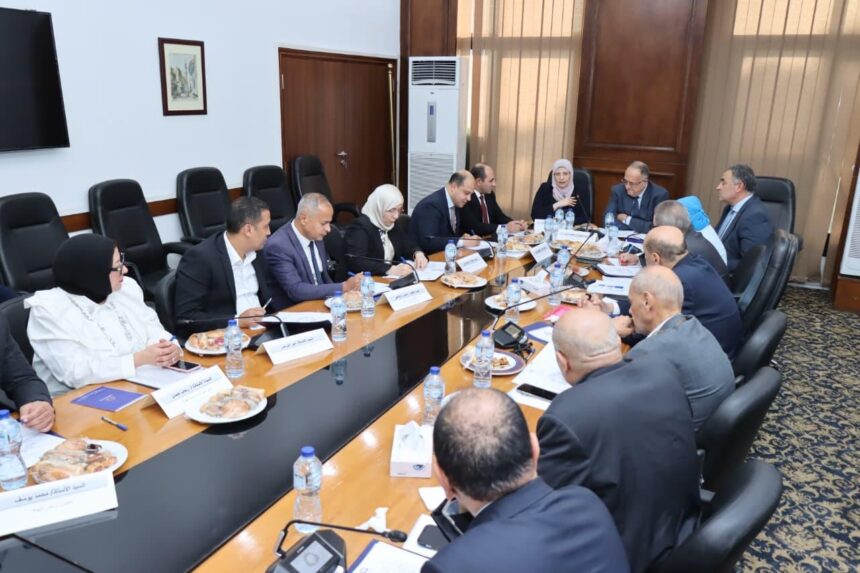
Nahed Youssef, Head of the Industrial Development Authority, chaired the first meeting of the Industrial Licensing Committee at the Federation of Egyptian Industries, bringing together heads of industrial chambers and senior officials to tackle key challenges facing investors.
The committee, recently formed under the leadership of engineer Mahmoud Serg, is expected to serve as a permanent platform for dialogue between the government and the private sector, helping to identify bottlenecks and fast-track practical solutions.
Youssef stressed that simplifying procedures and maintaining direct engagement with investors are central to the authority’s strategy, in line with broader government efforts to enhance Egypt’s industrial competitiveness and improve service delivery.
A central issue raised during the meeting was the cost and complexity of civil protection approvals, which many manufacturers consider a major hurdle.
Youssef acknowledged the concerns, noting that the system has already undergone significant reforms in recent years to strike a balance between facilitating licensing and preserving safety standards. She revealed that ongoing coordination with the Civil Protection Department at the Ministry of Interior aims to ease technical requirements under the updated Egyptian code issued in 2025.
Proposals under discussion include unifying and reducing fees, as well as extending payment cycles from annual to every three to five years—moves that could significantly ease financial pressures on industrial operators.
The meeting also reviewed a recent ministerial decision regulating industrial activities outside designated zones. According to Youssef, the move is designed to broaden opportunities for investors by allowing around 65 types of industrial activities within urban areas, provided they operate in standalone buildings.
In some cases, activities may also be permitted outside urban boundaries, subject to approvals from relevant authorities and case-by-case assessments.
On industrial land allocation, Youssef highlighted stricter regulations on resale and leasing, which have helped limit speculative practices and improve availability.
She noted that land plots are being reintroduced in high-demand locations such as Badr City, with allocations conducted through the Egypt Industrial Digital Platform under transparent criteria.
The discussions also touched on revising building ratios for certain industries in line with international benchmarks, with the aim of maximising land use efficiency. Youssef welcomed a study submitted by the federation, confirming it will be assessed for possible inclusion in the authority’s future strategy.
For his part, Mahmoud Serg said the committee is working to establish a structured framework for cooperation between the federation and the IDA, ensuring faster resolution of investor challenges and sustained communication.
He also praised the authority’s recent responsiveness to manufacturers’ concerns, describing it as a positive step towards a more business-friendly environment.
Meanwhile, Sayed Abaza, head of the Marble and Granite Division at the Building Materials Chamber, commended the authority’s efforts in facilitating licensing procedures in the Shaq El-Thoaban industrial area.
He noted that the introduction of an on-site licensing office has enabled the issuance of around 115 licences and industrial registrations within a short period, alongside tangible progress in addressing civil protection requirements and developing a dedicated regulatory code for the sector.
The latest discussions signal a broader shift towards a more agile and investor-focused licensing framework, as Egypt seeks to position itself as a competitive industrial hub in the region.
With reforms targeting cost reduction, procedural efficiency, and regulatory clarity, the government is aiming to remove longstanding obstacles and unlock new growth opportunities for both local and foreign investors.