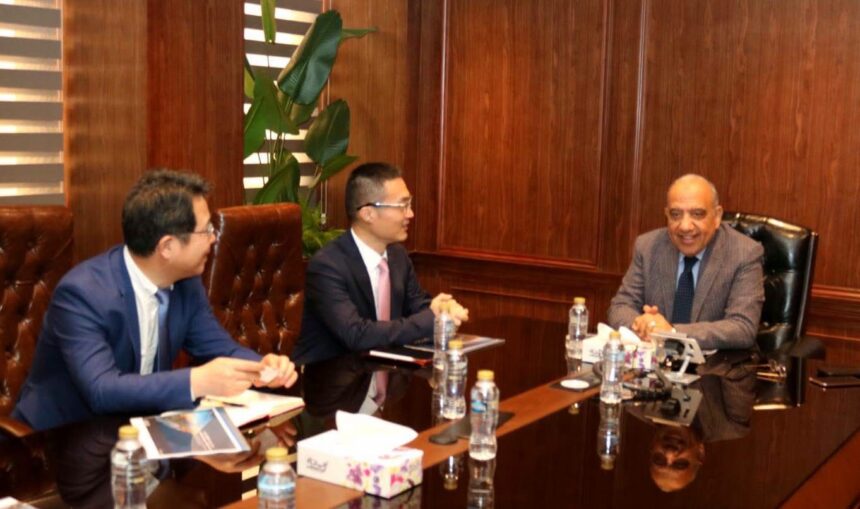
Egypt’s Minister of Electricity and Renewable Energy, Mahmoud Esmat, has held talks with executives from Huawei to expand co-operation in renewable energy, energy storage technologies, and smart grid solutions, as part of the country’s broader strategy to modernise its electricity sector.
The meeting, attended by Huawei Egypt CEO Benjamin Hou and Tony Bo, President of Digital Power, focused on advancing digital transformation and enhancing the resilience and operational efficiency of Egypt’s national electricity grid, particularly during periods of peak summer demand.
Esmat emphasised that Egypt is pressing ahead with efforts to upgrade and modernise the national grid to improve performance, reduce technical losses, and ensure the long-term sustainability of electricity supply. Discussions also explored practical approaches to strengthening grid flexibility in the face of rising demand and the growing integration of renewable energy sources.
A key focus was the transition from conventional grid systems to smart grids, which are expected to significantly enhance power quality and service delivery. Huawei presented its advanced technologies, including Intelligent Distribution Solutions (IDS), designed to mitigate the impact of distributed solar generation and support large-scale energy storage integration while maintaining grid stability.
The minister described Huawei as a “trusted partner”, highlighting ongoing collaboration in smart grids, energy efficiency, and digital infrastructure. He noted that Egypt’s national energy strategy targets increasing the share of renewable and clean energy to 45% of the overall energy mix by 2028, an objective that will require expanded deployment of grid stabilisation systems, particularly energy storage solutions.
Esmat also pointed to growing investment opportunities in renewable energy and both grid-connected and off-grid storage systems, underscoring the government’s commitment to leveraging advanced technologies to enhance service quality and operational efficiency.
He added that the shift towards smart grids represents a transformative step for Egypt’s power transmission and distribution systems, enabling more efficient use of renewable resources while supporting the country’s broader digital transformation agenda.