In a brief post on Bluesky, American economist and writer Robert Reich drew attention to a phenomenon that is increasingly reshaping the American public sphere: the growing concentration of wealth and ownership at strategic points within the media and digital infrastructure. Reich noted that the world’s richest man owns X, that two of the wealthiest individuals control Google, that the third-richest owns The Washington Post, while the fifth-richest owns Facebook, Instagram, and WhatsApp, at a time when Larry Ellison’s family, through Paramount Skydance, is seeking to acquire Warner Bros. Discovery. He then concluded his short list with a question that may appear simple but carries a much broader political significance: “Do you see the problem?”
At first glance, the issue may seem to be merely a debate over media ownership. In reality, however, it concerns something far more important: who owns the infrastructure through which reality reaches the public? In the digital age, media power is no longer confined to newspapers or television stations. It is distributed across social platforms, search engines, broadcasting networks, news organizations, entertainment and production companies, and algorithms that, to varying degrees, determine what gains visibility and circulation.
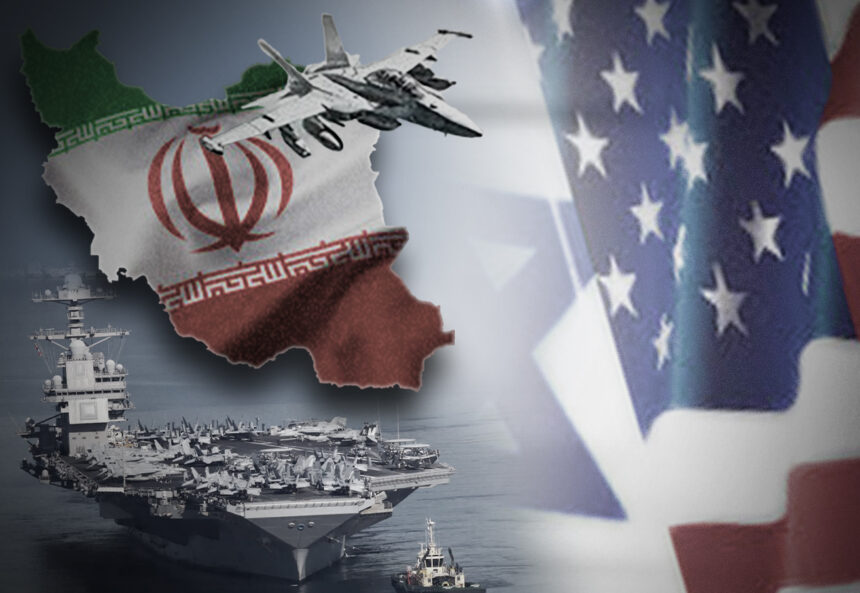
The question becomes even more significant when placed within the context of the American war on Iran. Modern warfare is not waged solely through aircraft, missiles, drones, and naval vessels. It is also fought at the level of images, information, and attention. While command centers work to identify military targets, platforms and screens simultaneously work to determine what audiences see, what reaches them first, and what remains at the margins.
Reich is not a casual observer of this landscape. He is an economist, professor, and former American politician who served as Secretary of Labour in the Clinton administration between 1993 and 1997, and he has devoted a substantial part of his intellectual career to studying the concentration of wealth, inequality, and the relationship between economic power and political influence. His post should therefore not be read simply as a list of wealthy individuals and corporations, but rather as part of a broader argument: when wealth becomes highly concentrated, it can translate into the capacity to influence the very institutions that shape public opinion.
The Bluesky post was not detached from this broader argument. In a longer article published by Reich on Substack in March 2026, he directly addressed the concentration of media ownership and its relationship to coverage of the war on Iran, citing CBS coverage and an interview conducted by Scott Pelley with Reza Pahlavi, the son of Iran’s former Shah. For Reich, the issue was not simply an assessment of a particular television interview, but a model of what the concentration of a large number of media and entertainment institutions under a single ownership structure might mean, particularly at a moment of war when the selection of guests, angles, and images becomes part of the struggle over how an event is interpreted. Yet Reich’s criticism was more specific than merely objecting to Pahlavi’s appearance. He argued that 60 Minutes gave him an extensive opening segment and presented him in a highly compelling political light, despite the fact that he has lived in exile since the fall of his father’s regime in 1979 and has not set foot in Iran for 47 years. According to Reich, the media problem lies in the gap between the amount of space afforded to Pahlavi and his actual position within Iranian society: the interview did not treat him merely as one of several opposition figures living abroad, but placed him in a position that came close to presenting him as a natural spokesman for Iran’s future, at a moment when the United States was waging war and debating the future of Iran’s political system. More importantly, the interview focused on his vision for political transition and his potential leadership, whereas, according to the logic of Reich’s criticism, it should have subjected him to more difficult questions concerning the extent to which he actually represents Iranians inside the country, the level of support he genuinely commands, the diversity of the Iranian opposition, and, moreover, the political and historical legacy of the Pahlavi family. Simply presenting him as “a leader of the opposition” does not resolve the most important question: Opposition to whom, and with what degree of representation inside Iran itself? This point becomes even more sensitive because a subsequent Reuters report on his political ambitions noted that his claims of a broad grassroots network inside Iran could not be independently verified, and that his attempt to present himself as a unifying opposition figure encountered objections and divisions among different Iranian constituencies.
This is where the significance of the Paramount and Warner Bros. Discovery deal emerges. The issue is not merely about film studios. If completed, the deal would bring together a vast range of media and entertainment assets, including CBS, CNN, HBO, Warner Bros., and others. Thus, talk of the “acquisition of a company” conceals a larger question concerning the extent to which the capacity to produce and distribute news, content, and culture becomes concentrated.

Yet caution is necessary here against a common inferential leap: the ownership of a media institution by a billionaire does not automatically mean that the institution implements his personal agenda, just as concentrated ownership does not, in itself, prove the existence of direct editorial control. Professional journalism cannot be reduced to the will of its owner, and the fact remains that institutions owned by extraordinarily wealthy individuals can sometimes publish reporting that is highly embarrassing to political or economic power. The more important issue is not proving the existence of a “secret room” controlling the news, but understanding the structural power that emerges when media assets, technological platforms, and vast financial resources become concentrated in the hands of a limited number of actors.
The war on Iran provides a live test of this structural power. Since the outbreak of the war in late February, audiences have no longer received military news solely through traditional news broadcasts. Statements and announcements, mobile-phone footage, satellite imagery, military videos, and presidential posts have all circulated simultaneously, often before undergoing the conventional journalistic verification process.
This changes the traditional media question. The question is no longer simply, “Is this information accurate?” It is also: “How did it reach me? Why did I see it specifically? And why did this image appear before others?” In a digital environment saturated with information, the central problem is no longer the scarcity of news, but the scarcity of attention. Those who possess the ability to attract or redistribute attention possess a new form of power.
This reality is particularly evident in US President Donald Trump’s use of Truth Social. His posts concerning the war have become a direct channel of political communication between the president and his audience, often bypassing the traditional journalistic intermediary. A political or military announcement can reach millions of people in its original wording, after which the media republish and analyze it, meaning that the message moves from the platform into the newsroom rather than the other way around.
This shift is not necessarily negative in itself. Direct communication can reduce the ability of media institutions to withhold information or reframe it. But it creates a corresponding problem: when the politician himself becomes the producer, publisher, and pace-setter of content, the public’s ability to distinguish between political messaging, independent information, and journalistic analysis becomes increasingly important.
On the other hand, the war has provided an even more complex example of the problem of digital fabrication. AI-generated clips claiming to document real military events have circulated across platforms. Some of these videos accumulated millions of views before their artificial nature was discovered. The problem, therefore, is not merely the existence of a “fake video,” but the fact that the speed at which an image spreads can outpace the speed at which it can be verified.
In wartime, this gap has consequences that extend beyond media misinformation. A fabricated image of a military strike, the destruction of an oil facility, or the downing of an aircraft can enter political debate, shape public perceptions, and potentially have indirect effects on markets and economic expectations. In this way, visual fabrication becomes part of the environment of psychological and economic warfare, even when its creator is not a governmental or military actor.
Even more revealing is the way in which the war itself has at times begun to be presented in language drawn from the culture of games and films. When official clips combine footage of military strikes with scenes from films and video games, they are not merely providing information about the war; they are offering a particular way of feeling about it. The missile becomes a visual spectacle, the explosion becomes an effect, and the military operation is transformed into content that can be shared like any other form of entertainment.
This point deserves particular attention because the danger lies not only in “propaganda.” Propaganda has existed since the earliest wars. What is new is its speed of transmission and its ability to merge seamlessly into the attention economy itself. Content that provokes shock, anger, or excitement has a greater chance of spreading, and algorithms do not need to adopt a particular political position in order to play a role in this process; it is enough for them to reward content that is most capable of keeping users connected to their screens.
At the same time, coverage by major news organizations reveals that the relationship between ownership and editorial independence is more complicated than Reich’s criticism might suggest. The Washington Post, owned by Jeff Bezos, published a report in late August based on a classified document concerning US military leaders’ assessment of the cost of continuing the war on Iran and its impact on the military’s ability to address other threats. The report provoked intense anger within the US administration. This episode is important because it challenges the idea that billionaire ownership necessarily means that an institution is subordinate to its owner’s political views.
But it does not eliminate the question raised by Reich; rather, it makes it more complicated. Editorial independence can remain intact within an institution characterized by highly concentrated ownership, but reliance on the independence of individuals and institutions does not fully resolve the structural problem. Democracy should not depend solely on whether the current owner happens to tolerate editorial independence; it requires a pluralistic structure that reduces, at the outset, the degree of power that any one individual or family can possess.
And here we arrive at the heart of the issue: the problem is not necessarily what a billionaire does, but how much they are capable of doing.
If one individual owns a massive social platform, another owns a national news organization, and another group controls a vast network of social platforms, while a single family can bring television networks, studios, and streaming platforms under its umbrella, the system becomes increasingly dependent on the decisions of a limited number of centres of power.
This does not mean that these centres will necessarily use their power badly. It does mean, however, that the cost of error becomes higher, the potential sphere of influence becomes larger, and democracy becomes more sensitive to the personality, priorities, and political and economic relationships of the owner.
Here, a paradox emerges that deserves particular attention in Reich’s own case. He criticizes the concentration of media power through digital platforms such as Substack and Bluesky, that is, through a media environment different from traditional journalism. But this does not place these platforms outside the problem. They, too, are companies and platforms with economic models, rules, and technological infrastructures, and over time they may acquire substantial power over how content is distributed.
For this reason, Substack or Bluesky should not be treated as the “salvation” from the dominance of traditional media. Their real value lies in illustrating a broader trend: the transfer of part of the power from traditional media institutions to a more direct relationship between writer and audience. But moving from one gateway to another does not automatically solve the problem of concentrated power; the question remains: who owns the infrastructure that allows this content to reach audiences, who sets its rules, who owns the data, and who controls the tools through which attention is distributed?
This paradox is important because it prevents the debate from falling into the simplistic binary of “bad old media” versus “good new platforms.” The issue is more complicated. Traditional journalism has genuine problems related to ownership and commercial bias, but it also possesses professional standards and institutional mechanisms for verification and accountability. New platforms give writers greater ability to reach audiences directly, but they do not eliminate the problem of power; they redistribute it.
The war on Iran therefore becomes a revealing moment. It demonstrates how political power, media wealth, technology, artificial intelligence, and the attention economy can converge at a single moment. The state produces its narrative, the politician broadcasts his message directly, the platform determines the mechanisms of distribution, the user redistributes it, AI makes the production of fabricated images faster and cheaper, and news organizations attempt to verify and interpret events amid an enormous flow of content.
Within this system, controlling information no longer necessarily means preventing the public from accessing it. Control may be subtler: overwhelming audiences with so much information that distinguishing between the real and the fabricated, the important and the marginal, the news report and the propaganda becomes increasingly difficult.
This is one of the most dangerous characteristics of the attention economy: you do not necessarily have to prevent people from knowing the truth; sometimes it is enough to make the truth one of thousands of stories competing for their attention.
That is why Reich’s question, “Do you see the problem?”, deserves to be posed more broadly than he himself framed it. Who owns the platform that disseminates the image? Who owns the institution that interprets it? Who owns the algorithm that gives it reach? And who possesses the capital that enables them to control more than one of these tools?
But perhaps the more important question is this: what happens to democracy when the ability to shape attention becomes more concentrated than the ability to produce information itself?
The war on Iran offers a troubling answer. Citizens do not experience war through direct military reality, but through a selected version of it that reaches their screens. That version may be accurate, incomplete, biased, or entirely fabricated. And while states compete to control the military domain, other actors compete to control the perceptual domain: what we see, what we remember, what we fear, and what we regard as victory or defeat.
The issue, therefore, is not that billionaires “own the truth.” No one possesses the truth in its entirety. The issue is that their growing ownership of the platforms and institutions that create and distribute narratives gives them an exceptional position in determining which part of the truth will have the opportunity to reach the public, when, in what form, and within what context.
This is the deeper meaning of the attention economy in wartime. Power no longer lies solely in the ability to launch a missile, but also in the ability to make millions of people see it in the way you want them to see it. The battle is no longer fought only on land or at sea, but also on the screen held in every citizen’s hand.
In the end, perhaps the most urgent question today is not: Who owns the media?
But rather: Who possesses the power to shape the reality that the public sees?
Because whoever possesses that power does not necessarily possess the truth, but they possess something no less important in modern politics: the ability to determine which narrative reaches people first.
And in wartime, that may itself constitute a form of power.
Dr. Marwa El-Shinawy, Academic and Writer