

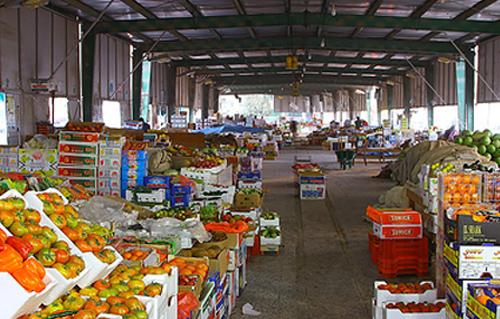
Prime Minister Mostafa Madbouly held a high-level meeting at Obour Wholesale Market on Saturday to review food supply conditions, market operations, and ongoing government efforts to stabilise prices.
During the meeting, Madbouly stressed that developing and organising wholesale markets is central to regulating commodity flows, ensuring efficient supply chains, and maintaining price stability. He reaffirmed the government’s commitment to upgrading infrastructure and strengthening regulatory frameworks to improve market performance.
Cairo Governor Ibrahim Saber said Obour Market, established in 1994, represents a key national project designed to replace informal markets, reduce post-harvest losses, and ensure efficient distribution of vegetables, fruits, fish, and grains across Cairo and neighbouring governorates.
Spanning around 300 feddans, the market includes more than 2,000 shops and storage units, operates շուրջ the clock, and supports over 100,000 direct and indirect jobs. Its modernised systems have reduced post-harvest losses from 50-60%, equivalent to roughly EGP 1.2bn annually, to just 3-5%, bringing performance in line with international benchmarks.
The market also provides daily data on prices and traded quantities, alongside health, veterinary, and supply monitoring, helping to enhance transparency, curb speculative practices, and stabilise commodity prices.
Saber added that Obour Market plays a strategic role in boosting supply availability, reducing intermediary trading layers, and ensuring fair pricing for consumers. Its infrastructure features dedicated trading zones, industrial areas for sorting, packing and storage, as well as logistics and administrative services. Ongoing upgrades include improvements to water networks, fire safety systems, and internal roads.
Representatives of the market’s board confirmed to the prime minister that all key commodities, particularly fruits and vegetables, are readily available. Traders also reaffirmed their commitment to supporting state efforts, especially during periods of global uncertainty.
Madbouly described Obour Market as a successful model for regulating trade and announced plans to replicate it in other regions, including 6th of October City, with additional wholesale markets currently under development.
He emphasised the government’s focus on ensuring competitive supply, fair pricing, and maintaining strategic reserves ranging from six months to one year. He added that Egypt continues to closely monitor supply chains through coordinated efforts across ministries, regulatory bodies, and local authorities to prevent shortages and monopolistic practices, as part of broader efforts to safeguard market stability and protect consumers.


