The Suez Canal remains one of the world’s most sensitive maritime passages. It connects Europe to Asia, carries a major share of global energy trade, and represents an essential economic resource for Egypt. In a context marked by tensions in the Red Sea and the reshaping of international oil routes, the movement of vessels linked to disputed marine insurance is attracting growing attention.
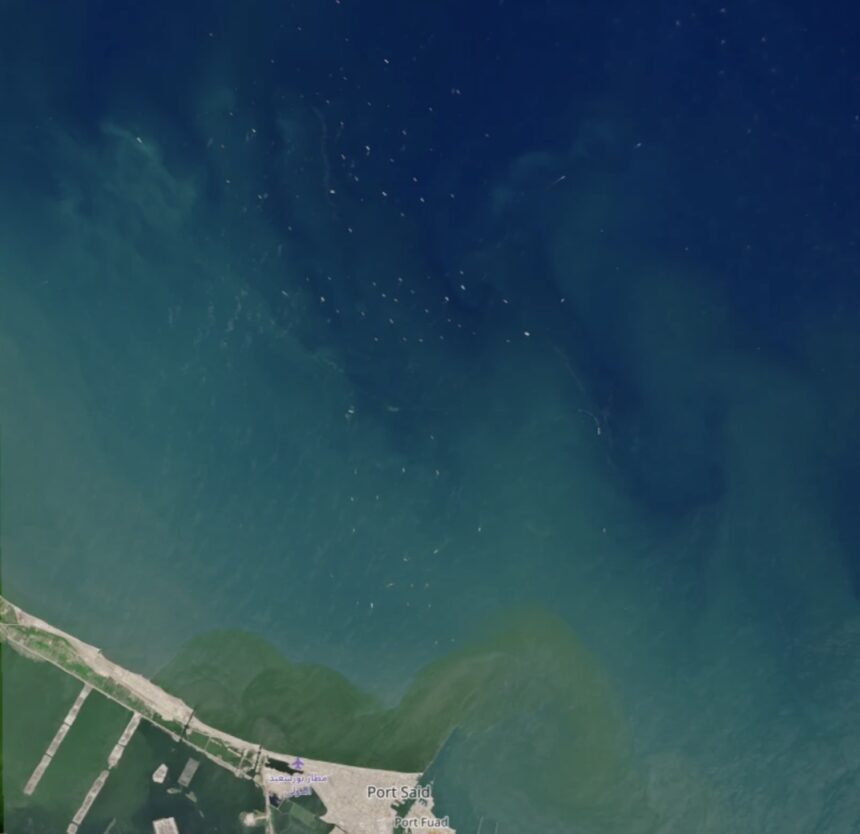
Among these cases is Seaguard P&I, an entity presented as a maritime insurer, cited in several specialist investigations and mentioned by Bloomberg for having issued certificates to sanctioned tankers or vessels connected to sensitive oil flows. Yet the legal existence of this structure, presented as German, remains difficult to establish in publicly consulted registries.(Ships waiting to cross the Suez Canal, 2026/04/22, COPERNICUS.eu)
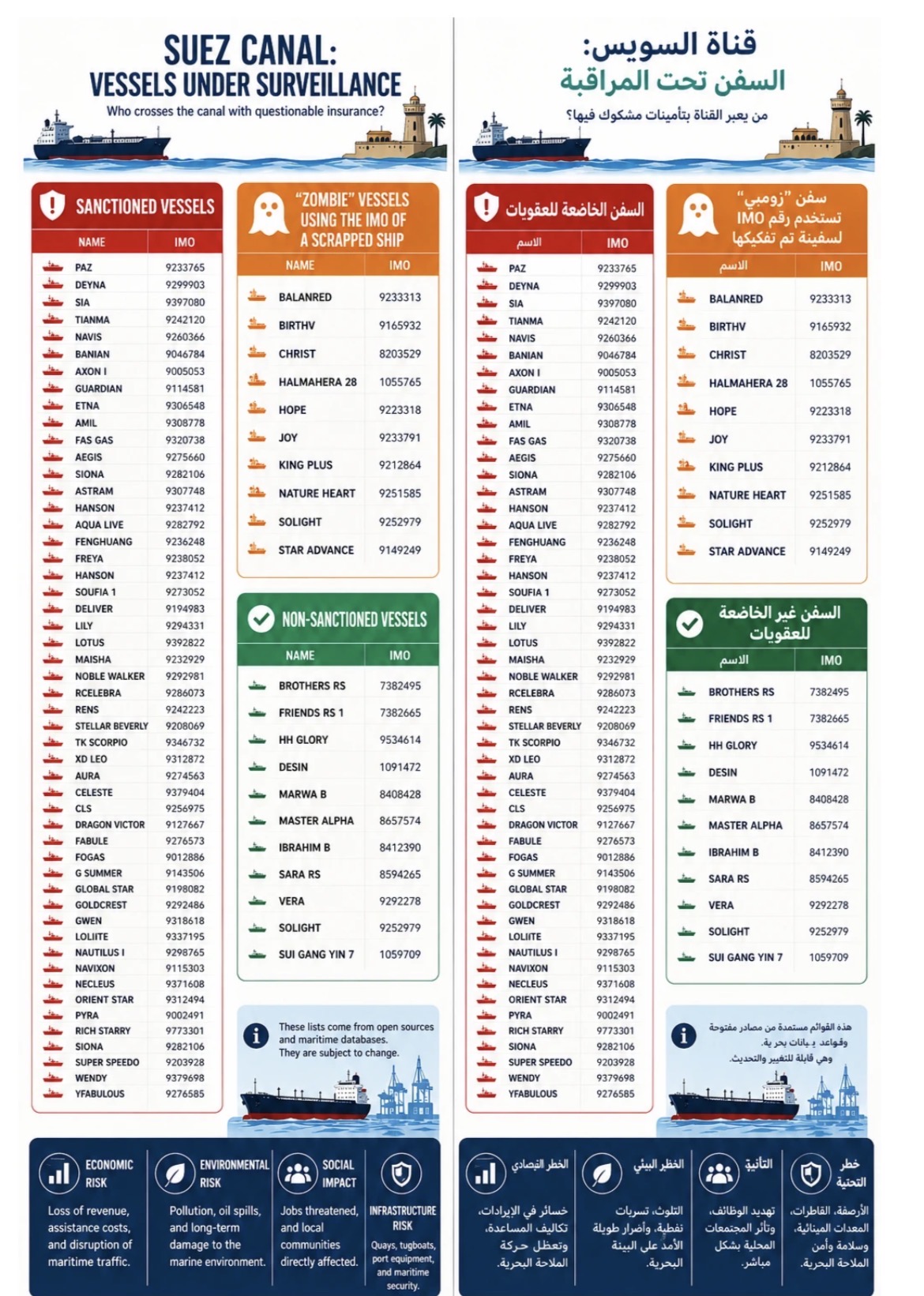
Several vessels on this list have been observed on routes leading to the Suez Canal. PAZ (IMO 9233765), DEYNA (IMO 9299903), intercepted by French authorities in March 2026, and TK
SCORPIO (IMO 9346732), recently reported in the Suez and Red Sea area, are among the most closely watched cases. Other names regularly appear in maritime databases and watchlists: AQUA LIVE (IMO 9282792), SIONA (IMO 9282106), AURA (IMO 9274563), LOLITE (IMO 9337195), GLOBAL STAR (IMO 9198082), and RICH STARRY (IMO 9773301).
In addition to these sanctioned vessels, there are more complex cases, sometimes described as “zombie ships”, suspected of using the IMO identity of vessels that have already been dismantled. Names such as BALANRED (IMO 9233313), HOPE (IMO 9223318), and STARADVANCE (IMO 9149249) illustrate this issue, which makes it much harder to identify actual responsibility in the event of an incident.
The issue goes far beyond administration. A recognised P&I club normally covers the most serious consequences of an accident: collision, pollution, wreck removal, damage to quays, tugboats, or port facilities. When an insurance certificate is disputed, incomplete, or difficult to verify, the question of funding becomes central the moment an emergency begins.
In a passage as strategic as Suez, an incident involving an ageing, poorly maintained, or underinsured tanker could generate significant costs: towing, traffic security, pollution responsle, partial interruption of transit, and protection of port infrastructure. The Ever Given case has already shown that a single vessel can block the canal and cause major economic losses for global trade.
The risk is not only economic. An oil leak in the Port Said area or the Gulf of Suez would also have significant ecological consequences for coastal zones, local fisheries, and port activities.
The social impacts would be immediate for the thousands of workers who depend directly on the canal’s smooth operation: pilots, dockworkers, hauliers, technicians, fishermen, and local businesses.