
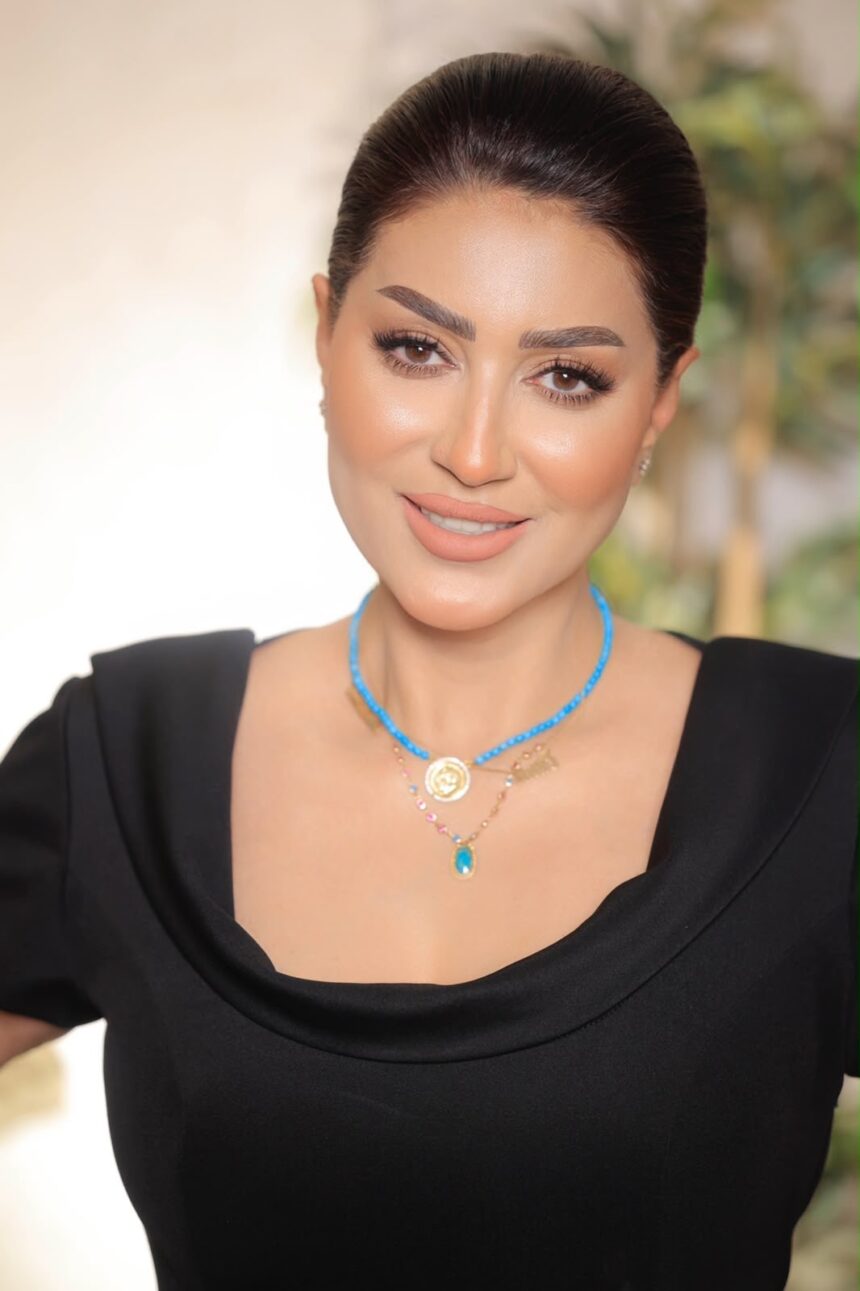
Egyptian actress Wafaa Amer has built a rich and varied career, establishing a lasting presence in the hearts of audiences through roles spanning historical, dramatic, and deeply human characters. Her work reflects an ability to move between different artistic traditions while choosing parts with psychological and emotional dimensions that extend beyond conventional performance.
Since the beginning of her career, Amer has pursued diverse experiences across film, television, and theatre, taking on roles that have become defining milestones. Among them are Queen Nazli in the television series King Farouk and Taheyya Kariokka in Kariokka, as well as her appearances in numerous dramatic productions. Most recently, she joined the two-part series Gawdar – Alf Leyla w Leyla, a world where fantasy, myth, and drama converge.
Her honour at the third edition of the Very Short Film Festival (VS-FILM) reflects the festival’s commitment to celebrating artists who have enriched Egypt’s cultural and artistic life while supporting emerging talent and creating space for new cinematic experiments.
In this conversation, Wafaa Amer discusses the significance of the honour, the roles that have shaped her career, her experience on Gawdar – Alf Leyla w Leyla, her perspective on Egyptian drama, the principles guiding her choices, the importance of very short films in discovering new talent, and her message to the next generation of artists.
What does receiving this honour from the VS-FILM Festival mean to you?
Every honour carries special significance for an artist. It reassures you that the work to which you have devoted years has not gone unnoticed, and that people have followed your journey and appreciated the effort behind it. I am especially pleased that this recognition comes from a festival devoted to very short films — a vital artistic space that gives new ideas and deserving talents the opportunity to be seen and discovered.
I also believe that an honour is not simply a celebration of an artist’s past achievements. It is a responsibility that encourages us to keep working and offer new experiences that respect the audience and add something meaningful to our artistic record.
Do you believe that honouring established artists at festivals focused on young talent sends an important message?
Absolutely. Art is built on communication between generations. It is important for experienced artists to meet emerging talents and for young people to feel that there are those who believe in their abilities and encourage them to continue. Festivals are not merely ceremonies or award platforms; they are opportunities to exchange knowledge and open new doors for creative people.
Bringing together recognition for artists with long careers and support for young talent gives festivals genuine value. It also affirms that art is an ongoing journey, passed from one generation to the next.
Which projects do you consider important milestones in your career?
Many works have marked different stages of my journey, and each period has had its own character and challenges. During the 1990s, I appeared in a number of important television series, including Layaly Al-Helmiya, Zaman Al Helm Al Daea, and Ze’ab Al-Gabal, along with other productions that left a lasting impression on me.
Later, I took on roles that presented particular artistic challenges, including Queen Nazli in Al-Malek Farouk, Taheyya Kariokka in Kariokka, and Monira in Al-Toofan. These characters required research, an understanding of their circumstances and personalities, and an effort to reach their psychological and human details. That process is what made them such important milestones for me.
How do you choose your roles, and what makes you accept one character over another?
I look for a role that presents a challenge and adds something new to my career. I enjoy variety, whether the part is emotionally powerful, historical, or offers a different range of human feeling. What matters is that the script is strong, the director has a clear vision, and I feel the character is worth investing real effort in.
I do not like repetition. I always try to portray different kinds of characters because an artist needs renewal and must continually test their abilities in unfamiliar territory. I also believe that a role’s value is not determined solely by its size, but by its impact, authenticity, and ability to reach the audience.
You appeared in both parts of Gawdar – Alf Leyla w Leyla. What was that experience like?
It was an enjoyable artistic experience, particularly because the series draws on the atmosphere of One Thousand and One Nights folktales, combining fantasy and drama in a world far removed from conventional frameworks. Playing Fatima, the mother of Gawdar in Gawdar – Alf Leyla w Leyla, gave me the opportunity to explore a range of human emotions within a dramatic setting filled with suspense and imagination.
The nature of the production, its visual details, and the characters it brought together also made the experience distinctive. I am proud to have been part of it because it created a singular artistic world of its own.
Do you prefer historical roles and complex characters, or do you sometimes gravitate towards lighter parts?
I do not like to confine myself to one type of role. Variety is what allows an artist to continue growing and discover new dimensions of their talent. Historical characters require study and research; dramatic roles demand a deep sensitivity to human detail; and comedy requires precise timing and the ability to recognise and capture irony.
What matters to me is finding a genuine, well-written character and having enough room to present it in a fresh and convincing way.
Do you prefer television drama, cinema, or theatre?
Each medium has its own particular magic. Television reaches a broad audience and gives an actor the opportunity to develop a character over multiple episodes. Cinema is defined by compression, focus, and visual language. Theatre, meanwhile, is an essential school of direct performance and live interaction with the audience.
I am happy to have worked across all these fields because each experience offers a different kind of knowledge and expands an artist’s tools. I believe a true artist remains a student throughout life, learning from the distinct nature of every medium.
How do you assess the current state of Egyptian TV drama?
Egyptian drama continues to hold a prominent place and command a wide audience in Egypt and throughout the Arab world. There are ongoing attempts to renew both subject matter and storytelling approaches, and that is encouraging. But what matters most is continuing to produce work that respects the viewer’s intelligence and emotions — work that addresses subjects capable of reflecting society and its transformations.
We will always need strong scripts, carefully written characters, and greater variety in themes and dramatic formats so audiences can find productions that speak to their interests while offering genuine artistic and human value.
What can audiences expect from you in the coming period?
I am reading scripts and considering several projects. I always make sure that my choices are based on the value of the character and the quality of the subject matter. There are also projects in production or awaiting release, and I hope my upcoming choices will meet the standards I aspire to and live up to the audience’s trust.
I generally prefer to announce projects at the appropriate time, once their details are clear and their final shape has been established.
How do you view the very short film movement championed by the VS-FILM Festival?
I believe it deserves serious attention. Presenting a complete idea within a limited amount of time requires tremendous intelligence and focus. Sometimes a single scene or a simple human moment can leave a powerful impression if it is written and presented with honesty.
The very short film places its creator before a genuine challenge: how to express a clear and compelling idea through the fewest possible scenes and within the shortest possible duration, without compromising meaning or dramatic structure. That requires talent and a sophisticated understanding of cinematic language.
Can short films serve as a genuine gateway for discovering the stars of tomorrow?
Certainly. Talent needs an opportunity, and an artist does not have to begin with a major leading role or a large-scale production. A short film can reveal a gifted actor, a director with a distinctive vision, or a writer with an original voice.
That is where specialised festivals become so important. They give these works a platform for screening and discussion and help bring them to a wider audience. I hope interest in very short films continues to grow and that they receive greater opportunities for production and exhibition. Many small projects contain major talents who simply need someone to discover them.
What message would you give young people who dream of working in cinema?
I would advise them to study, work hard, and be patient. They should not rush results. Acting is an art that requires culture, observation, and an understanding of human nature; it is not merely a matter of standing in front of a camera. Young artists should read widely, study the work of established performers, take advantage of every opportunity to learn, and search for their own artistic identity rather than imitate others.
True success takes time and consistency. Talent alone is not enough unless it is accompanied by serious work and complete respect for the profession.
To conclude, what do you wish for VS-FILM, and what would you like to say to its audience and the young filmmakers taking part?
I wish the festival continued success and longevity. I hope it remains a genuine platform for discovering talent and supporting diverse experiments, and that it succeeds in introducing new names capable of enriching Egyptian and Arab cinema.
I am grateful to everyone who gives artists their trust and affection, because the relationship between an artist and the audience is one of the most important reasons an artist continues. To young people, I would say that the road requires patience, faith in your talent, and sustained effort. True art is not built on fame alone; it is built on honesty, feeling, and the ability to create something that remains in people’s memories.