
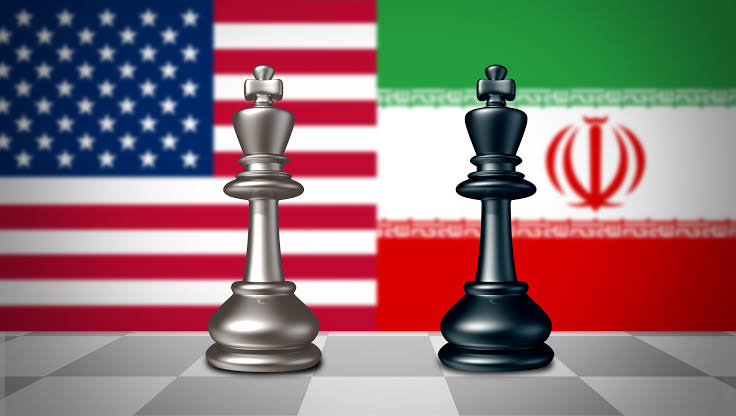
In political and military affairs, success is measured not by the scale of destruction inflicted on an adversary, but by the ability to translate military strikes into a secure and sustainable political reality.
Wars sometimes confront major powers with questions they never anticipated, turning battlefield and tactical victories into crippling strategic predicaments. The elimination of key figures and the destruction of critical infrastructure, costly as they may be for the adversary, can ultimately sever the channels of negotiation and dismantle the very mechanisms through which a conflict might be brought to an end. This is precisely the predicament confronting the US administration after its strikes reached the upper echelons of Iran’s leadership, forcing Washington to confront the limits of military power and the illusion of a swift, decisive victory.
Washington pressed ahead with a strategy aimed at creating a comprehensive leadership vacuum in Tehran, believing that such a move would weaken its adversary and compel it to capitulate. What emerged instead was a more fundamental crisis: the absence of a counterpart capable of making decisions, negotiating terms and ensuring that any agreement would be honoured.
In a rare moment of candour, US President Donald Trump’s recent admission that Washington may have “gone too far” in killing Iranian leaders, thereby complicating ongoing negotiations to end the war, was far more than an offhand remark. It laid bare the underlying reality of the conflict and amounted to an implicit, if unmistakable, acknowledgement that Washington had entered the war without a clearly defined understanding of its ultimate political objectives or a credible strategy for bringing hostilities to a negotiated conclusion.
This raises an important and contentious question about the strategic logic underpinning American conduct in complex crises: the absence of a political blueprint for the day after the fighting ends.

The central assumption was that devastating strikes against the highest levels of Iran’s religious, political and military leadership, including the assassination of former Supreme Leader Ali Khamenei, would generate a shock and power vacuum sufficient to propel the Iranian public into overthrowing the government.
Reality, however, exposed the short-sightedness of calculations rooted in the illusion of overwhelming power. Rather than triggering the popular uprising Washington had hoped to precipitate, the violent campaign became a catalyst for national consolidation, encouraging a rally-round-the-flag effect around the remnants of the state.
The course of the war has exposed a profound gap between the military impact of the strikes and the political outcomes they were intended to achieve. Although months of American and Israeli bombardment inflicted severe damage on Iran’s infrastructure and strategic industries, exacerbated poverty and unemployment and yielded numerous tactical successes on the battlefield, Washington’s strategic failure became increasingly apparent.
The Islamic Republic did not collapse. Instead, it became more emboldened in pursuing its core objectives: removing American forces from the Gulf, securing the lifting of sanctions and compelling international recognition of Iran as a major regional power. Washington’s failure to grasp the historical and societal dynamics of Iran has therefore led it into a predicament more intractable than the war itself: the challenge of finding a way out.
Many American officials appear to believe that sufficiently severe economic pressure will eventually drive Iranians into the streets to overthrow their government, or that the Islamic Republic, fearing for its survival, will ultimately yield to American demands. Such assumptions overlook the fact that Iran has spent the past fifteen years developing an economy designed specifically to withstand American economic warfare. Successive governments, for example, have cultivated extensive ties with neighbouring countries in an effort to achieve a degree of self-sufficiency in food supplies.
This does not mean that Iranians are optimistic about their country’s future. They are deeply concerned about what lies ahead and yearn for stability, normality and economic relief. Yet they do not necessarily regard an American-Israeli war as the most effective path towards achieving those goals.
Moderate political figures in Iran, including President Masoud Pezeshkian, parliamentary speaker Mohammad Bagher Ghalibaf, former president Hassan Rouhani and former foreign minister Mohammad Javad Zarif, have maintained that Tehran should continue to pursue a diplomatic resolution to the conflict.
With established political and executive figures eliminated, the rapid strikes have disrupted the structural networks through which decisions are made in Tehran. Washington now finds itself confronting a profound political vacuum and an increasingly formidable dead end. Military operations that diminish an adversary’s fighting capacity can simultaneously undermine its ability to negotiate and implement a settlement.
Iran’s new leadership faces a dual dilemma. It must contend with mounting pressure on the battlefield while also navigating the domestic political risks of being accused of capitulation or betrayal should it make concessions. The loss of a unified chain of command further increases the danger that military factions may act independently, while weakening the established channels of communication and the relationships of trust painstakingly cultivated over decades with regional intermediaries such as Oman and Qatar, as well as Switzerland.
Against this backdrop of uncertainty, Washington’s options appear increasingly constrained. Caught in a race against time, the United States cannot afford to wait indefinitely for Iran’s domestic political landscape to stabilise. It may therefore be compelled to abandon the pursuit of a comprehensive settlement in favour of relying more heavily on intermediaries to sound out the new leadership and explore limited, incremental arrangements. These could include partial agreements on reopening maritime routes, easing military tensions or establishing temporary de-escalation mechanisms.
The experience has demonstrated that weakening an adversary militarily does not confer the ability to impose peace. Washington now finds itself in a political and moral predicament in which the central question is no longer how to break its opponent, but how to end a war in which it has weakened the other side so profoundly that it can no longer be certain who has the authority to negotiate its conclusion.
Prof. Hatem Sadek, Helwan University