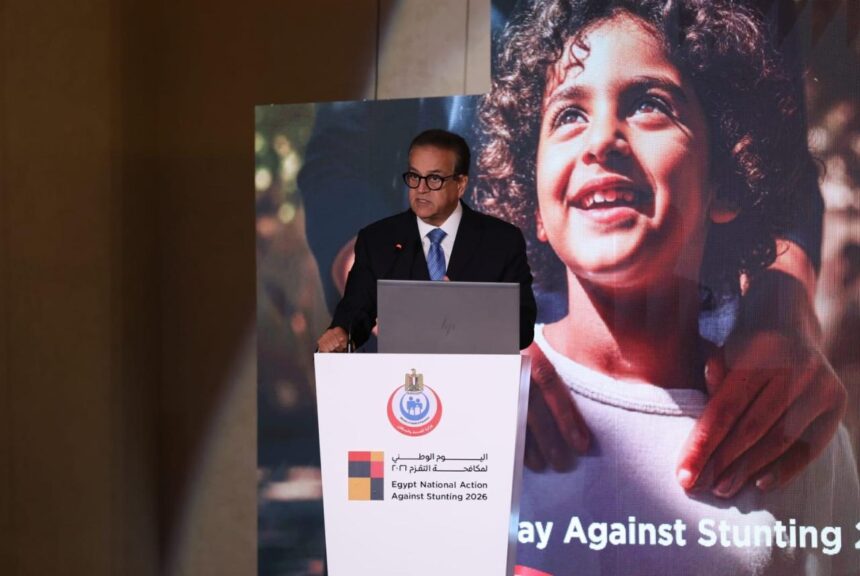
Egypt has recorded a sharp decline in anaemia and stunting among children since 2019, Health and Population Minister Khaled Abdel Ghaffar said during the 2026 National Day to Combat Stunting.
The event, held under the theme “Early Detection Is Only the Beginning,” was organised in cooperation with Sandoz Egypt to review progress under President Abdel Fattah Al-Sisi’s initiative for the early detection of anaemia, obesity, and stunting among primary school students.
Abdel Ghaffar said the prevalence of anaemia among children had fallen from 42.3% in 2019 to 8% in 2026, while the prevalence of stunting declined from 6.9% to 4% over the same period.
He said improving child health and nutrition was central to Egypt’s efforts to develop human capital and achieve sustainable development, adding that malnutrition and stunting should be viewed not only as health challenges but also as economic and social development issues.
“Investment in children’s growth and nutrition is an investment in human capital, the strength of the national economy and the future of sustainable development,” the minister said, linking the efforts to Egypt’s Vision 2030 development strategy.
Abdel Ghaffar stressed that efforts to prevent stunting should begin before birth rather than waiting until children reach school age. He called for greater public awareness of anaemia, obesity, and stunting and urged pharmaceutical companies to expand domestic production of micronutrients and nutritional supplements for pregnant women.
Such measures, he said, could help reduce risk factors associated with stunting and improve access to essential nutritional support for vulnerable groups.
Nima Abid, the World Health Organization’s representative in Egypt, said the country had reduced stunting rates at a faster pace than the global average, attributing part of the progress to the presidential initiative.
Abid described stunting as a development issue that can affect children’s physical growth and future productivity and, ultimately, the national economy. He called for continued attention to the first 1,000 days of a child’s life, alongside stronger health education for families.
Natalie Meyer, UNICEF’s Deputy Representative for Programmes, said Egypt had adopted an integrated approach to tackling child malnutrition by combining school-based early detection with referral for diagnosis, treatment, and follow-up services.
She also highlighted preventive measures under the “Golden 1,000 Days” initiative, including improving maternal nutrition, promoting breastfeeding, ensuring appropriate complementary feeding, and preventing infections.
Yasmine El-Hennawy, Executive Director for Marketing Horizons at Sandoz Egypt, said the company was participating in the national event for the second consecutive year and stressed the importance of sustained cooperation between the public and private sectors.
She said the effects of stunting can extend beyond physical health to children’s psychological wellbeing, learning ability, and educational performance, adding that the private sector can support government efforts by helping expand access to new treatments and health innovations.