

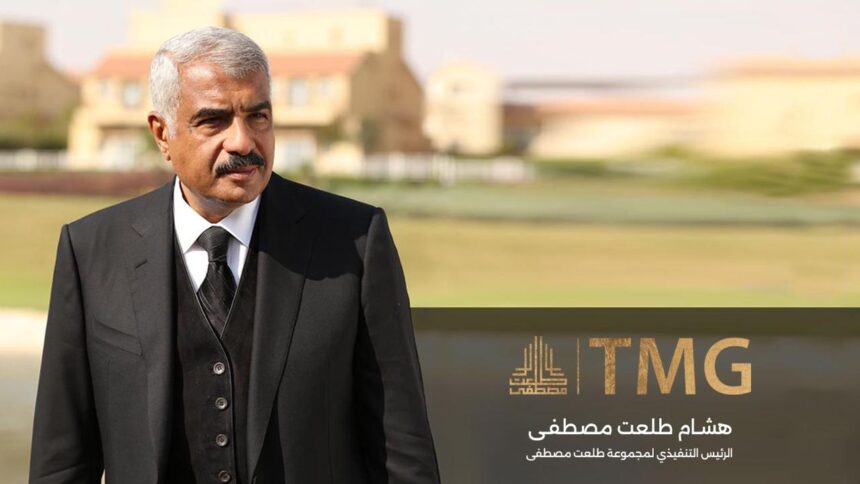
TMG CEO says major developers maintain strong collection rates, while secondary-market slowdown reflects tighter liquidity and monetary policy
Hisham Talaat Moustafa, CEO and Managing Director of Talaat Moustafa Group Holding (TMG Holding), said Egypt’s real estate market is operating at normal levels, arguing that the exceptional activity witnessed in 2023 and 2024 was largely driven by inflation, currency depreciation, and sharp increases in construction costs.
Speaking during a phone interview with television host Amr Adib on MBC Masr’s Al Hekaya programme, Moustafa dismissed concerns over a broad crisis affecting Egypt’s major real estate developers, pointing to their strong customer collection rates and financial positions.
He said TMG Holding’s customer collection rate stands at 99.6%, meaning that defaults represent approximately four per 1,000.
According to Moustafa, similarly high collection rates have been reported by other major developers in their officially disclosed financial data, which he said indicates that concerns over widespread financial distress among Egypt’s leading real estate companies are not supported by their reported performance.
Moustafa acknowledged that some smaller developers are facing difficulties, particularly companies that entered the sector over the past five or six years. However, he estimated that sales associated with these companies account for only around 1% to 2% of the overall market.
He added that the government is working to address and resolve problems facing some of these companies, arguing that difficulties affecting such a limited share of the market should not be interpreted as evidence of a broader real estate crisis.
2023 and 2024 were exceptional years
Moustafa attributed the extraordinary momentum in Egypt’s property market during 2023 and 2024 to the inflationary environment that prevailed during the period.
The depreciation of the Egyptian pound, combined with substantial increases in the prices of construction materials and other inputs, encouraged a segment of investors to purchase real estate as a hedge against inflation and in anticipation of further price increases, he explained.
This resulted in a significant influx of investment-driven demand, with some buyers entering the market primarily to benefit from capital appreciation rather than purchasing properties for long-term use.
Moustafa said the situation has since changed as monetary conditions tightened and liquidity declined.
He linked the slowdown in Egypt’s secondary real estate market to monetary policy measures implemented during 2025 and 2026 to curb inflation, saying that reduced liquidity has affected purchasing power and the speed at which properties can be resold.
According to Moustafa, the large number of investors who entered the property market during the inflationary surge of 2023 and 2024 eventually contributed to an increase in the supply of units offered for resale.
As liquidity and purchasing power subsequently weakened, investors seeking to exit some of these positions began requiring more time to find buyers, resulting in slower activity in the secondary market.
However, Moustafa stressed that this should be viewed as a period of market readjustment rather than a structural crisis.
He said sales and unit transfers continue to take place normally, while current market conditions represent a return towards more sustainable levels following two years of exceptional inflation-driven activity.
Moustafa maintained that the financial performance and collection rates of Egypt’s major developers remain key indicators of the sector’s underlying strength, distinguishing their position from the challenges facing a relatively small number of newer and smaller market participants.


