Egypt’s President Abdel Fattah Al-Sisi said Sudan’s security, sovereignty, stability, and unity were a “red line” for Egypt, while calling for progress on the second phase of the agreement to end the war in Gaza and sufficient humanitarian aid to reach the enclave.
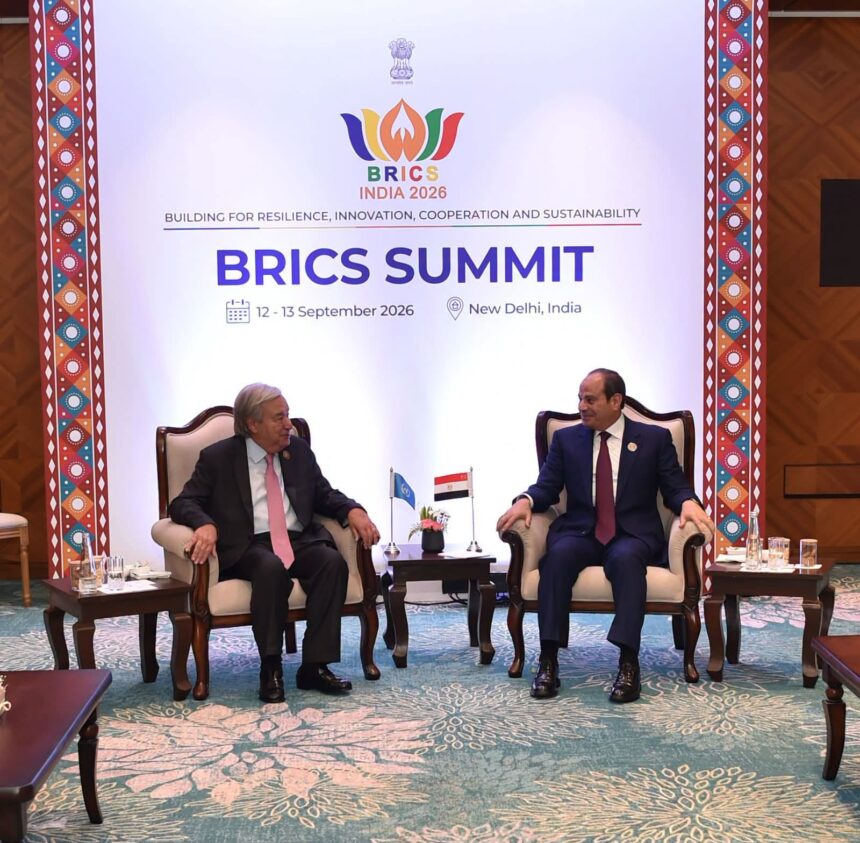
Al-Sisi made the remarks during separate meetings with South African President Cyril Ramaphosa and UN Secretary-General Antonio Guterres on the sidelines of the BRICS summit in New Delhi, according to the Egyptian presidency.
In talks with Ramaphosa, Al-Sisi said Cairo was committed to supporting the sovereignty and stability of African states, particularly Sudan, and would not allow its security, sovereignty, stability, or unity to be undermined.
The two leaders discussed conflicts across Africa and called for stronger efforts to resolve disputes peacefully, while stressing the need for Egypt and South Africa to coordinate African positions in international forums.
On bilateral ties, Al-Sisi proposed upgrading relations with South Africa to a strategic partnership and elevating their joint committee to a higher-level mechanism aimed at expanding trade and investment.
He also called for greater cooperation on continental connectivity projects and more efficient trade corridors linking northern and southern Africa. Ramaphosa welcomed the proposal, according to the presidency.
The two leaders reaffirmed their support for the establishment of a Palestinian state in accordance with international resolutions and stressed the importance of respecting international law and states’ rights in managing water-related disputes.
In separate talks with Guterres, Al-Sisi said Egypt was working with mediators to implement the second phase of the agreement to end the war in Gaza and called on the international community to ensure that sufficient humanitarian assistance reaches the territory.
Al-Sisi reiterated that any threat to Sudan’s security, unity, or sovereignty constituted a red line for Cairo.
The meeting with Guterres also covered reform of the United Nations.
Al-Sisi backed efforts to streamline spending, review mandates, and improve coordination among UN bodies, while stressing that member states should retain ownership of negotiations over reforms.