Egypt and Pakistan called on Sunday for the resumption of a collapsed US-Iran agreement to halt a widening regional conflict, following a weekend of severe maritime clashes where both nations targeted each other’s vessels.
Egyptian Foreign Minister Badr Abdelatty and Pakistani Foreign Minister Ishaq Dar emphasised the importance of implementing the “Islamabad” memorandum of understanding to reach a comprehensive and sustainable agreement. During a phone call, the ministers exchanged assessments on regional files and efforts to contain escalation and restore calm, the Egyptian foreign ministry said in a statement.
The two officials agreed to maintain close coordination bilaterally and within the “four regional parties mechanism” to support joint efforts for regional security.
The diplomatic plea follows the collapse of the US-Iran memorandum, signed on June 17, which expired in August amid dwindling hopes for a near agreement and renewed military confrontations.
On Saturday, US forces announced they had targeted three Iranian oil tankers in response to Iran’s Revolutionary Guards (IRGC) firing ballistic missiles at two US warships—an aircraft carrier and a guided-missile destroyer—patrolling regional waters. US Central Command (CENTCOM) stated the warships successfully evaded multiple “unjustified” Iranian attacks, confirming no US personnel were harmed.
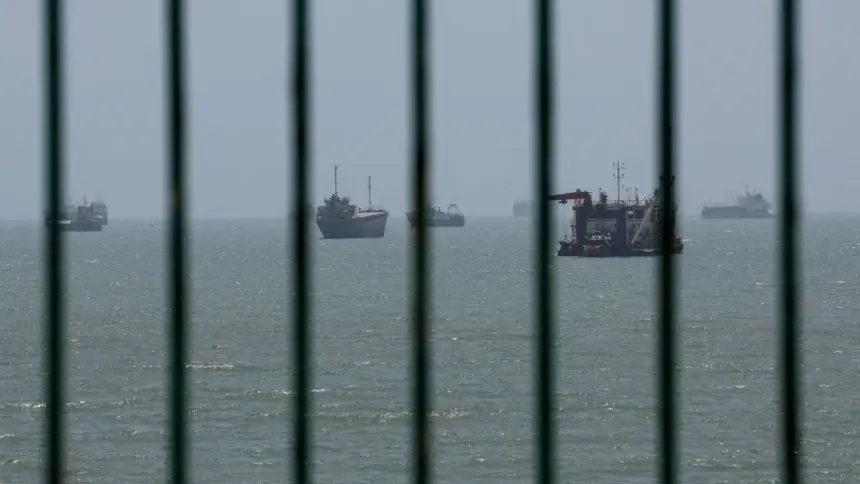
Concurrently, the IRGC Navy issued a statement on Saturday announcing it had targeted three oil tankers crossing unauthorised corridors in the Strait of Hormuz, in addition to three other US ships in various areas.
Despite the military escalation and its growing impact on the global economy, US President Donald Trump downplayed the ramifications of the war. As the conflict enters its seventh month with both sides betting on time, Trump described the overall situation as a “simple matter.”
Trump’s comments followed statements by his Vice President J.D. Vance, who said he does not describe the hostilities as a “war” because major combat operations ended months ago. When asked about Vance’s remarks on Friday, Trump agreed.
“I call it a military conflict (not a war) because it is a simple matter for us, it is not a big deal,” Trump said. “As you know, we carry out sporadic strikes, I heard what he said, and it was interesting, because I think there is a great deal of truth that we are not fighting at present.”
Conversely, US Energy Secretary Chris Wright highlighted the severity of the maritime situation, stating that crossing the Strait of Hormuz currently requires military force.
In an interview with CNN, Wright noted the US Navy is assisting numerous vessels through the strait. “We cooperate with some shipping fleets that want to pass,” Wright said when asked if the waterway was safe.
“Iranian ships do not cross the Strait of Hormuz at all, and this is a ticking time bomb for their economy,” Wright added. “We help many ships cross, but it requires military force to do so currently, we are not at pre-war levels.”