US President Donald Trump downplayed the seven-month conflict with Iran as “small potatoes,” even as recent US intelligence assessments warn that Tehran is preparing for a prolonged escalation to pressure Washington ahead of November’s midterm elections.
Trump agreed with Vice President JD Vance’s recent assertion that the hostilities should not be classified as a “war,” noting that major combat operations concluded months ago.
“I call it a military conflict… because it is small potatoes for us, it is not a big deal,” Trump told reporters on Friday. “As you know, we carry out intermittent strikes, I heard what he said, and it was interesting, because I think there is a great deal of truth in that we are not fighting at the present time.”
The President contrasted the 18 American military fatalities in the Iran conflict with the 58,220 US personnel who died in the Vietnam War, according to US National Archives records, as well as the heavy losses sustained in Afghanistan.
“We lost tens of thousands of people in Vietnam, and in Afghanistan we lost a lot,” Trump said. “What we have done is amazing, we took control of Venezuela, and practically took control of Iran.”
In his remarks on Thursday, Vance declined to offer a timeline for the conflict’s end or a return to pre-war gasoline prices, stating instead that ending the hostilities rests entirely with Iran. Both sides are increasingly relying on the passage of time to force the other into submission.
Intelligence Warns of Iranian Escalation
Despite Trump’s optimism—echoing his prediction of a swift and decisive victory when the United States and Israel launched their initial strikes on Iran on February 28—US intelligence indicates that Tehran remains resilient. Critics of the President argue his administration has severely underestimated Iran’s capacity to continue fighting.
The New York Times reported on Friday that classified assessments suggest the Iranian government is weighing a “major escalation” and believes it can sustain regional attacks for months. Over the past week, Iran targeted commercial vessels in the Strait of Hormuz and US forces in the region, while retaliatory US strikes inside Iran resulted in both military and civilian casualties.
Democratic Representative Jason Crow, a member of the House Intelligence Committee, noted that Iranian leadership has unified, silenced internal dissent, and retained substantial drone and missile stockpiles.
“The Iranians feel very confident in their position; they have taken significant damage, but that was always part of their calculus, and they know they can absorb the losses, and they are playing a long-term strategy in this regard,” Crow said.
He added that Tehran now possesses a sharper understanding of its leverage over the Strait of Hormuz, a critical chokepoint that accommodated a fifth of global oil supplies prior to the conflict. “They have always known the strait is a big bargaining chip, but they are much more aware of the leverage it gives them,” Crow stated.
Munitions Shortages and Military Strain
Iran’s calculation is reportedly bolstered by intelligence suggesting the US military would struggle to sustain new large-scale operations due to a severe depletion of interceptor missiles and the deployment of costly military assets.
CNN, citing sources familiar with stockpile reports, indicated the military has exhausted approximately 80% of its interceptors for one of its primary missile defence systems. Since the conflict began, the US has consumed nearly four-fifths of its Terminal High Altitude Area Defense (THAAD) system interceptors and roughly half of its Patriot interceptors compared to pre-war levels.
The Washington Post reported that several US military commanders informed Secretary of War Pete Hegseth that continuing large-scale operations against Iran is unsustainable and could compromise America’s ability to counter threats in other global regions.
In response to a massive leak regarding these advanced weapons stockpiles, CBS News reported that senior US military officials have undergone polygraph tests as part of a widespread investigation. While Trump maintained that the US possesses “massive amounts” of munitions, he acknowledged that supplies for some types are “shorter.”
Economic Toll and Political Fallout
Beyond the military strain, the economic and political costs of the conflict are mounting as the midterm elections approach, drawing sharp criticism from the Democratic Party over the administration’s attempts to minimize the crisis. Reports indicate the conflict cost Washington approximately $40 billion through July.
The national average price for gasoline has surged to $4.14 per gallon, up from $3.19 a year ago. To mitigate the economic impact, the Trump administration has drawn heavily from emergency oil reserves, leaving the US Strategic Petroleum Reserve at its lowest level since 1983, according to CNN.
These economic pressures are damaging Trump’s political standing and threatening the Republican Party’s control of Congress, Bloomberg reported. A University of Massachusetts poll released on Monday showed that more than two-thirds of Americans disapprove of Trump’s handling of the conflict, dragging his overall approval rating down to 32%.
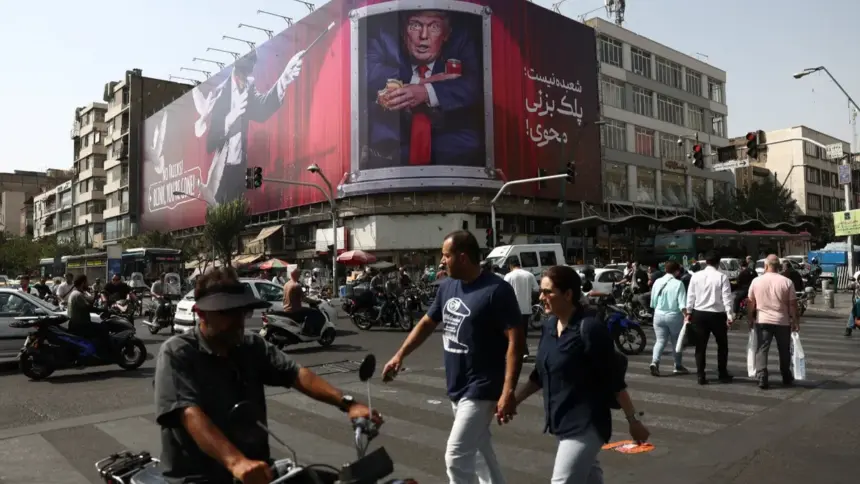
US officials told The New York Times that Iran is acutely aware of the political damage inflicted by elevated fuel prices. Intelligence suggests Tehran intends to prolong the conflict until at least the midterm elections, deploying propaganda to undermine Trump and the Republicans, similar to its efforts during the 2020 and 2024 presidential campaigns.
“The Iranians believe they have maximum leverage,” Democratic Representative Josh Gottheimer said. “So, from their perspective, why not continue to land political blows on the President?”
Current and former officials noted that Iran has emerged from months of sporadic warfare with enhanced operational experience and remains highly averse to negotiating a comprehensive end to the conflict, opting instead to capitalise on the political fallout enveloping the US administration.