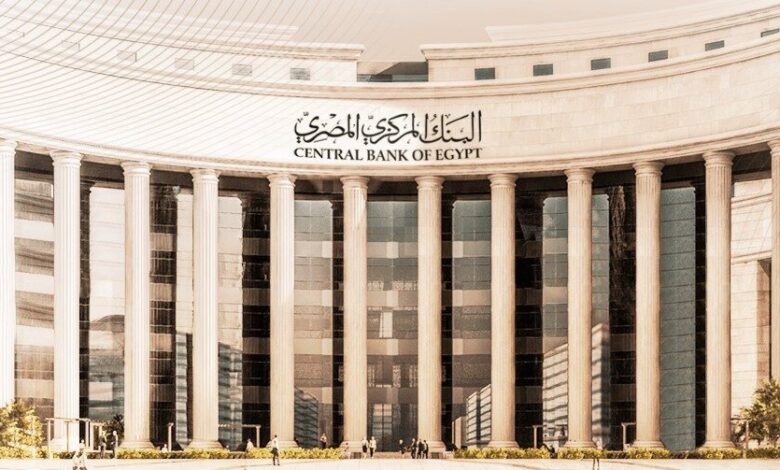
The Central Bank of Egypt (CBE) expects inflation to begin declining gradually from the first quarter (Q1) of 2027 and approach its target of 7% (±2%) during the second half of the year.
The CBE said the projected downward trajectory would be supported by maintaining an appropriately restrictive monetary stance over the forecast horizon, alongside the continued moderation in underlying monthly inflation and a broad-based easing of inflationary pressures across components of the consumer price index.
However, the inflation outlook remains subject to upside risks, particularly an escalation in regional tensions and a larger-than-expected impact from fiscal consolidation measures.
The CBE’s Monetary Policy Committee (MPC) decided at its meeting last Thursday to keep its key policy rates unchanged for the fourth consecutive meeting. The overnight deposit rate was maintained at 19%, the overnight lending rate at 20%, while the main operation rate and discount rate were both kept at 19.5%.
The decision followed similar holds on 2 April, 21 May and 9 July, with the MPC saying the move was consistent with its assessment of the latest inflation developments and outlook.
Globally, the MPC said economic activity had slowed slightly amid geopolitical volatility and weaker demand, while inflation remained generally elevated, with varying inflationary pressures across economies. This has resulted in divergent monetary policy decisions by central banks in line with prevailing economic conditions.
Energy prices have again come under upward pressure and become more volatile amid intensifying regional tensions. Agricultural commodity prices have also risen due to supply concerns stemming from geopolitical tensions and adverse weather conditions.
The MPC said the global economic outlook remained highly uncertain and exposed to several risks, including a prolonged period of regional tensions, tighter financial conditions and renewed supply-chain disruptions.
Domestically, the CBE’s preliminary estimates indicate that real economic activity is expected to continue its slight slowdown in the second quarter of 2026, reflecting the negative impact of the regional conflict, after recording growth of 5% in the first quarter.
The CBE expects average real GDP growth to reach around 5% in fiscal year 2025/2026. Output is expected to remain below its potential, although the gap is projected to narrow gradually by the second half of 2027.
The trajectory of the output gap indicates that demand-driven inflationary pressures are likely to remain limited in the short term, supported by the current restrictive monetary policy stance.
Annual headline inflation edged up to 14.9% in July from 14.3% in June, while annual core inflation increased to 14.7% from 14.3%.
The MPC attributed the slight increase mainly to an unfavourable base effect, noting that monthly headline and core inflation both came in below expectations at 0% in July.
Monthly price developments showed broad-based stability, with prices of some goods and services declining, indicating that the effects of previous shocks were gradually fading in line with their temporary nature.
Against this backdrop, the CBE expects annual headline inflation to accelerate on average through the third quarter of 2026, partly due to unfavourable base effects.
However, the pace of acceleration is now expected to be lower than projected at the MPC’s July meeting, following softer inflation readings in June and July.
The MPC said keeping policy rates unchanged was necessary to maintain an appropriate positive real interest rate, helping anchor inflation expectations and support the projected downward path of inflation.
The committee said it would continue to assess monetary conditions based on incoming economic developments, the inflation outlook and surrounding risks, and would take the measures necessary to safeguard price stability and ensure inflation returns to its target.