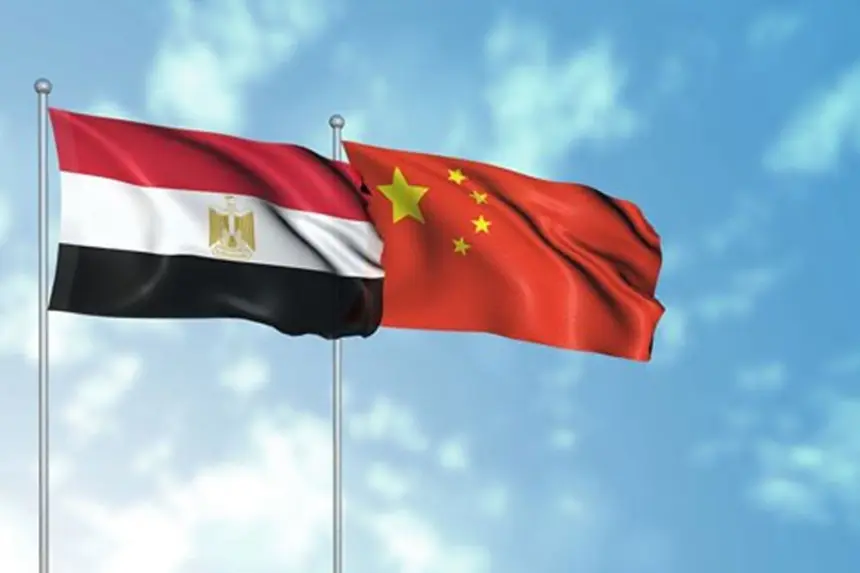
Egypt-China trade reached approximately $20.8bn in 2025, with Chinese exports to Egypt accounting for nearly $19.9bn, compared with just $819m in Egyptian exports to China, Head of the Egyptian Commercial Service Abdel Aziz Elsherif said.
The figures highlight both the scale of the economic partnership between the two countries and the significant trade imbalance that Egypt is seeking to address by increasing and diversifying its exports to the Chinese market.
Elsherif’s remarks come as Egypt and China mark 70 years of diplomatic relations, with Egypt being the first Arab and African country to establish official diplomatic relations with Beijing.
Over the past seven decades, bilateral relations have expanded significantly, reaching the level of a comprehensive strategic partnership in 2014. Egypt has also become a key partner for China in major regional and international cooperation frameworks, including the Belt and Road Initiative, the Forum on China-Africa Cooperation (FOCAC), and BRICS.
“China today represents one of Egypt’s most important trading partners and the largest source of Egyptian imports,” Elsherif said, noting that bilateral cooperation has expanded beyond trade to encompass industry, infrastructure, energy, transport, logistics, and the digital economy.
He said the current trade imbalance represents a key challenge that requires joint efforts, particularly by increasing the competitiveness and diversification of Egyptian exports to China.
China tariff exemptions offer new opportunity
Elsherif highlighted China’s decision to grant tariff exemptions for exports from African countries for two years starting May 1, 2026, describing the measure as an important opportunity to facilitate the entry of African, including Egyptian, products into the Chinese market.
However, he noted that maximising the benefits of the initiative will require Egyptian companies to strengthen their competitiveness, develop a deeper understanding of Chinese consumer preferences and market requirements, and establish stronger direct links with Chinese importers and distribution networks.
Egypt has an existing export base that can be further developed in the Chinese market, including food and agricultural products, textiles and ready-made garments, chemicals and fertilisers, building materials, engineering products, renewable energy products, and green economy-related industries.
From trade to production and investment
Elsherif called for a gradual shift from focusing primarily on bilateral trade towards a broader model of economic and production integration between Egypt and China.
“This should be based on working together on production and investment, while using Egypt as a platform for exports to other markets,” he said.
He highlighted the importance of attracting more Chinese investment into Egypt’s productive sectors and facilitating technology and knowledge transfer to increase local value added and strengthen Egypt’s integration into regional and global value chains.
Egypt’s strategic geographic location, developed logistics infrastructure, and extensive network of trade agreements with African, Arab, and other international markets provide Chinese companies with an opportunity to establish production bases in Egypt and export to regional and global markets, he added.
Accordingly, increasing Egyptian exports to China and attracting Chinese investment to Egypt should be viewed as complementary elements of a broader economic strategy built around trade, investment, production, and joint exports.
Elsherif also emphasised the need to build more resilient economic ties amid growing pressures on global trade and supply chains, highlighting the importance of streamlining trade procedures, improving logistics services, strengthening financial cooperation, and establishing more direct channels of communication between Egyptian and Chinese institutions and companies.