

Egypt on Saturday strongly condemned the missile attack on an oil tanker operated by Abu Dhabi National Oil Company (ADNOC), describing the incident in the Strait of Hormuz as a serious threat to maritime security, regional stability, and global trade, as Iran and Oman continued negotiations over navigation arrangements in the strategic waterway.
In a statement, Egypt’s Ministry of Foreign Affairs said Cairo stands in full solidarity with the United Arab Emirates and rejects attacks targeting civilian vessels and critical infrastructure. The ministry stressed the importance of safeguarding freedom of navigation, preventing further escalation, and resolving regional disputes through political and diplomatic means.
Egypt’s position came as Foreign Minister Badr Abdelatty held a telephone conversation with Iraqi Foreign Minister Fuad Hussein to discuss the latest regional developments and future security arrangements. The two ministers underscored the need to reduce tensions, promote dialogue, and address regional crises through political solutions, while reaffirming their commitment to strengthening trilateral cooperation between Egypt, Iraq, and Jordan.
Qatar also condemned the attack on the UAE tanker, describing it as a violation of international law, freedom of navigation, and UN Security Council Resolution 2817. Doha rejected any attempt to use the Strait of Hormuz as a tool of political or economic pressure and called for the unconditional reopening of the waterway.
The UAE said the missile strike caused no casualties but described the attack as a direct threat to regional stability and global energy security. It accused Iran’s Islamic Revolutionary Guard Corps (IRGC) of using commercial shipping and the Strait of Hormuz as instruments of economic coercion.
In a separate maritime incident, the United Kingdom Maritime Trade Operations (UKMTO) agency reported that a commercial vessel was struck by an unidentified projectile about 18 nautical miles east of Khasab, Oman. The resulting fire was extinguished by the crew, with no injuries or environmental damage reported.
Oman’s Ministry of Foreign Affairs said negotiations over navigation arrangements in the Strait of Hormuz were continuing in a “positive and constructive” atmosphere, while warning against actions that could undermine the progress achieved so far.
Iranian Foreign Minister Abbas Araghchi said Tehran and Muscat were close to reaching an agreement on the legal framework governing the management of the strait and the designation of shipping routes. However, he said the reopening of the waterway remained linked to broader issues, including what Iran describes as US violations of the Islamabad Memorandum of Understanding.
Araghchi added that Iran no longer accepts the previous Traffic Separation Scheme and that discussions are underway on a temporary navigation route that could later serve as the basis for a permanent arrangement.
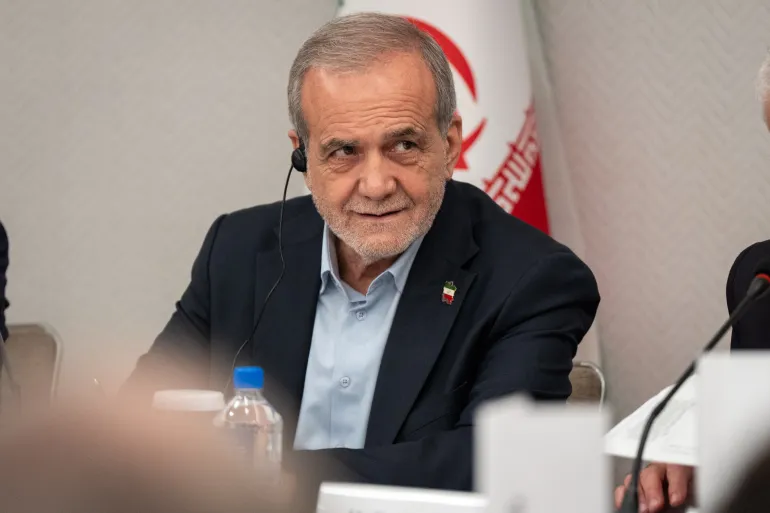
Iranian President Masoud Pezeshkian said the current circumstances present the best opportunity to reach an agreement, adding that Tehran remains committed to using the memorandum as the foundation for future progress despite its deep mistrust of Washington. He nevertheless accused the United States of violating provisions governing navigation through the Strait of Hormuz.
Iran’s Islamic Revolutionary Guard Corps adopted a tougher stance, saying the reopening of the strait remains subject to Iran’s own conditions and is not directly tied to the ongoing negotiations with Oman. A spokesperson described the Strait of Hormuz as not only an economic corridor but also a strategic pillar of Iran’s national power.
Meanwhile, CNN, citing people familiar with internal discussions, reported that Chairman of the Joint Chiefs of Staff Dan Caine had warned senior US administration officials that any further escalation against Iran could prove counterproductive and that air power alone was unlikely to compel Tehran to accept President Donald Trump’s demands.


