

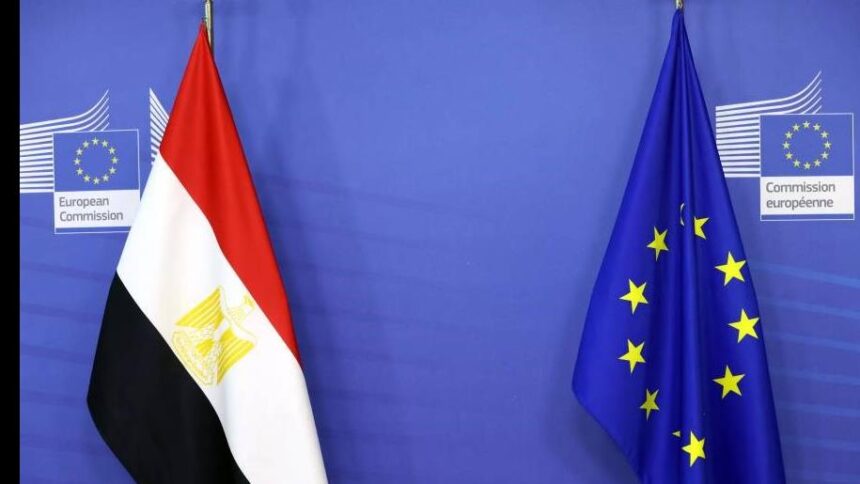
Egypt and Europe today are closer than geography or trade balances suggest. Gaza, the energy crisis, migration, climate change, and disrupted supply chains reveal, almost daily, that Egypt’s stability and Europe’s security are two sides of the same coin.
This convergence now rests on a clear institutional structure. Since the Strategic and Comprehensive Partnership launched in March 2024, backed by a €7.4bn package running through 2027 across six pillars, the pace has quickened: a first-ever Egypt-EU Summit in Brussels, followed months later by the most substantive session yet of the Association Council.What were once protocol-bound meetings have become a cumulative institutional process.
Economically, the EU remains Egypt’s largest trading partner, with goods trade reaching €32.4bn in 2025, over 22% of Egypt’s total trade. But the number says little on its own. What matters is whether this exchange builds stronger institutions, raises productivity, and opens real opportunities for young Egyptians, or whether Egypt stays simply a market Europe sells to, rather than a partner inside its value chains.
That is a governance question, not a generosity one. The real test isn’t the size of the financial package but who tracks its implementation, who judges whether it worked, and where universities, researchers, and the private sector fit into that process. Success should look like a training slot filled, a research grant awarded, a job created on a factory floor, not another line in a summit communiqué.
A permanent Egyptian-European forum on public policy and knowledge could anchor that answer, bringing together decision-makers, researchers, and young people to produce measurable policy papers and joint projects rather than one-off statements.
This convergence now extends into areas rarely discussed this openly before. In mid-2026, the EU announced a financing package of up to €690m, a loan combined with European Commission grants, to modernise Egypt’s electricity grid and integrate clean energy under the Trans-Mediterranean Renewable Energy and Clean-Tech Cooperation Initiative (T-MED). Months earlier, Cairo had hosted the first Egypt-EU Security and Defence Dialogue. Both point to the same shift: Egypt is becoming a partner in regional stability, not only a recipient of it.
Egypt’s association with Horizon Europe shows what’s possible. Egyptian researchers and universities can now take part fully in European research and innovation networks, on equal footing with their EU counterparts. That opportunity goes beyond applied science. It extends to AI governance, cultural policy, public administration, and education, the fields that will decide whether Egypt shapes its own future or simply adapts to decisions made elsewhere.
The Pact for the Mediterranean adds another opening. Launched by the European Commission at the end of 2025, with its first Action Plan following a few months later, the Pact already includes initiatives such as the Mediterranean University and the Youth Parliamentary Assembly. The proposed Egyptian-European forum could sit naturally inside that emerging architecture.
The timing is fitting: both sides have already begun preliminary talks on the next cooperation framework for 2028-2034. This is the moment when institutions are built and initiatives proposed, not after the agreement is already sealed.
Egypt is not Europe’s southern margin, and Europe is not a distant funder of Egypt; both are partners in a single Mediterranean space. The future of this relationship will be determined by our ability to move from a partnership of necessity to a partnership for shaping the future.
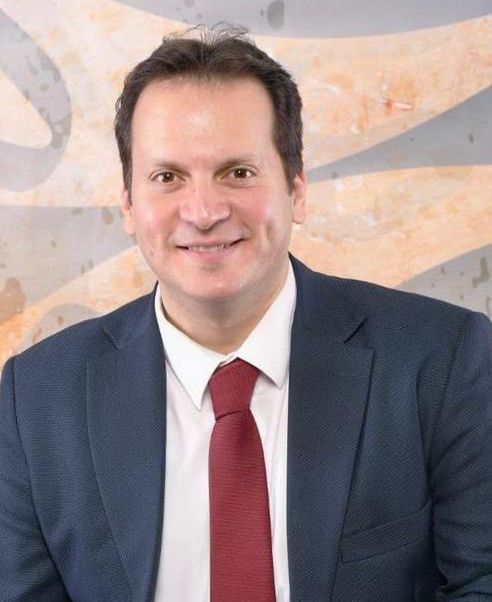
Dr Ramy Galal is a governance and institutional reform specialist focusing on state capacity, accountability, and the design of effective public institutions, with an interest in the governance of meaning.
He is an Assistant Professor and a former Senator, and previously served as an advisor and official spokesperson for Egypt’s Ministry of Planning and Economic Development, with direct involvement in policy design and implementation.
He holds a PhD from Alexandria University, a master’s degree from the University of East London, and a diploma in public administration from the University of Chile.

