

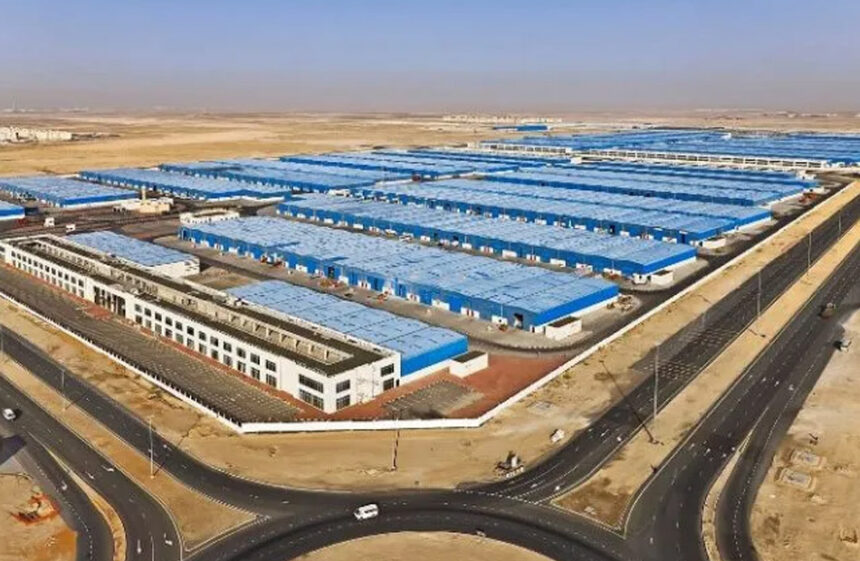
Egypt’s Ministry of Industry has launched a new lease-to-own system for industrial land through the Egypt Digital Industrial Platform, aiming to reduce the upfront financial burden on investors and accelerate industrial investment.
The ministry said the new mechanism is designed to provide greater flexibility for manufacturers by allowing investors to allocate more of their financial resources to building factories, purchasing machinery and equipment, and expanding production capacity, rather than paying the full cost of land at the outset.
Under the scheme, investors can lease industrial land for periods ranging from seven to a maximum of 21 years, with an annual rental payment equivalent to 5% of the land’s price per square metre.
The rental value will be reassessed after the seventh and fourteenth years if the investor has not yet applied to purchase the land.
Investors will become eligible to apply for ownership after one year of actual factory operation. Rental payments already made will be deducted from the total land price, after which investors will pay 25% of the remaining value upfront and settle the balance in three annual instalments, in accordance with the applicable regulations.
The ministry said the new mechanism is intended to ensure industrial land is allocated to serious manufacturing projects, curb speculation and land hoarding, and maximise the efficient use of state assets.
Applications will be submitted electronically throughout the year via the Egypt Digital Industrial Platform, where a committee representing the relevant ministries and government entities will review submissions and allocate land based on the targeted industrial activities.
Through the platform, investors can access tender documents, browse available investment opportunities, select suitable industrial plots, complete application procedures, and pay fees electronically, helping streamline procedures and accelerate land allocation.
The lease-to-own model is one of nine industrial land allocation mechanisms currently available through the platform, alongside freehold ownership, usufruct, and other allocation systems.


