

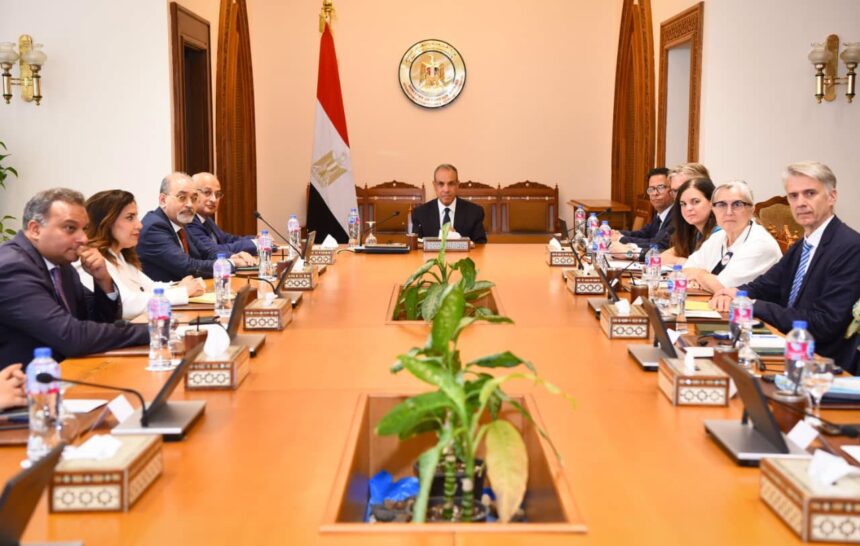
Egypt is currently drafting its second five-year National Human Rights Strategy for the 2026-2031 period to consolidate the values of democracy, citizenship, and the rule of law, Minister of Foreign Affairs, International Cooperation and Egyptian Expatriates Badr Abdelatty told a European Parliament delegation on Tuesday.
During the meeting, the European Parliament’s Subcommittee on Human Rights, headed by Member of the European Parliament Mounir Satouri, acknowledged the economic and regional challenges facing the country and praised Egypt for hosting millions of refugees and asylum seekers.
The European delegation described Egypt as a key partner for the European Union in supporting regional stability, noting the recent elevation of relations to a comprehensive and strategic partnership. The delegates called for intensified parliamentary cooperation and mutual visits to explore broader prospects for collaboration.
Abdelatty outlined the state’s efforts to upgrade its comprehensive human rights system and achieve social justice in accordance with presidential directives. He highlighted the role of the Supreme Standing Committee for Human Rights, which he chairs, pointing to recent successes on legislative, civil, and political fronts.
The minister stressed the importance of balancing civil and political rights with economic, social, and cultural rights, noting that specific attention is being directed towards women, children, youth, the elderly, and persons with disabilities.
Improving human rights conditions is an extended and cumulative process, Abdelatty said, affirming the government’s commitment to maintaining constructive dialogue with civil society and international partners, primarily the United Nations and the European Union.
Abdelatty also reviewed national programmes aimed at enhancing economic and social rights, including the “Decent Life” and “100 Million Healthy Lives” initiatives, alongside the expansion of the social protection umbrella and the development of informal settlements.
The minister noted that these advancements have been achieved despite security and economic challenges, including the threat of terrorism and the heavy burden of hosting millions of refugees, migrants, and foreign residents amid ongoing regional instability.
On the international stage, Abdelatty highlighted Egypt’s engagement with global and regional human rights systems, noting the submission and discussion of national reports before the UN Human Rights Council’s Universal Periodic Review. He added that Egypt plans to maintain an active role during its membership in the Human Rights Council in Geneva for the 2026-2028 term.
Abdelatty expressed hope that the delegation’s visit would enhance the exchange of expertise and allow European officials to closely observe the steps Egypt has taken in the human rights field.