
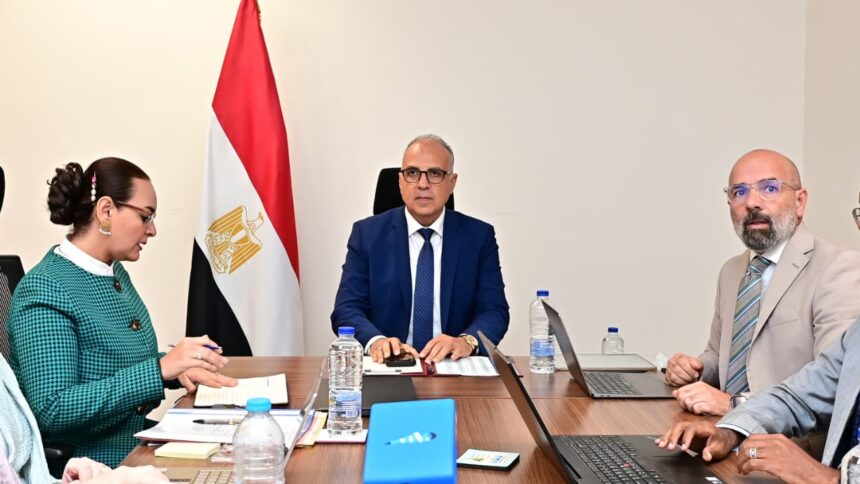
Water Resources and Irrigation Minister Hani Sewilam discussed developing the use of desalinated water for intensive food production with Hossam El-Zayat, Deputy Director of the American University in Cairo’s Center for Applied Research on the Environment and Sustainability (CARES).
Sewilam said desalination for intensive food production was one of the tracks under Egypt’s “Water System 2.0” approach, which aims to produce more food with less water as the country faces limited water resources.
He called for more applied research to reduce both desalination costs and the energy required for the process, saying economic viability would be a key factor in determining whether desalinated water could be used more widely for agriculture.
The talks also covered farming methods designed to maximise output from each unit of water, taking into account crop water footprints and the economic return from the water and energy used in food production.
Sewilam also raised the possibility of making productive use of the highly saline brine generated by desalination, including extracting commercially valuable salts and minerals or using it for algae production and brine shrimp farming.
He said such approaches could improve the overall value of desalination while reducing the environmental impact of disposing of concentrated brine.
The minister called for stronger cooperation among government agencies, universities and research centres to develop practical applications for desalination-based food production and draw on international experience.
The ministry’s statement did not specify locations or timetables for pilot projects, nor did it provide estimates for desalination costs or the scale of food production being targeted.