

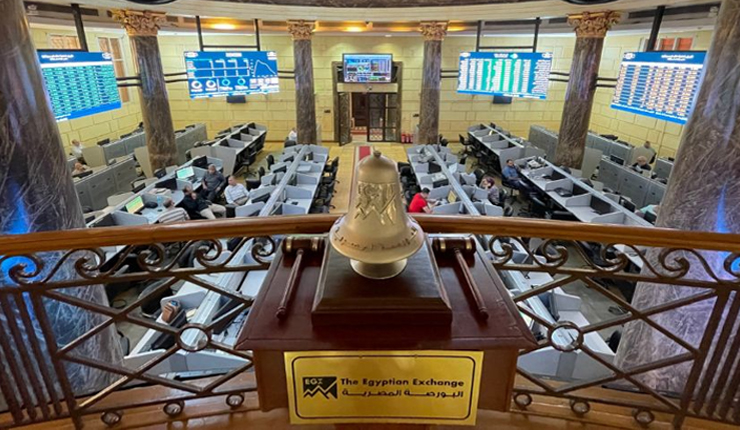
Some 61,000 joint-stock companies in Egypt are eligible to benefit from the advantages of listing on the Egyptian Exchange (EGX), representing a promising opportunity to deepen the capital market and expand the base of listed companies, Mohamed Awad, Chief Executive Officer of the General Authority for Investment and Free Zones (GAFI), said as the standing joint committee between the authority and the bourse held its first meeting of 2026.
Awad noted that GAFI’s services have been used to establish around 414,000 companies, while the number of companies listed on the Egyptian Exchange stands at around 260.
The meeting was held within the framework of implementing the directives of Mohamed Farid Saleh, Minister of Investment and Foreign Trade, on strengthening integration and coordination between the ministry’s affiliated bodies and the various state institutions concerned with economic and investment affairs, in a manner that contributes to improving the investment environment and facilitating the services provided to investors. The session was chaired by Awad and Omar Radwan, Chairperson of the Egyptian Exchange, and attended by Major General Yasser Abbas, Deputy Chief Executive Officer of the authority, and Mohamed Sabry, Vice Chairperson of the Egyptian Exchange.
The minister affirmed that the ministry attaches great importance to strengthening integration and coordination between the various state bodies to develop and encourage investment, by creating the appropriate environment to incentivise investors and ease procedures for them. He noted that cooperation between the Egyptian Exchange and GAFI aims to ease matters for listed companies, expedite the completion of required services and tasks, and raise the efficiency of services provided to investors and companies.
Farid added that this cooperation also contributes to raising awareness among joint-stock companies of the advantages of converting into public companies listed and traded on the bourse, where such companies are qualified and their owners have the desire and conviction to do so. This supports efforts to deepen the capital market and increase liquidity levels, as one of the essential elements for the success of government and private offerings, in line with the targets and pillars of the State Ownership Policy Document, which aims to strengthen the role of the private sector and increase its contribution to economic activity, supporting sustainable, employment-rich economic growth.
The meeting discussed ways to strengthen cooperation and coordination between the two sides to facilitate procedures for listed companies and improve the services provided to investors, alongside discussing the development of the joint cooperation protocol to support the promotion of investment opportunities and the capital market, the exchange of information and expertise, and the implementation of joint awareness and training programmes.
Awad affirmed that the committee represents an institutional mechanism for strengthening integration between the authority and the bourse, explaining that the coming phase will see the development of the cooperation protocol between the two sides to keep pace with digital transformation and enhance integration in service delivery. He pointed to the importance of supporting promising companies and encouraging them to benefit from the financing tools available through the capital market.
For his part, Radwan affirmed the importance of continued coordination to address the challenges facing listed companies and to work on encouraging more companies to benefit from the advantages of listing and trading, proposing the organisation of joint training programmes and workshops to raise staff efficiency and strengthen institutional communication between the two sides.


