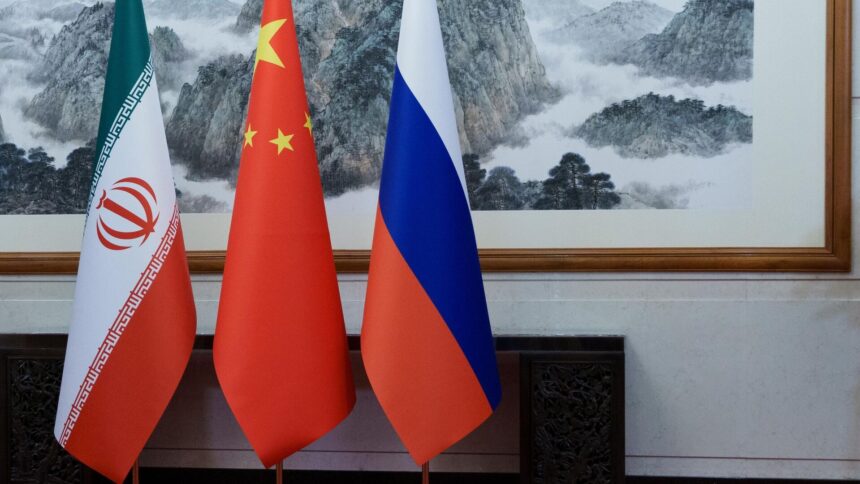
Today’s international environment is far more complex than in the past. Alliances are less defined, and the world is no longer divided into strictly opposing blocs. International relations have become increasingly fluid. Within this context, the evolving relationship among Russia, China, and Iran has sparked significant debate among scholars.
This relationship matters because it directly influences the balance of power in the Middle East, a region where new international trends are often tested. The key question is not whether a formal alliance exists, but how this flexible mix of interests reshapes power and stability in the region.
Such cooperation challenges traditional ideas about deterrence. In recent years, Iran has sought closer ties with Russia and China to counterbalance US influence. Yet these relationships do not guarantee support in times of crisis. Instead, they create an uncertain security environment, where assistance is not assured and outcomes remain unpredictable.
This uncertainty grants regional powers greater independence. Without rigid alliances, Middle Eastern states can engage with multiple major powers without fully committing to any single bloc. As a result, the region has become a competitive arena where countries respond to shifting interests and pursue diverse partnerships. This has produced a fragile and easily disrupted stability.
In the past, the region enjoyed a more structured balance. Today, crises are managed rather than resolved. Major powers such as Russia and China aim to prevent escalation but avoid costly or risky commitments. This approach seeks to maintain stability and avert conflict, yet underlying tensions persist.
Russia and China focus on managing regional crises—including those involving Iran—rather than pursuing comprehensive solutions. Russia seeks to limit further complications given its own challenges and the war in Ukraine. China, meanwhile, prioritizes safeguarding its economy and energy security, while steering clear of direct military involvement. This strategy may prevent deterioration but does not address deeper structural issues.
By managing crises instead of resolving them, Russia and China maintain a degree of control and stability in the region. Their relationship with Iran remains flexible, allowing each side to pursue its own interests without binding defense commitments.
This flexible approach has significant implications. Rather than a single dominant power imposing order, the Middle East now operates within a complex web of overlapping relationships. Power struggles persist, but with multiple strong actors involved, outcomes are harder to predict.
Consequently, the region is more susceptible to sudden shifts, while states enjoy greater freedom to adapt to new circumstances. The environment remains fluid, with numerous players shaping and reacting to events. Rapid change is the norm, forcing countries to continually reassess strategies and partnerships. Traditional frameworks for understanding these dynamics no longer suffice. Today, relationships are driven by shifting interests rather than fixed alliances or ideologies. Even when divisions appear to deepen, they may not reflect enduring realities.
Dr. Marwa El-Shinawy – Academic and Writer