


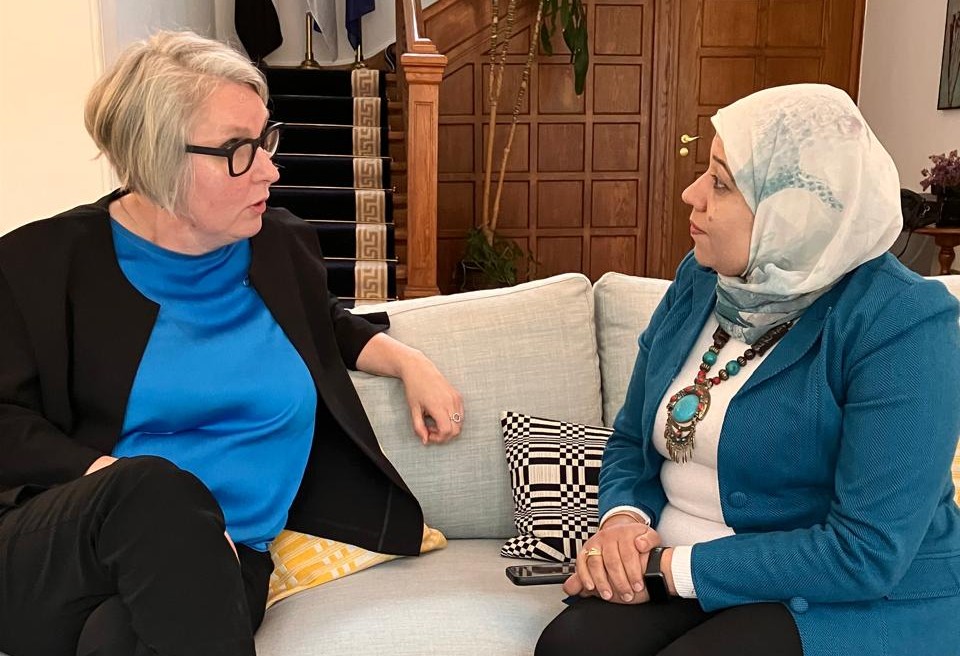
Finland’s Ambassador to Egypt, Riikka Eela, has highlighted the growing momentum in Egyptian-Finnish economic relations, pointing to substantial untapped opportunities across trade, investment, and technology.
- What is the current volume of trade exchange between Egypt and Finland, and how do you see it evolving in 2026?
- What is the current level of Finnish direct investment in Egypt, and which sectors hold the most promise?
- Finland is known for its leadership in digitalisation. What opportunities exist for cooperation with Egypt in this field?
- What joint efforts are underway in sustainability and the green transition?
- What challenges do Finnish companies face in the Egyptian market?
- How does Finland view Egypt’s role as a logistics and trade hub?
- Are there emerging sectors that could drive future cooperation?
- Where do you see the greatest potential for strengthening cooperation in the coming years?
In an interview with Daily News Egypt, Eela underscored Finland’s global strengths in innovation, digitalisation, and sustainability, identifying key sectors for deeper cooperation, including ICT, healthcare, the green transition, and logistics.
She also emphasised Egypt’s strategic position as a regional hub, recent progress in improving the business climate, and a shared ambition to build a long-term, future-oriented partnership between the two countries.
What is the current volume of trade exchange between Egypt and Finland, and how do you see it evolving in 2026?
Trade relations between Egypt and Finland have developed steadily in recent years, reflecting a positive trajectory. However, despite this progress, considerable untapped potential remains to expand trade flows in both directions. We expect exports from both countries to continue growing gradually in 2026, supported by stronger economic ties and increased business engagement.
According to the latest full-year data for 2024, Finland’s exports to Egypt reached approximately €456m. Goods accounted for 94% of this total, while services represented just 6%. In a broader context, exports to Egypt still account for less than 0.5% of Finland’s total global exports, which stood at around €111bn, clearly indicating significant room for expansion.
Egypt holds a strategically important position for Finland. It is currently the largest destination for Finnish goods exports in Africa, surpassing markets in the GCC. Nearly 80% of Finnish exports to Egypt consist of forest-based products, including timber, paper, and pulp.
One of the most promising opportunities lies in the services sector. Globally, services account for around 35% of Finland’s exports, yet in Egypt they represent only 6%. This gap highlights strong potential for growth in digital services, consulting, and advanced technological solutions.
On the other hand, Egyptian exports to Finland reached €88m in 2024, with goods comprising 77% and services 23%. Key exports include fertilisers, chemicals, textiles, glassware, and agricultural products such as fruits and vegetables.
What is the current level of Finnish direct investment in Egypt, and which sectors hold the most promise?
Measuring Finnish direct investment in Egypt is not always straightforward, as many companies operate through global structures, meaning their investments are not always fully captured in country-level statistics.
That said, several prominent Finnish companies have established significant operations in Egypt. For example, Huhtamäki operates three manufacturing facilities and has obtained a Golden Licence, reflecting the scale of its investment. HMD Global has also set up large-scale mobile phone manufacturing operations in the country.
In addition, Nokia plays a major role in Egypt’s telecommunications landscape, running extensive regional operations from Cairo and contributing to digital infrastructure development across Africa. Meanwhile, KONE is actively involved in major construction and infrastructure projects, providing vertical transportation solutions.
Egypt is widely regarded as an attractive destination for foreign investment due to its strategic location, large market, and ongoing economic reforms. While governments can facilitate investment, decisions ultimately lie with companies. Our role is to provide accurate information and encourage Finnish firms to explore opportunities in Egypt.
We also encourage Egyptian stakeholders to engage directly with Finnish companies in Finland. Cooperation between the Finnish Embassy in Cairo and the Egyptian Embassy in Helsinki already provides a strong foundation for further growth.
Looking ahead, sectors such as machinery, ICT, and healthcare offer particularly strong potential for increased Finnish investment.
Finland is known for its leadership in digitalisation. What opportunities exist for cooperation with Egypt in this field?
Finland has developed a highly advanced ICT ecosystem and is globally recognised as a leader in digital transformation. Companies such as Nokia are at the forefront of innovation, including next-generation technologies like 6G.
One area where Finland excels is digital public services. For instance, it operates one of the world’s most efficient online taxation systems, developed by Solita, which simplifies compliance by automatically calculating taxes and preparing returns for approval.
In addition, a comprehensive digital government platform developed by Gofore enables citizens to access a wide range of public services online—from passport applications to vehicle registration—eliminating the need for physical visits.
Egypt has already made important strides through initiatives such as the Digital Egypt platform, creating a strong foundation for collaboration, particularly in exchanging best practices and developing more advanced solutions.
There are significant opportunities for cooperation in ICT, including artificial intelligence, data centres, secure mobile networks, and broader digital transformation initiatives. Digitalisation and AI, in particular, can substantially enhance productivity across key sectors of the Egyptian economy.
What joint efforts are underway in sustainability and the green transition?
Finland’s approach to sustainability is based on collaboration, long-term planning, and science-based policymaking, bringing together government, private sector, academia, and civil society.
One key initiative is Finland’s support for the “Switch to Circular Economy” programme, implemented by the United Nations Industrial Development Organization (UNIDO) in Egypt under the name “One Circle”, which promotes resource efficiency and sustainable production.
A notable example is a refurbishment centre established by Nokia, focused on extending the lifecycle of mobile network equipment. The facility is already operational and has strong potential for expansion.
Finland also plays a leading role in the World Circular Economy Forum. Meanwhile, companies such as Wärtsilä are investing in breakthrough technologies, including power plants capable of operating on 100% hydrogen, an innovation with significant implications for Egypt’s energy transition.
What challenges do Finnish companies face in the Egyptian market?
We recognise and appreciate the significant efforts made by Egyptian authorities to improve the business environment. Reforms in areas such as customs management have been particularly noteworthy and send a positive signal to investors.
However, some challenges remain, particularly in customs clearance procedures and administrative processes. Addressing these issues will be important for enhancing Egypt’s competitiveness as a global logistics hub and gateway to Africa.
It is also important to note that Finland conducts its trade policy within the framework of the European Union, working closely with EU member states and the EU Delegation in Cairo to maintain continuous dialogue with Egyptian authorities.
Overall, while challenges persist, the trajectory is clearly positive, and ongoing reforms are expected to further improve the investment climate.
How does Finland view Egypt’s role as a logistics and trade hub?
Egypt’s strategic geographic location makes it ideally positioned to serve as a logistics and manufacturing hub for both Africa and the Middle East. Its access to major shipping routes and proximity to key markets offer clear advantages.
As a member of the African Continental Free Trade Area, Egypt provides access to a vast and growing African market. Many Egyptian companies already have a strong presence across the continent, creating opportunities for Finnish firms to collaborate and expand their footprint in Africa.
Are there emerging sectors that could drive future cooperation?
Yes, several emerging sectors offer promising opportunities. Finland has a vibrant gaming industry with annual revenues of nearly €3bn, led by globally recognised companies such as Supercell and Rovio Entertainment.
Finland also hosts Slush, one of the world’s leading startup events, connecting entrepreneurs with investors and global tech ecosystems.
Healthcare innovation is another promising area, particularly in women’s health, where Finland has developed specialised expertise through initiatives such as the Women’s Health Hub.
At the same time, Egypt’s dynamic and youthful startup ecosystem presents strong opportunities for collaboration. Initiatives like the Nordic Tech Hub in Cairo have already demonstrated the potential to connect Nordic innovation with Egypt’s development and sustainability goals.
Where do you see the greatest potential for strengthening cooperation in the coming years?
The priority is to continue expanding trade and investment flows in both directions. Finland and Egypt share a long history of commercial relations spanning more than a century, built on trust and mutual respect.
In today’s rapidly evolving global environment, strengthening these ties is more important than ever. The Finnish Embassy in Cairo and the Egyptian Embassy in Helsinki play a key role in facilitating business connections and supporting companies.
The establishment of the Finnish–Egyptian Trade Council and its Egyptian counterpart is another important step in strengthening institutional cooperation. These platforms will serve as key pillars in unlocking new opportunities.
Overall, the outlook for Finnish–Egyptian relations is highly promising, with strong potential to deepen cooperation across trade, investment, innovation, and sustainable development.


