

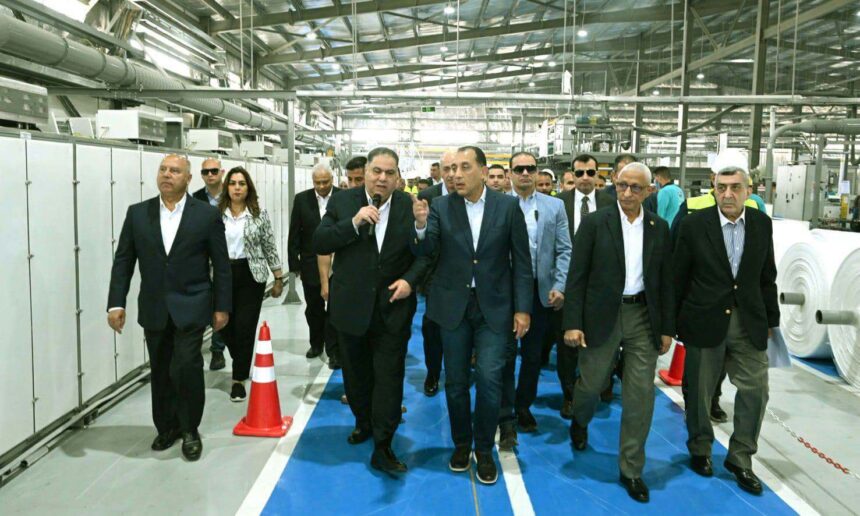
Egyptian Prime Minister Mostafa Madbouly inaugurated the National Sinai for Plastic Industries (NSPI) factory in Bir El-Abd, as part of a broader tour of development and infrastructure projects across North Sinai, underscoring the government’s commitment to accelerating economic growth in the peninsula.
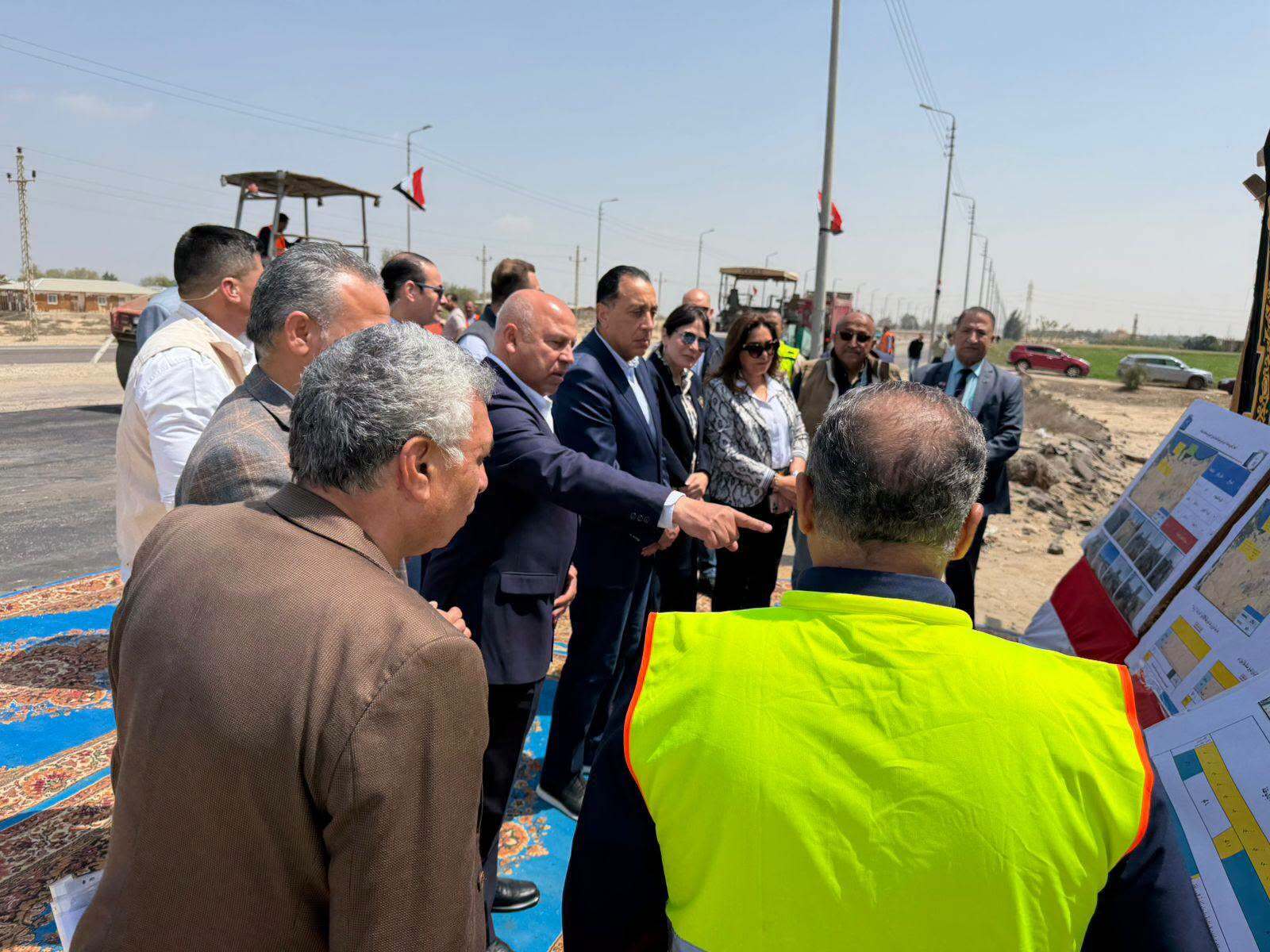
En route to the opening, Madbouly made an unplanned stop to inspect upgrade works on the Al-Mathlath Checkpoint–Gelbana–Balouza road, a 20-kilometre stretch being developed under the presidential Decent Life initiative and implemented by the Ministry of Transport. He also reviewed maintenance and expansion works on the Qantara East-Arish road, including resurfacing, lane widening and safety enhancements aimed at improving connectivity and reducing travel risks.
Minister of Transport Kamel Al-Wazir said Egypt is implementing a series of major infrastructure projects in Sinai in line with directives from President Abdel Fattah Al-Sisi to achieve comprehensive and sustainable development. He noted that upgrading road networks is key to attracting investment in sectors such as agriculture, industry and tourism, while improving access to essential services including education and healthcare.
Madbouly later attended the inauguration of the plastics manufacturing facility in the Bir El-Abd industrial zone, describing it as a tangible step in the state’s strategy to expand industrial development nationwide, particularly in North Sinai, which holds significant untapped potential.
The factory, developed by NSPI, is built on a 20,000-square-metre site with total investments of approximately EGP 530m. As the first industrial project in the Bir El-Abd industrial zone, it is expected to serve as a catalyst for building a broader industrial base in the governorate.
The facility specialises in producing woven polypropylene bags used for packaging cement, sugar, flour and animal feed. It has an annual production capacity of around 55 million units and is equipped with advanced production lines imported from India, marking the first time such technology is introduced to Egypt.
Madbouly highlighted the project’s role in supporting domestic industry, creating jobs and opening new export opportunities. The factory currently employs 170 workers, 46% of whom are from Sinai, reflecting efforts to integrate local communities into development initiatives.
North Sinai Governor Khaled Megawer described the ongoing efforts as part of a broader “battle for development”, noting that rebuilding the region requires sustained momentum following years of security challenges.
Meanwhile, Hassan Fahmy said the project forms part of a wider strategy to stimulate economic activity in Sinai and attract further investment. He called for additional incentives and streamlined procedures, including the establishment of a dedicated investor services centre in Bir El-Abd.
Beyond industrial development, the Prime Minister also reviewed progress on a major railway project linking Bir El-Abd, Arish and Ras El-Naqab, spanning approximately 353 kilometres. The railway is part of the broader Arish-Taba logistics corridor, aimed at enhancing trade and connectivity across Sinai.
During the visit, Madbouly inspected works on the Bir El-Abd-Arish segment, where construction is advancing on embankments, stations and key infrastructure components, including bridges and tunnels. He also reviewed the 12-kilometre railway link connecting to Arish Port, which will facilitate the movement of goods through the national rail network.
Al-Wazir noted that the wider Sinai railway network—extending up to 500 kilometres from Ferdan to Taba—represents a key pillar of Egypt’s logistics strategy, supporting economic integration, improving mobility and unlocking new development opportunities across North, Central and South Sinai.
Madbouly concluded the tour by directing officials to accelerate implementation timelines, emphasising the importance of enhancing road safety, improving transport efficiency and delivering tangible benefits to citizens. He stressed that these projects collectively reflect Egypt’s determination to transform Sinai into a dynamic hub for investment, industry and logistics.


