

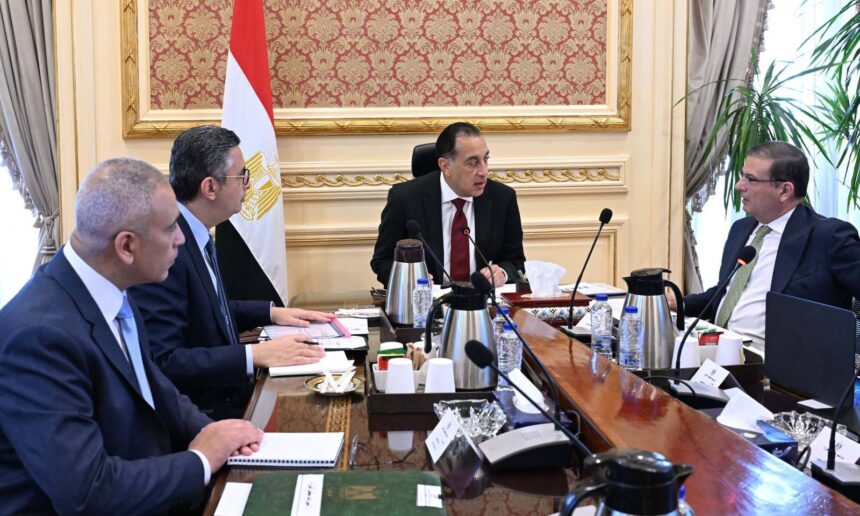
Prime Minister Mostafa Madbouly held a series of high-level meetings on Sunday to assess Egypt’s preparedness on strategic commodities, the current local wheat supply season, and financial planning for the upcoming fiscal year.
The discussions covered the availability of essential goods in domestic markets, the distribution of agricultural fertilizers, and the broader economic and fiscal framework underpinning government operations and investment. The meetings come amid ongoing regional pressures affecting supply chains, financing conditions and key sectors.
In the first session, attended by Minister of Supply and Internal Trade Sherif Farouk and Minister of Agriculture and Land Reclamation Alaa El-Din Farouk, Madbouly stressed that regular follow-ups aim to ensure adequate strategic reserves for a comfortable time horizon. This, he said, is essential to stabilising markets and maintaining balanced prices.
He underscored that close monitoring of fertilizer availability and stronger governance of the subsidy system are critical to meeting domestic demand. Ensuring timely and equitable distribution is expected to support farmers, raise productivity and expand agricultural output. The meeting also reviewed preparations for the 2026 local wheat procurement season, a cornerstone of Egypt’s food security strategy.
Farouk noted that reserves of key commodities–including wheat, rice, sugar, cooking oil, pasta and meat–are sufficient to cover domestic consumption for up to six months, with some items nearing a full year of supply. He added that the government is targeting around five million tonnes of locally sourced wheat this season, in line with efforts to bolster food security. Proactive planning, he said, has helped contain the impact of regional disruptions and ensure continued availability of essential goods.
Alaa El-Din Farouk outlined measures to maximise the 2026 wheat season, including incentives for farmers to supply larger volumes through competitive procurement prices. The plan also focuses on improving operational efficiency, tightening oversight, expanding collection points in key agricultural areas, and strengthening cooperative collection mechanisms in coordination with local directorates and crop marketing bodies. Direct farm-to-collection logistics are also being deployed to ease transport burdens and streamline delivery.
The meeting further reviewed efforts to ensure the regular distribution of agricultural fertilizers. Activity intensified nationwide over the past week, alongside a one-week extension of the distribution period. Authorities verified compliance with approved mechanisms, completed winter allocations, and ensured that subsidies reached eligible farmers. Additional steps include enhanced field monitoring, adoption of modern technologies in production and distribution, and stricter controls to prevent malpractice while safeguarding fair access.
In a separate meeting, Madbouly met with Minister of Finance Ahmed Kouchouk to review key fiscal files. The Prime Minister reaffirmed the government’s priority of securing sufficient financing to meet essential needs, strengthening partnerships with the private sector, improving public services, and maintaining a balanced fiscal stance to support growth and stability.
Kouchouk said the ministry is working to ensure adequate funding for state requirements while rationalising expenditure and increasing allocations to certain entities to enhance flexibility under exceptional conditions. He stressed that securing essential goods for citizens and production inputs for investors remains a central objective.
He also highlighted close coordination with relevant ministries to ensure smooth trade flows through ports and customs, supporting supply chain efficiency and uninterrupted movement of goods.
On the 2026/2027 budget, Kouchouk said it has been prepared to be balanced, flexible and impact-driven, with provisions aimed at stimulating growth, improving services and maintaining buffers against potential risks. He added that a package of draft laws–approved by the Cabinet–will be submitted to Parliament, focusing on easing the tax burden, encouraging investment, broadening the tax base and strengthening state revenues without constraining economic activity.
The minister noted that ongoing reform efforts are being implemented in coordination with the Central Bank of Egypt, with the aim of enhancing macroeconomic stability, improving fiscal and monetary indicators, and building a more resilient economy capable of absorbing external shocks.


