

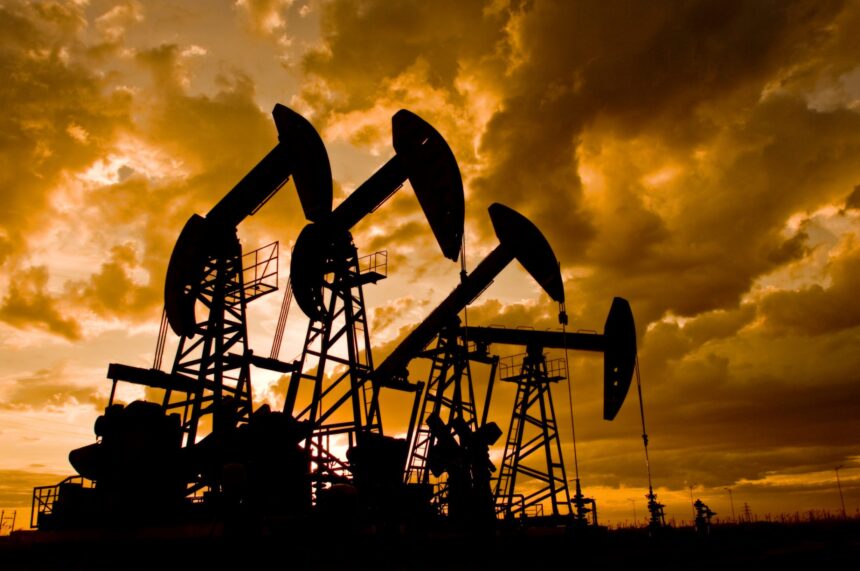
As April 2026 begins, the Middle East is entering a highly volatile phase in its confrontation with Iran. What started as a conventional military escalation has rapidly evolved into a full-fledged “energy war”, posing direct risks not only to regional stability but to the global economy at large. The US-Israeli operation “Epic Fury” marked a dramatic turning point, targeting key nodes of Iran’s leadership structure. The reported killing of Supreme Leader Ali Khamenei and several senior officials has, at least temporarily, disrupted Tehran’s decision-making architecture and accelerated a cycle of rapid and reciprocal escalation.
In recent weeks, the conflict has taken on a more dangerous dimension, shifting towards direct attacks on critical energy infrastructure. US and Israeli strikes have targeted Iranian oil and gas fields, as well as power generation facilities. In response, Tehran has launched waves of ballistic missiles and drones against energy installations across the Gulf. These attacks have caused significant damage to production and refining facilities, triggered large-scale fires, and partially disrupted supply chains—effects that were swiftly reflected in global markets through sharp increases in oil and gas prices.
Against this backdrop, US President Donald Trump has escalated his rhetoric, signalling the possibility of broader strikes on Iran’s energy backbone—including power plants, oil infrastructure, and strategic sites such as Kharg Island—should maritime traffic through the Strait of Hormuz remain obstructed. The Strait, through which nearly 20 per cent of the world’s oil supply flows, represents a critical chokepoint; any sustained disruption would translate into immediate pressure on the global economy.
Iran’s threat to partially or fully close the Strait has triggered widespread international concern. The International Energy Agency has begun assessing the release of strategic reserves in an effort to mitigate potential supply shocks. Meanwhile, Gulf Cooperation Council (GCC) states have found themselves at the epicentre of the confrontation, as their energy facilities came under direct attack despite prior efforts to avoid deep involvement in the conflict.
Politically, Gulf states have adopted a dual-track approach: firmly condemning Iranian attacks while simultaneously advocating de-escalation through diplomatic channels. While Riyadh and Abu Dhabi have shown indirect support for efforts to curb Iran’s missile capabilities, countries such as Qatar and Oman have prioritised mediation, warning of the severe economic consequences of any prolonged disruption to energy markets and maritime routes.
At the regional level, broader diplomatic engagement has intensified, with key actors including Egypt, Turkey, Pakistan, and Saudi Arabia participating in high-level consultations aimed at containing the crisis. These efforts have focused on securing the Strait of Hormuz and preventing a slide into a wider regional war, reflecting a shared recognition of the immense strategic and economic stakes involved.
Beyond the immediate battlefield, the crisis has underscored the vulnerability of global supply chains. The disruption is no longer confined to oil and gas production; it now threatens the broader architecture of international trade. Instability in the Strait of Hormuz has driven up shipping and insurance costs, prompting some global companies to reroute cargo via longer alternatives such as the Cape of Good Hope. The result is higher transit times, increased costs, and renewed inflationary pressures worldwide.
At the same time, the crisis is likely to accelerate the global transition towards alternative energy. Industrial economies—particularly in Europe and Asia—are expected to intensify efforts to reduce dependence on Gulf oil by expanding investments in renewables, including green hydrogen, solar, and nuclear energy. While gradual, this shift carries long-term strategic implications for hydrocarbon-dependent economies in the region.
The crisis cannot be fully understood without factoring in the role of major global powers. Countries such as China and Russia are deeply intertwined with the unfolding dynamics. Beijing, as one of the largest importers of Gulf energy, has a vested interest in maintaining stable flows and may push for diplomatic solutions. Moscow, meanwhile, navigates a more complex calculus—benefiting from higher energy prices while seeking to preserve its regional balance of relationships.
Inside Iran, the situation is further complicated by signs of internal fragility in the post-Ali Khamenei era. Competition among key power centres—such as the Revolutionary Guard, the clerical establishment, and political factions—could shape Tehran’s strategic choices, either towards further escalation or towards pragmatic engagement to relieve mounting pressure.
Equally concerning is the risk of unintended escalation. With multiple theatres of operation—Iran, the Gulf, Yemen, and Lebanon—and the involvement of non-state actors, the probability of miscalculation remains high. A single tactical error or misjudgement could rapidly expand the conflict beyond current limits.
From a macroeconomic perspective, the crisis is already placing additional strain on the global economy. Central banks may be forced to reconsider monetary policy trajectories, delaying rate cuts or even reverting to tightening measures to contain energy-driven inflation. Such shifts could weigh heavily on global growth, particularly in emerging markets.
In light of this complex landscape, there is an urgent need for a comprehensive political–economic framework that moves beyond temporary ceasefires towards a sustainable regional security architecture. Any viable agreement would likely require a balanced formula: an Iranian commitment not to weaponise the Strait of Hormuz, in exchange for international guarantees against targeting Iran’s energy infrastructure, alongside the establishment of a monitoring mechanism to ensure maritime security.
This should be complemented by broader regional security arrangements addressing missile threats, drone warfare, and the role of non-state actors. Economically, calibrated incentives—such as phased sanctions relief and reconstruction support—could serve as leverage to encourage pragmatic compromises, while humanitarian initiatives would be essential to rebuild affected areas in Iran, the Gulf, and Lebanon.
As the conflict enters its second month, it is clear that energy has become the central lever shaping its trajectory. The coming phase will likely be defined by one of three scenarios: a conditional de-escalation through a limited agreement on energy and maritime security; a prolonged war of attrition with no decisive outcome; or a broader regional escalation with far-reaching consequences.
Ultimately, Arab states—particularly those in the Gulf—carry a critical responsibility in steering diplomatic efforts. Anchored in their core interests of security and sustainable development, their role in driving a credible political process is indispensable. With time running short and risks mounting, pragmatic political solutions remain the most rational path to prevent the region from sliding into an uncontrollable and deeply destabilising conflict—one that could reshape the Middle East for decades to come.
Dr Hatem Sadek – Professor at Helwan University

