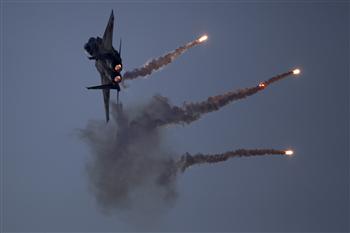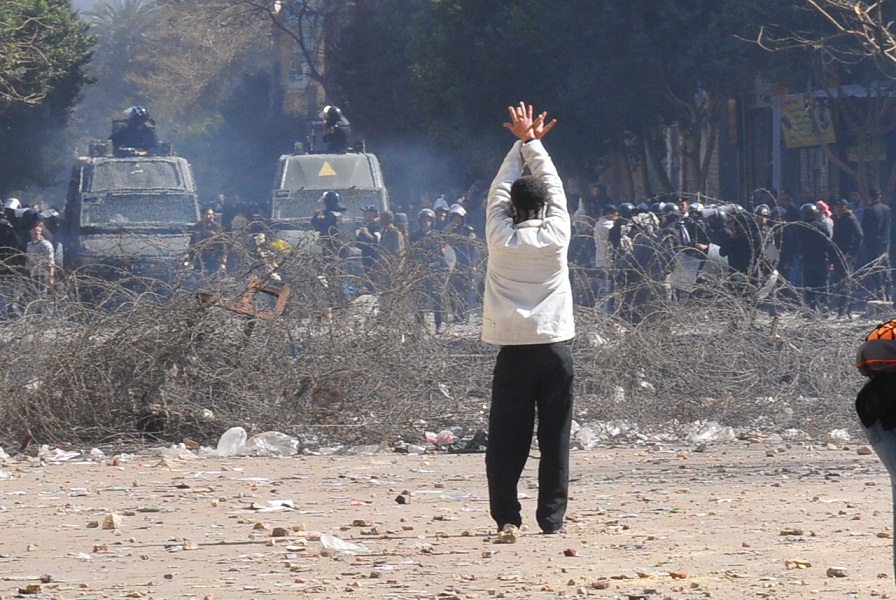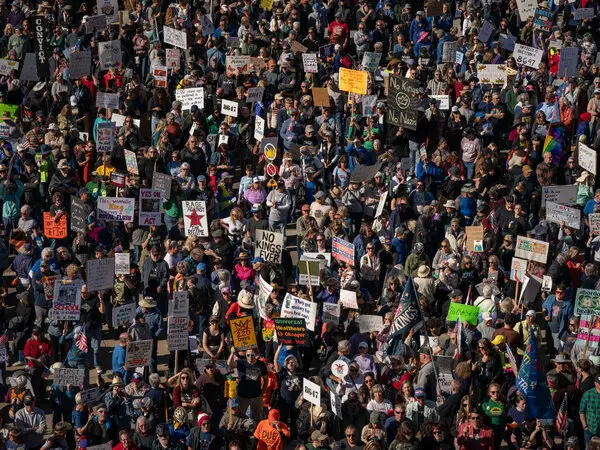
On 28 March 2026, millions of Americans took to the streets in unprecedented protests under the banner of “No Kings”, sending a clear message that the populace would not tolerate the concentration of power in the hands of a single individual, nor remain silent in the face of corruption or unjust wars. What distinguished this day was that the American people, after decades of polarisation and misdirected awareness, began to understand the hidden dynamics driving power and politics, realising that popular anger can be exploited if not consciously directed. This new awareness coincided with an escalation of US-Israeli strikes on Iran’s nuclear and military facilities, adding a dual dimension to the protests, as demonstrators linked internal authoritarianism with external war policies, recognising that America’s crisis is rooted not only in leadership but in accumulated economic and social failures over four decades. While the war on Iran had a broader context and long-standing causes, it is now being actively exploited to divert attention from Trump’s scandals more than for any other reason.
The popular anger expressed by millions of Americans did not arise in a vacuum but was the result of a long-standing series of political and economic failures, from the erosion of labour unions and the loss of millions of manufacturing jobs due to globalisation and open markets, to major financial crises such as the 2008 Great Recession, which exposed a vast gulf between financial and political elites and the middle and marginalised classes. Donald Trump, according to political analysts like Robert Reich, did not create the anger itself, but skilfully exploited it demagogically, redirecting citizens’ frustration away from the true causes of domestic failure—rising prices, declining essential services, and exposed corruption—towards hostility against the government, immigrants, and minorities, thereby constructing a misguided electoral base rooted in fear and false security.
It is important to note that the American populace was deeply polarised, and Trump’s success in the most recent elections was not solely a reflection of his popularity; while he had a loyal base, a significant portion of voters, including Arab Americans who made their position explicit, cast ballots as a punitive vote against Democratic policies rather than as support for Trump himself. Despite the massive turnout in the main demonstrations (estimated at 8-9 million participants across more than 3,300 events), small counter-protests did occur in some cities, but they remained limited in size and influence.
In this context, the war on Iran was not merely an external conflict but a tool employed by the president to divert attention from domestic failures and the management of the state, as well as the Jeffrey Epstein scandals. After years of polarisation and media manipulation, the American public became increasingly aware that this war was not waged to protect values or the Iranian people, but served personal and authoritarian agendas. Foreign policy could be exploited to mask domestic shortcomings and scandals, making the 28 March protests a moment of collective political clarity and a demonstration of citizens’ capacity to hold power accountable and resist exploitation.
The prominent presence of artists in the heart of the protests added a significant symbolic dimension: Robert De Niro labelled Trump a threat to freedom, Arnold Schwarzenegger had warned for years about authoritarian tendencies, and Bruce Springsteen emphasised that art could serve as a counterforce to demagoguery. This gathering was not merely a media spectacle; it was a symbol of the people’s ability to resist and hold authority accountable, demonstrating that culture and the arts are integral to civic consciousness and essential in confronting populist rhetoric and abuse of power.
What makes the 28 March protests historic is the collective awareness they revealed, showing citizens’ ability to connect domestic developments with foreign policy and understand that wars, regardless of purported security justifications, cannot cover up government failures or political scandals. The American people sent a message to the world that democracy is not merely about ballot boxes but a daily practice of accountability and peaceful confrontation of wrongdoing, capable of rejecting authoritarianism, exposing corruption, and opposing wars that serve individual power at the expense of national security and public interest.
The most significant transformation highlighted by these protests is the emergence of a decline in the intensity of deep polarisation within the American populace, as citizens became more capable of linking internal policies with global events, rejecting attempts by demagogues to manipulate public opinion or ignite external conflicts to mask failures. This civic awareness forms a robust safeguard against potential atrocities that leaders like Trump might attempt, echoing the legacies of Hitler and Stalin, confirming that the American peaceful revolution protects not only the United States but democratic values globally, including the Middle East, which now stands as a principal beneficiary of the American people’s ability to set boundaries against the abuse of power.
The “No Kings” protests are far more than a transient demonstration; they represent the beginning of a qualitative shift in American popular consciousness, proving that the true power of the people lies in resisting demagoguery, exposing corruption, exercising accountability, and rejecting aggressive wars that serve personal interests over national and global welfare. Art and culture form an essential part of this social and political movement. Today, the American people are not only capable of safeguarding democracy at home but projecting influence globally, preventing any abuse of power to ignite wars or conceal scandals, affirming that a conscious society is the ultimate safeguard against the repetition of historical atrocities. Despite their geographic distance from the Middle East, these protests represent the greatest hope for the region in preventing Trump and Netanyahu from exploiting power to wreak havoc.
Dr Marwa El-Shinawy – Writer and Academic