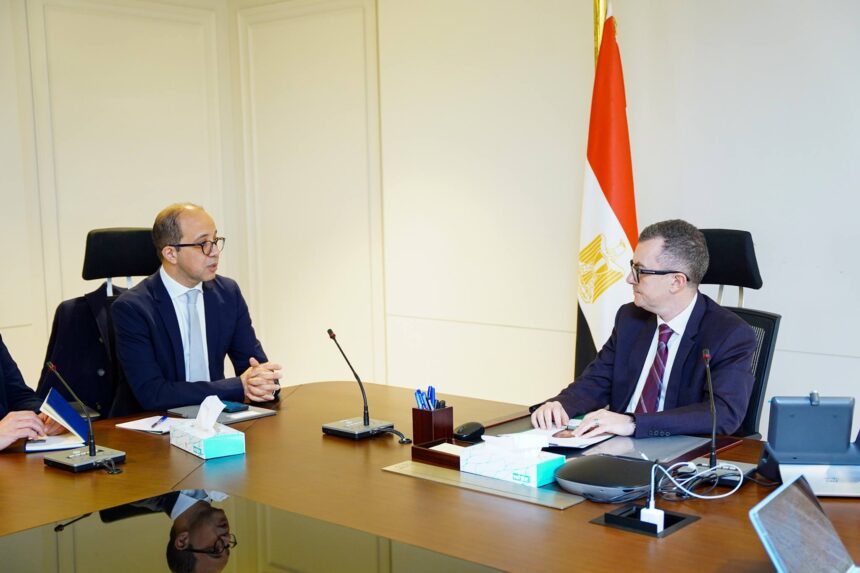
Egypt’s Minister of Planning and Economic Development, Ahmed Rostom, held talks with Naoufel Telahigue, Regional Director of the Near East, North Africa, Europe and Central Asia Division at the International Fund for Agricultural Development (IFAD), to explore avenues for broadening cooperation in food security projects and strengthening support for smallholder farmers.
The meeting forms part of the ministry’s wider efforts to advance economic empowerment and generate sustainable employment opportunities by promoting agricultural entrepreneurship.
Rostom expressed Egypt’s appreciation for its longstanding partnership with IFAD and reaffirmed the government’s commitment to deepening cooperation in line with the country’s economic and social development plan and overarching sustainable development framework. He underlined the strategic importance of the agricultural sector to the national economy, highlighting its role in supporting GDP growth, creating jobs, and reinforcing food security–particularly amid persistent global challenges.
The minister noted that the Ministry of Planning and Economic Development is working to ensure the efficient allocation of public investments to priority sectors, with food security at the forefront. He also stressed the importance of strengthening impact assessment mechanisms to secure measurable and sustainable development outcomes.
Rostom further emphasised the need for close coordination among the ministries of planning, agriculture, foreign affairs, and international cooperation, alongside international partners, to maximise returns from joint programmes.
Both sides reviewed food security as a central government priority during the current phase, including efforts to enhance strategic planning for agricultural projects and better align financing with national development objectives. Discussions also addressed expanding programmes supporting smallholder farmers, promoting agricultural entrepreneurship to empower young producers and enhance their competitiveness, and improving resource efficiency to achieve more sustainable results.
Rostom highlighted the “Decent Life” initiative as a cornerstone of Egypt’s rural development strategy, explaining that the ministry’s new approach seeks to transition beneficiaries in targeted villages from reliance on assistance to economic empowerment and productive participation. This includes job creation schemes and integrating small farmers into food processing value chains.
For his part, Telahigue reaffirmed the strategic importance of IFAD’s partnership with Egypt, commending the progress achieved in joint projects aimed at supporting smallholder farmers, establishing productive clusters, and strengthening the national food security system. He described Egypt as a key partner for IFAD in Africa and the Middle East–particularly through programmes focused on boosting productivity and enhancing resource efficiency–and confirmed the fund’s commitment to sustaining and expanding cooperation in the period ahead.