

Sudan’s Rapid Support Forces (RSF) militia have seized control of the Mistariha area in North Darfur, the stronghold of tribal leader and Revolutionary Awakening Council chairman Musa Hilal, following a multi-pronged assault involving drone strikes.
The Revolutionary Awakening Council said on Monday that Hilal survived the attack, which targeted his residence and local infrastructure. The council accused the RSF of launching the offensive from three axes on Sunday evening. However, the RSF-linked Sudan Founding Coalition, “Tassis,” denied responsibility for the strike, instead accusing the Sudanese army of carrying out the drone attacks.
In a separate development on Monday, the Chadian government announced the closure of its border with Sudan until further notice. N’Djamena said the decision follows “repeated incursions” by warring Sudanese factions into Chadian territory and is intended to prevent the conflict from spreading. The closure includes the movement of both people and goods, though the government noted that humanitarian exceptions may be granted with prior authorisation.
The escalation in North Darfur has centred on strategic locations including Mistariha and the border town of Tine. The Sudanese army and allied “Armed Struggle Movements” said they regained control of Tine after briefly losing it to the RSF. Tine is a critical gateway for commercial trade and a main corridor for humanitarian aid into Darfur.
Hilal, a prominent leader of the Mahameed branch of the Rizeigat tribe, declared his support for the Sudanese army in April 2024, a year after the conflict between the army and the RSF began. Both Hilal and RSF commander Mohamed Hamdan Dagalo, known as Hemedti, belong to the Rizeigat tribe, though they represent different branches.
Ahmed Mohammed Abkar, a spokesperson for Hilal’s council, said in a statement that the drone strikes hit a local hospital three times, as well as Hilal’s guest house, civilian homes, and a mourning tent. The council confirmed Hilal was unharmed, dismissing earlier reports of his death.
In contrast, the “Tassis” coalition alleged that the Sudanese army carried out the strikes, claiming the bombardment injured civilians and destroyed service facilities, including a hospital and water sources. The coalition called on the international community to take a firm stand against what it described as violations.
Mahameed youth groups in South and East Darfur warned that the targeting of Hilal could ignite a wider tribal war between the Mahameed and Mahariya branches. They held RSF deputy commander Abdelrahim Dagalo politically and morally responsible for any security escalation, citing fears of a return to the 2017 scenario when Hilal was arrested by the RSF.
Hilal rose to prominence during the 2003 Darfur war as a tribal leader fighting alongside the government and was placed under United Nations sanctions in 2006. He later served as an advisor to former President Omar al-Bashir before establishing the Revolutionary Awakening Council in 2014. Tensions between Hilal and Hemedti intensified during a 2017 disarmament campaign, leading to Hilal’s three-year imprisonment before his release in 2021.
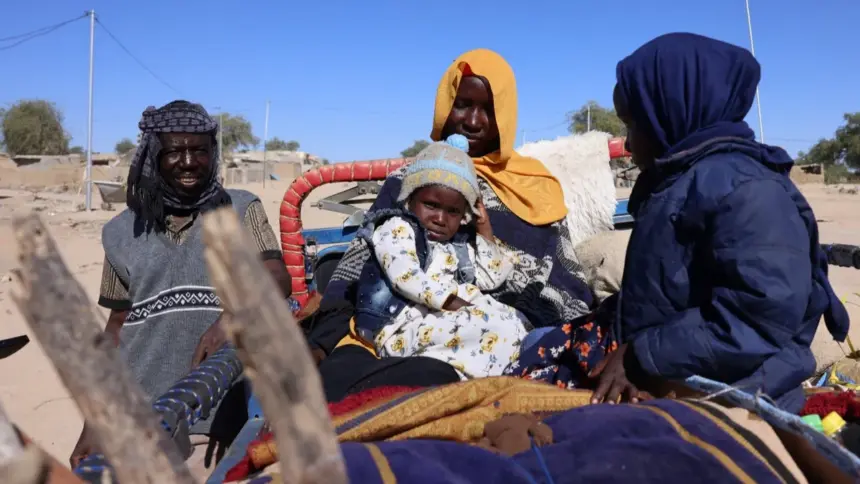
Fighting in the Tine, Karnoi, and Ambarao regions—previously considered strongholds for armed movements that had avoided direct clashes for three years—has triggered a humanitarian crisis. Witnesses reported that more than 2,000 people have fled Tine, where there are now acute shortages of food and medical supplies.
