

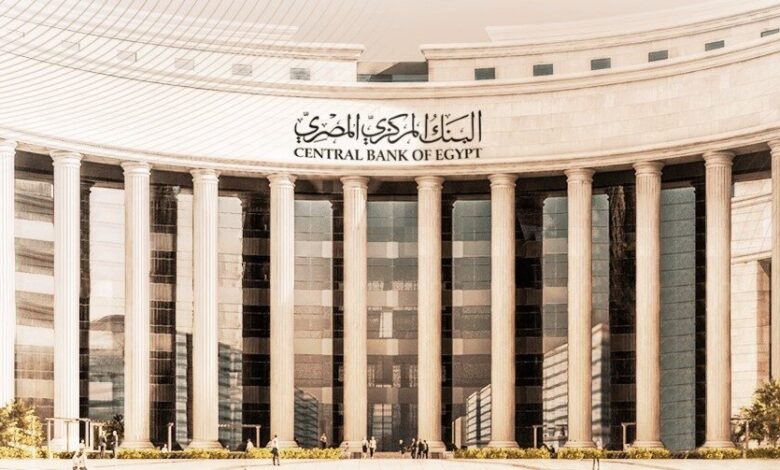
The Central Bank of Egypt (CBE) said the Egyptian banking sector had demonstrated a high degree of financial resilience and an ability to withstand various shocks, despite heightened risks to global financial stability, particularly amid escalating geopolitical tensions.
The sector’s resilience has been supported by the CBE’s continued implementation of appropriate supervisory and prudential measures, in line with domestic and global economic and financial developments and the evolving nature and sources of risks, including emerging risks.
Risk management and governance
In its recently published Financial Stability Report, the CBE stressed that it continues to strengthen banks’ risk management and governance frameworks and closely monitor their performance to ensure continued compliance with regulatory requirements, international best practices and financial soundness standards.
The CBE said these efforts were reflected in improvements in the banking sector’s financial soundness indicators during 2025 and through March 2026, strengthening its ability to absorb shocks and continue playing its central role in providing the financing needed by the domestic economy, including the foreign currency required to finance foreign trade.
This was supported by continued confidence in the banking sector among individual and institutional depositors, contributing to financial stability and economic growth.
Total assets
According to the CBE, total banking sector assets increased to EGP 26.9trn in March 2026.
The CBE explained that the banking sector relies primarily on deposits as its main source of funding, with deposits recorded at EGP 14.9trn in March 2024.
It noted that household deposits in local and foreign currencies accounted for 59.8% of total deposits, representing a stable source of funding for the sector.
The portfolio of loans and credit facilities extended to customers also increased to EGP 11.4trn in March 2026, with loans to the private sector accounting for 40.5% and personal loans representing 76.1%.
The CBE noted that the ratio of non-performing loans to total loans declined to 1.9% in March 2026, while the sector continued to maintain high provision coverage ratios for these loans, supporting its ability to absorb expected credit losses.
Local-currency loans also continued to account for the largest share of total lending, limiting credit risks associated with exchange rate fluctuations.
Market risks
The CBE said market risks in the banking sector remained low, accounting for no more than 2% of total risk-weighted assets and off-balance-sheet exposures in March 2026.
It attributed this primarily to banks’ limited investments in financial instruments classified as fair value through profit or loss, reducing revaluation risks arising from increases in interest rates.
The CBE noted that banks also complied with regulatory limits on net open foreign-currency positions relative to their total capital base, with the ratio standing at -1.6% in March 2026.
Meanwhile, the banking sector recorded an improvement in its net foreign asset position, which reached EGP 319.2bn.
The banking sector continued to demonstrate a high degree of operational resilience, with operational losses remaining limited relative to total sector revenues.
Capital requirements for operational risks accounted for 7.3% of total risk-weighted assets and off-balance-sheet exposures in March 2026, reflecting the continued maintenance of adequate capital levels to cover these risks.

Banking sector profits
According to the CBE, the banking sector’s net profits increased by 43% in the first quarter of 2026 compared with the same period in 2025, supporting the sector’s capital base.
The net interest margin stood at 5.2%, while return on average equity reached 33.9% and return on average assets remained stable at 2.6%.
The CBE added that, in terms of capital adequacy, the capital adequacy ratio reached 18.5% in March 2026, exceeding the regulatory minimum of 12.5%.
The leverage ratio stood at 7.6%, also exceeding the regulatory minimum of 3%, strengthening the sector’s ability to absorb unexpected losses and withstand various shocks.
Liquidity risks
The CBE noted that liquidity risks in the banking sector remained limited, with liquid assets accounting for 47.1% of total assets in March 2026.
The average actual liquidity ratio stood at 42.3% in local currency and 73.4% in foreign currencies.
Both the liquidity coverage ratio (LCR) and net stable funding ratio (NSFR) continued to exceed the regulatory minimum of 100%.
The local-currency liquidity coverage ratio reached 519.9%, while the foreign-currency ratio stood at 209.3%.
The net stable funding ratio reached 171.9% in local currency and 158% in foreign currencies, reflecting the sector’s ability to secure stable, long-term funding sources.
According to the CBE, the loan-to-deposit ratio continued to rise, reaching 68.4% in March 2026, driven by loan growth outpacing deposit growth.
Systemically important banks
In the same context, the CBE noted that the number of domestic systemically important banks declined to four in March 2026, compared with five in March 2025, according to the indicators used to identify them.
The CBE explained that these banks account for a substantial share of the banking sector’s balance sheet items, representing 65.6% of the sector’s total financial position.
Their market share reached 68.8% of total customer loans and credit facilities, while they accounted for 62% of deposits and contributed around 67.7% of the sector’s net profits.
According to the CBE, these banks maintain sound financial indicators and are required to build additional capital buffers ranging from 0.25% to 1.25% to mitigate systemic risks.
Strengthening cybersecurity
The CBE stressed that it continues its efforts to strengthen cybersecurity as a key pillar of financial stability through an integrated strategic vision involving numerous regulatory and supervisory measures.
These include proactively responding to potential cyberattacks through the Financial Sector Computer Emergency Response Team.
The CBE highlighted its electronic connectivity project with major state-owned and commercial banks, financial institutions and the Egyptian Credit Bureau (I-Score), alongside the provision of cybersecurity-related technical services and consultancy.
The CBE said it is working on issuing the second cybersecurity regulatory framework to keep pace with global developments and standards and accommodate advanced technologies.
The new framework includes several specialised guidance documents covering critical areas such as artificial intelligence security, governance, risk and compliance, and cloud computing security.
Strengthening the fintech and innovation ecosystem
Regarding efforts to strengthen the fintech and innovation ecosystem, the CBE said it had implemented a range of leading initiatives and programmes.
These include launching the fourth cohort of its fintech regulatory sandbox, which focuses on testing a credit-scoring model developed by I-Score.
The model uses alternative data analysis and customers’ behavioural patterns to predict their future repayment capacity.
The CBE also continued implementing the Digital Academy initiative in cooperation with the Egyptian Banking Institute, aimed at developing the digital and financial capabilities of banking sector employees.
In addition, work continued on the FinYology initiative, also in cooperation with the Egyptian Banking Institute, to introduce university students to fintech, develop their skills and connect their academic studies with available career opportunities in the sector.
Supervision of money laundering and terrorist financing risks
Regarding supervision of money laundering and terrorist financing risks, the CBE said it remains committed, in cooperation with the Egyptian Money Laundering and Terrorist Financing Combating Unit, to applying a risk-based supervisory approach.
This approach complies with standards issued by the Financial Action Task Force (FATF), as well as domestic laws, regulations and procedures, with the aim of reducing the risk of financial institutions being exploited for money laundering and terrorist financing.
The CBE explained that the assessment process is based on several questionnaires containing qualitative and quantitative components to measure the implementation and effectiveness of controls and the level of risk.
Continuous coordination and follow-up with banks are also undertaken to support the implementation of necessary corrective action plans.
An annual sector-wide assessment of these risks is conducted, alongside ongoing monitoring of emerging international risks and an evaluation of their potential implications for the Egyptian banking sector.
The CBE added that supervision of anti-money laundering and counter-terrorist financing programmes is carried out by assessing the effectiveness of governance frameworks and controls applied in this area, as well as issuing relevant regulatory instructions and requirements.
Cooperation and coordination also take place with numerous national authorities to strengthen institutional coordination and the exchange of information and expertise in this field.
