

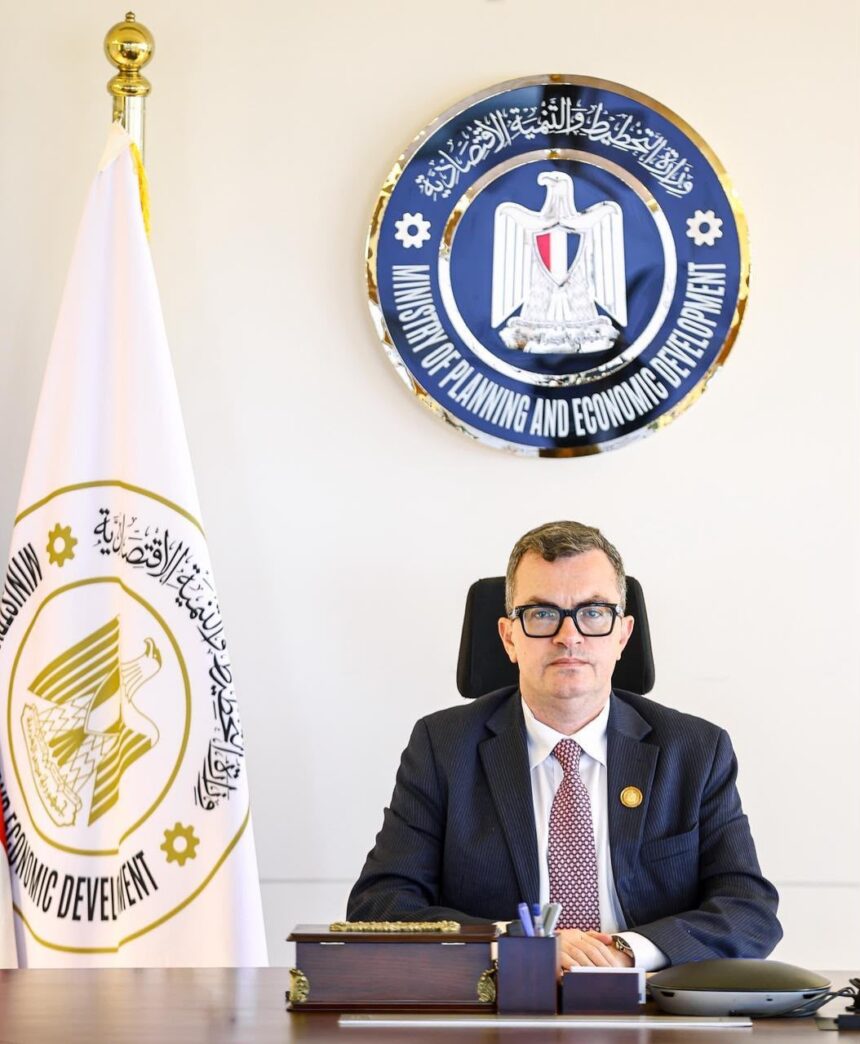
Minister of Planning and Economic Development and Egypt’s Governor at the Islamic Development Bank Group Ahmed Rostom said Egypt is developing an innovative mechanism to support and guarantee financing for infrastructure projects through the Egypt Infrastructure Financing Guarantee Facility (IFGF).
The mechanism aims to mobilise long-term financing in local currency, ease pressure on the state budget, and increase private-sector participation in financing and implementing infrastructure projects, particularly in the renewable energy and water sectors.
Rostom’s remarks came in a speech delivered on his behalf by Karim El-Sayed, Adviser to the Minister for Public Policy, at the opening of the seventh dialogue meeting of technical cooperation agencies from Islamic Development Bank member countries.
The meeting was held under the theme “Enhancing Resilience through Cooperation in Energy, Food Security and Water”, in the presence of Foreign Affairs, International Cooperation and Egyptians Abroad Minister Badr Abdelatty, as well as a number of ambassadors and representatives of international and regional institutions.
Rostom stressed the importance of the historical, civilisational, and human ties connecting the member countries of the Islamic Development Bank Group, which provide a solid foundation for strengthening cooperation and joint action.
He said the meeting’s theme clearly reflects the nature of the challenges facing member countries today and the importance of strengthening collective action, exchanging expertise, and integrating capabilities to support the efforts of Global South countries to achieve development and build economies better able to withstand crises and future transformations.
Rostom said the need to build more resilient and adaptable economies and societies is becoming increasingly pressing amid geopolitical disruptions, economic shifts, climate challenges, and successive crises affecting development finance, food security, energy security, and water security.
These challenges require countries to reconsider their tools for cooperation, intensify joint efforts, and move beyond simply responding to crises towards building more proactive, flexible institutional and economic capabilities, he said.
The planning minister also stressed Egypt’s commitment to strengthening the exchange of expertise and successful experiences, supporting technical cooperation among member countries, and enabling them to benefit from centres of excellence and national institutions with accumulated expertise.
He highlighted the role of Egypt’s Central Agency for Public Mobilisation and Statistics (CAPMAS) as an important national model, given its extensive institutional expertise in official statistics, censuses, and surveys, as well as in producing data and indicators that provide an essential foundation for evidence-based development planning and policymaking based on accurate and reliable information.
Rostom said Egypt places water, energy, and food security at the forefront of its national and development priorities, recognising the central importance of these sectors in achieving security and stability and supporting economic and social growth.
He said the state is working to strengthen the private sector’s role in financing and implementing development projects and expand partnerships with financing and development institutions, including the Islamic Corporation for the Development of the Private Sector, with the aim of mobilising additional investment and providing innovative financing solutions for priority projects.
The planning minister said that despite the scale and complexity of the challenges facing the world today, they also create new opportunities for cooperation and joint action.
He stressed that sustainable development cannot be achieved through resources alone or financing alone, but requires political will, specialised knowledge, capable institutions, and effective partnerships that can translate ideas and expertise into programmes and projects with tangible and sustainable impact.
Rostom said this is where the true value of multilateral development cooperation becomes evident, particularly through the Islamic Development Bank Group, which serves as a platform bringing together countries, institutions, expertise, and resources, providing space for dialogue and knowledge exchange and supporting the development of partnerships capable of responding to shared challenges.
He said the meeting would provide an important opportunity to strengthen dialogue, exchange experiences and expertise, and explore new areas of technical cooperation, helping build the capacities of member countries, enhance their resilience, and support their progress towards more inclusive and sustainable development.

