Egypt and Oman are exploring the establishment of two joint industrial zones, one in each country, under Egypt’s industrial developer model, as part of broader efforts to strengthen industrial integration, investment cooperation and supply chains between the two countries.
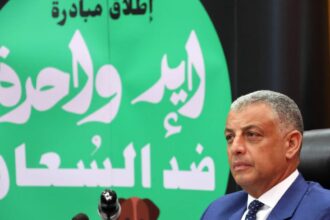
The proposal was discussed during a meeting between Nahid Youssef, Chairperson of Egypt’s General Authority for Industrial Development (IDA), and a high-level Omani delegation headed by Qais bin Mohammed Al Yousef, Chairperson of Oman’s Public Authority for Special Economic Zones and Free Zones.
The meeting formed part of an expanded visit by the Omani delegation to Egypt aimed at exchanging expertise and examining Egypt’s experience in developing, managing and operating industrial zones, particularly through the industrial developer model.
The meeting was attended by Hazem Anan, Vice Chairperson of the IDA; Salem Al Dhahli, CEO of Khazaen Economic City; Dawood Al Hadabi, CEO of Madayn Industrial Cities; Ahmed Akak, CEO of the Special Economic Zones and Free Zones Authority in Duqm; as well as senior IDA officials.
Youssef highlighted the strategic partnership between Egypt and Oman and said Egypt’s Ministry of Industry is committed to providing full support to the Omani side and sharing Egyptian expertise in the establishment, management and development of industrial zones.
She said the exchange of expertise, particularly in the industrial developer model, could support stronger supply chains and boost trade and exports between the two countries.
The IDA chairperson also outlined a package of procedural reforms introduced by the Egyptian government to create a more attractive environment for industrial investment, including incentives and facilitation measures for private-sector manufacturers and priority industries.
Youssef pointed to the success of Egypt’s industrial developer model, noting that the country currently has 26 industrial zones operating under the system, managed by 12 local and international developers and covering a combined area of approximately 40 million square metres.
Discussions also focused on a proposal to establish jointly developed private industrial zones in Egypt and Oman, with one zone located in each country. The initiative is intended to promote industrial integration between the two locations and mark a new phase of economic and industrial cooperation.
For his part, Al Yousef praised Egypt’s industrial and development progress, expressing Oman’s interest in expanding economic and industrial cooperation and benefiting from Egyptian expertise in managing specialised industrial cities and upgrading industrial infrastructure.
He said the visit aims to identify a list of priority strategic sectors and industries where the two countries could explore direct cooperation and integration based on their respective needs and competitive advantages.
Al Yousef stressed the importance of translating the discussions into practical recommendations and an actionable implementation plan that would support the long-term economic partnership between Egypt and Oman.
He added that Oman’s authority is among the country’s oldest institutions specialising in the development, establishment and operation of industrial cities, overseeing 24 investment zones, including 16 operational zones and eight currently under development.
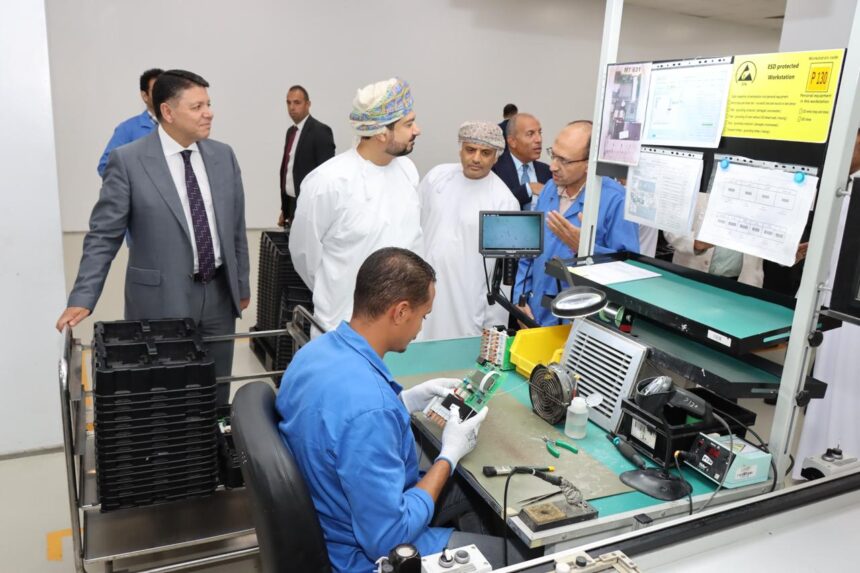
As part of the visit, the Omani delegation, accompanied by IDA Vice Chairperson Hazem Anan and other officials, conducted a field tour of 10th of Ramadan City to gain first-hand insight into Egypt’s industrial development experience.
The delegation visited Elsewedy Industrial Development’s industrial zone, which spans approximately 1.1 million square metres and hosts nearly 40 factories operating in engineering industries, equipment manufacturing, food production, pharmaceuticals, cosmetics and warehousing.
The tour also included a visit to Iskraemeco Egypt, which operates a 50,000-square-metre facility employing around 850 workers and specialises in manufacturing smart and prepaid electricity meters, as well as smart water meters.
The delegation further inspected Pioneer Pharma, a pharmaceutical manufacturer specialising in medicines and injectable antibiotics. The company has investments of EGP 78m and supplies both the domestic market and export destinations including Yemen, Iraq, Libya and Sudan.
The visit concluded with a tour of Al Amal El Sherif Plastics, which manufactures plastic pipes and fittings. The company has capital investments of EGP 796m and exports to markets including Iraq, Tunisia and Morocco, alongside serving the domestic market.