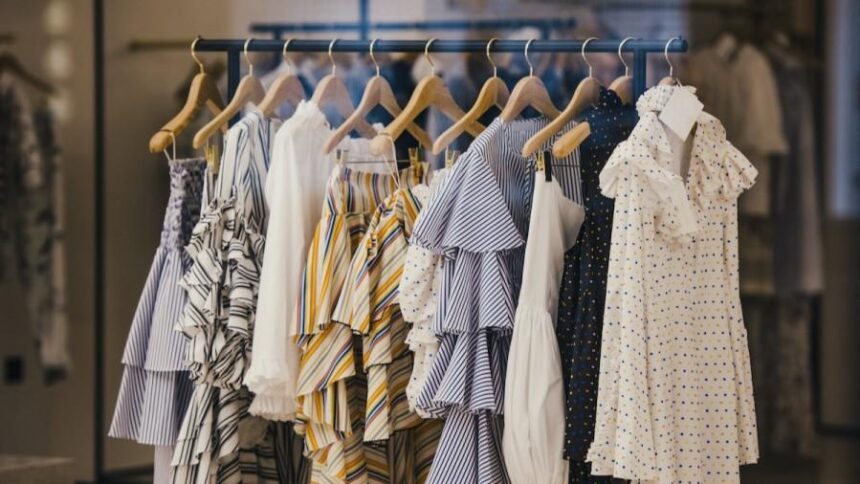
Egypt’s apparel exports increased by 15% year-on-year during the first half (H1) of 2026, reaching $1.775bn compared with $1.548bn during the same period in 2025, according to the Apparel Export Council (AEC).
The council said the sector maintained strong growth momentum despite ongoing challenges affecting global trade, supported by increased reliance on locally sourced production inputs as part of efforts to deepen domestic manufacturing and strengthen industrial integration.
The AEC also highlighted its continued efforts to promote industrial integration within Egypt’s apparel sector and increase local value-added across the industry.
June recorded the sector’s strongest monthly performance so far this year, with exports surging 47% to $355m, compared with $241m in June 2025, providing a significant boost to first-half export growth.
Fadel Marzouk, Chairperson of the Apparel Export Council, said the first-half results reflect the resilience of Egypt’s apparel industry and its ability to sustain export growth despite continued uncertainty in the global economy.
He noted that disruptions to global supply chains have affected international trade flows and demand across several markets. However, Egypt’s apparel sector has maintained its competitiveness, supported by product quality and exporters’ ability to meet delivery commitments.
Marzouk added that the sector’s continued export growth since the beginning of 2026 reflects coordinated efforts between exporting companies, the AEC, and government entities to support the industry, expand into new markets, and strengthen the global presence of Egyptian apparel products.
Europe and the United States remained the main drivers of export growth during the first six months of the year. Apparel exports to Europe increased by 25% to $767m, compared with $615m in H1 2025, while exports to the United States rose by 13% to $693m, up from $616m a year earlier. Together, the two markets accounted for the largest share of Egypt’s apparel exports.
Marzouk said the sustained expansion in European and US markets reflects the growing confidence of international buyers in Egyptian apparel, citing the industry’s product quality, diversified manufacturing capabilities, and ability to respond quickly to changing market requirements.
He added that the AEC is implementing a comprehensive strategy to expand into new export markets, diversify export destinations, increase the value-added of Egyptian products, and enhance the export capabilities of small and medium-sized enterprises.
Marzouk said the council aims to maintain the current pace of growth throughout the remainder of 2026 and increase apparel exports beyond $3.5bn, with a target of reaching $4bn by the end of the year by building on the strong first-half performance.