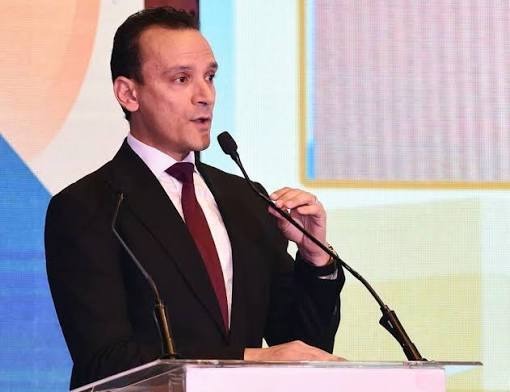
An Egyptian lawmaker has called for the establishment of an independent real estate regulatory authority reporting directly to the Prime Minister, arguing that the country’s rapidly expanding property market requires a comprehensive regulator rather than a federation representing developers.
Abdel Khalek Ibrahim, a member of the housing committee in Egypt’s House of Representatives, said the proposed authority would oversee the entire real estate ecosystem, balancing the interests of developers, government entities, homebuyers, brokers, marketing companies, facility management firms and asset management companies.
His remarks come as the Ministry of Housing prepares draft legislation to establish a real estate developers’ federation aimed at organising the sector.
According to Ibrahim, discussions between Parliament and the Ministry remain at an early stage and are focused on shaping the overall philosophy of the proposed legislation rather than debating its final legal provisions.
“We are still in the phase of formulating ideas and coordinating with the Ministry of Housing,” Ibrahim said, noting that recent parliamentary meetings were intended to explain the objectives of the proposed law rather than review a finalised draft.
While acknowledging that a developers’ federation could serve as an important first step toward regulating the market, Ibrahim argued that its mandate would inevitably be limited.
“The current government proposal focuses on regulating the work of real estate developers,” he said. “In my view, the primary objective should be regulating the real estate market as a whole, not simply classifying developers.”
He said classifying developers may have been an effective regulatory tool in the past, but Egypt’s unprecedented urban expansion over the past decade has fundamentally transformed the sector.
“The urban boom, the diversity of real estate products, the size of the market and its geographical expansion mean that developer classification alone is no longer sufficient,” he said. “A developers’ federation may be a first step, but it cannot be the final solution. We need an integrated regulatory authority similar to those found in countries with mature and active real estate sectors.”
Ibrahim noted that government entities such as the New Urban Communities Authority (NUCA) and the Urban Development Fund also operate as major real estate developers through their large-scale housing and urban development projects.
“If disputes arise between customers and government developers, how will a professional union deal with such cases?” he asked. “Can a professional association supervise or hold accountable a government body the size of NUCA? The answer is obvious.”
For that reason, he argued, only an independent authority with a clear legal mandate would be capable of regulating both public- and private-sector developers under a single framework.
Ibrahim also raised concerns about potential conflicts of interest within a developers’ federation.
“Logically, the largest developers will occupy the majority of seats on its board,” he said. “How can neutrality be guaranteed if a dispute arises between a major developer and its customers, or between a large developer and a smaller competitor?”
He warned that, in such circumstances, the federation could effectively become both “judge and litigant,” undermining its ability to make impartial decisions.
Instead, Ibrahim said an independent regulator would provide a more balanced governance model by serving as a neutral authority responsible for licensing, oversight, dispute resolution and market regulation.
He added that such an institution would be better positioned to protect consumers, ensure fair competition and enforce consistent regulatory standards across Egypt’s increasingly sophisticated real estate sector.
The proposal comes as Egyptian authorities continue efforts to strengthen governance of one of the country’s largest economic sectors, which has expanded rapidly over the past decade, driven by large-scale urban development projects, rising private investment and the growth of mixed-use and residential developments nationwide.